 EN
EN
 English
 русский
 Español
Silicone Cable vs. PVC vs. TPE: A Complete Comparison for Your Next Project
 2026.07.15
 Industry News
Content
- 1 What Is Silicone Cable?
- 2 Key Performance Properties of Silicone Cable
- 3 Silicone Cable vs. PVC vs. TPE vs. XLPE: A Head-to-Head Comparison
- 4 How to Choose the Right Silicone Cable for Your Application
- 5 Understanding the Limitations: Abrasion Resistance and How to Mitigate It
- 6 Key Certifications and Compliance for Silicone Cable (UL, CE, NASA)
- 7 Common Applications of Silicone Cable
- 8 Conclusion and Where to Buy
In the spring of 2025, a robotics integrator told me their first prototype failed quality testing within six weeks. The trouble was not the motors or the controllers. It was the wiring inside the articulated arm. Standard PVC cable cracked at the joint after 15,000 flex cycles. That engineering team switched to silicone cable and pushed past 2 million cycles without a fault. This single swap eliminated the most common failure point and cut downtime to near zero. The lesson is simple: insulation material selection is not a commodity decision, it is a design-critical one.
Silicone cable is defined by its insulation, a synthetic silicone rubber that wraps the conductor in a soft, heat-resistant jacket. The conductor itself is typically tinned or silver-plated copper, often built with extremely high strand counts to boost flexibility. Together, they create a wire product that excels where PVC, TPE, or XLPE simply cannot survive. But the real value emerges only when you match the cable’s properties to your specific operating environment. The following sections break down exactly how to make that match with confidence.
What Is Silicone Cable?
Silicone cable is a single- or multi-conductor electrical wire insulated with a silicone rubber compound. The insulation is extruded directly onto the conductor, forming a seamless, uniform barrier. Because silicone rubber maintains its mechanical properties across a wider temperature window than almost any other common insulation, it opens up applications from cryogenic chambers to engine compartments.
At the conductor level, high-end silicone cables use silver-plated copper strands with a high strand count. For example, a 26 AWG conductor might contain 19 strands or, in ultra-flexible versions, 40 or more strands. The higher the strand count, the lower the bending stress on each individual wire. This architecture, combined with the inherently soft insulation, yields a cable that can be tied in a knot and still perform. It is not simply a high-temperature wire — it is a high-flexure, high-voltage, and high-reliability foundation for demanding electrical systems.
Key Performance Properties of Silicone Cable
Four performance characteristics separate silicone cable from commodity wiring.
- Temperature range: Continuous operation from -60 degrees Celsius to 200 degrees Celsius. Short-term excursions to 250 degrees Celsius are feasible with many formulations. This range dwarfs the -20 degrees Celsius to 105 degrees Celsius ceiling of standard PVC.
- Voltage rating: Common ratings include 300 V and 600 V, with some specialty designs reaching 10 kV or more. Silicone’s dielectric strength, typically above 20 kV per millimeter, supports compact insulation walls without sacrificing electrical integrity.
- Flexibility and flex life: Ultra-fine stranded conductors encased in low-durometer silicone rubber allow minimum bend radii as low as 4 times the outer diameter. In dynamic flex testing, high-strand-count silicone cables routinely exceed 10 million cycles, compared to 1 million cycles for PVC in similar configurations.
- Low-temperature elasticity: Unlike PVC, which becomes brittle below freezing, silicone retains elasticity down to -60 degrees Celsius. This makes it the default choice for outdoor instrumentation in Arctic environments or aerospace applications at altitude.
- Environmental resistance: Silicone resists UV radiation, ozone, and moisture. It does not support fungal growth and retains its properties after prolonged water immersion, which is critical for marine and washdown environments.
These properties come with trade-offs, particularly in abrasion resistance and cost, which will be examined in detail later.
Silicone Cable vs. PVC vs. TPE vs. XLPE: A Head-to-Head Comparison
No single insulation material is ideal for every application. The table below compares silicone cable against three common alternatives across the dimensions that matter most in industrial and commercial design.
| Property | Silicone | PVC | TPE | XLPE |
|---|---|---|---|---|
| Continuous temp. range | -60 deg C to 200 deg C | -20 deg C to 105 deg C | -50 deg C to 125 deg C | -40 deg C to 125 deg C |
| Flexibility (bend radius) | 4x OD or better | 8x OD typical | 5x OD typical | 6x OD typical |
| Dynamic flex life | Very high (10M+ cycles) | Medium (1M cycles) | High (5M+ cycles) | Medium (3M cycles) |
| Abrasion resistance | Fair | Good | Very good | Good |
| Chemical resistance | Good (excellent vs. ozone, UV) | Fair to good | Good | Excellent |
| Dielectric strength | >20 kV/mm | 15-20 kV/mm | 18-22 kV/mm | 20-30 kV/mm |
| Relative cost | High | Low | Medium | Medium-high |
The data makes the selection logic clear. For static installations in dry, room-temperature environments, PVC is often sufficient and economical. For continuous motion in tight spaces with temperature extremes, silicone is the superior performer. TPE strikes a balance where flexibility and moderate abrasion resistance are both needed. XLPE is the choice when chemical exposure dominates and high voltage endurance is paramount.
How to Choose the Right Silicone Cable for Your Application
Selecting the optimal silicone cable requires mapping three operational parameters to the cable’s design: operating temperature, mechanical motion profile, and environmental exposure. The decision tree below captures the most common paths.
- Temperature: If the ambient or contact temperature exceeds 125 degrees Celsius, silicone becomes almost mandatory. If below -40 degrees Celsius, PVC and many TPE formulas are excluded immediately.
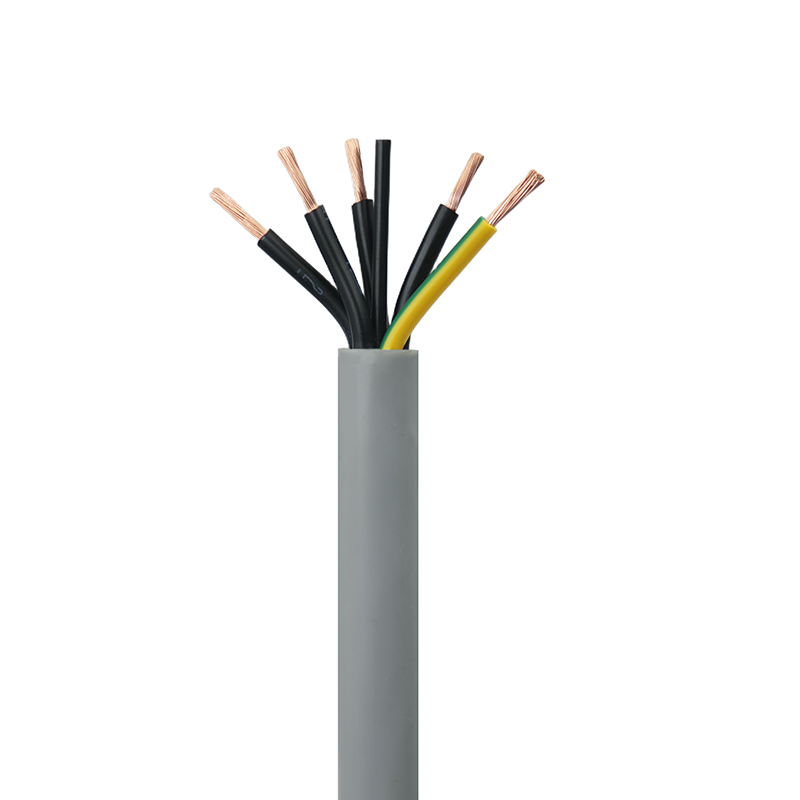
- Motion profile: For fixed wiring, standard silicone wire suffices. For continuous flex in cable tracks or robotic joints, specify a high-strand-count conductor (class 5 or 6 stranding) and verify the bend radius. Industrial robotic arms often require cables that survive at least 5 million flex cycles; look for test data from the manufacturer. A flexible control cable designed for similar dynamic loads, such as unshielded highly flexible control cable, can serve as a benchmark for expected life.
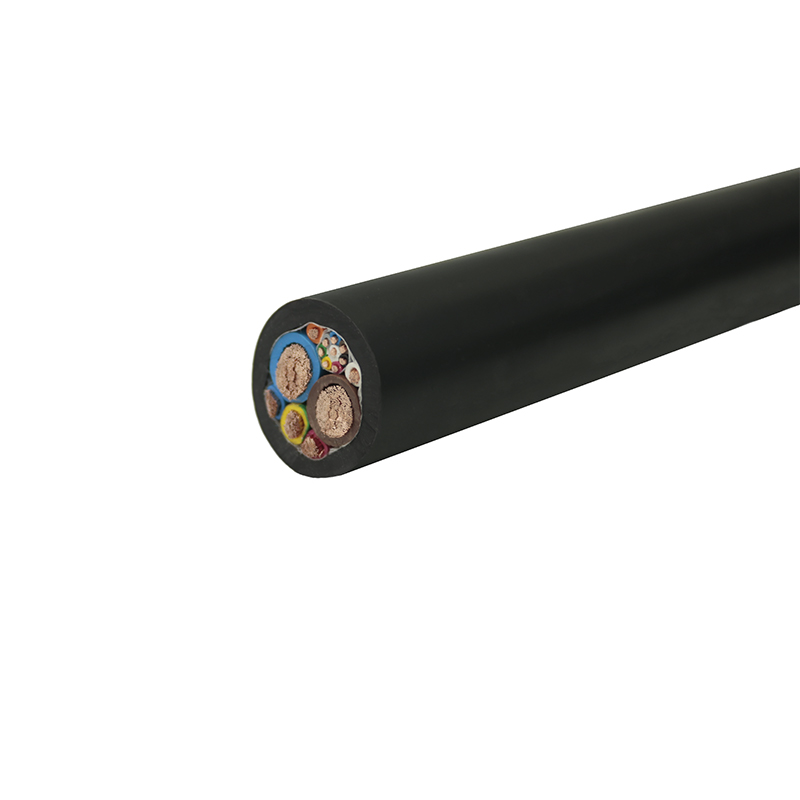
- Environment: In splash zones or underwater housings, silicone’s moisture resistance is an asset, but confirm the jacket wall thickness and any additional sheathing. For charging station cables exposed to sunlight and frequent flexing, UV-stable silicone combined with a robust jacket structure is recommended. A dedicated flexible cable for DC charging stations demonstrates how silicone insulation can be integrated into a system that also manages bending, pulling, and weather year-round.
A practical approach is to create a requirement-to-specification matrix. List your top priorities (e.g., high flex cycles, 200 degrees Celsius peak, UL listing) and then request technical data that validates each one from your supplier. Do not accept generic claims; ask for specific test results.
Understanding the Limitations: Abrasion Resistance and How to Mitigate It
Silicone’s most significant weakness is its fair abrasion resistance. The material is soft by design, which means it can be cut, gouged, or worn away more easily than polyurethane or PVC. Ignoring this characteristic leads to premature insulation failure in any application where the cable contacts sharp edges, abrasive surfaces, or experiences repeated rubbing. The good news is that engineered solutions are straightforward.
- Braided sleeves: Adding a nylon, polyester, or aramid braided sleeve over the silicone jacket dramatically improves cut-through and abrasion resistance without significantly affecting flexibility. This is the most common fix in robotics and aerospace harnesses.
- Composite jackets: Manufacturers can co-extrude a thin layer of polyurethane or TPE over the silicone insulation. The inner silicone maintains high-temperature performance and flexibility, while the outer jacket handles surface wear. The trade-off is a slight increase in overall diameter and cost.
- Routing and strain relief: Often the problem is not the cable but the installation. Using smooth-edged cable carriers, avoiding sharp bends near connectors, and employing proper strain relief fittings can prevent abrasion damage. Always specify a minimum bend radius of 6 times the cable outer diameter, even if the cable itself can tolerate tighter bends, to create a safety margin.
These mitigations do not negate silicone’s advantages; they simply close the one performance gap that designers must proactively address.
Key Certifications and Compliance for Silicone Cable (UL, CE, NASA)
Certifications are not abstract badges. They define the specific test conditions a silicone cable has passed and, therefore, the environments in which it can be safely deployed. The table below summarizes the critical standards that affect silicone cable selection.
| Certification | Region/Market | Key Test Focus | Typical Silicone Application |
|---|---|---|---|
| UL 758 (AWM) | North America | Flame resistance, insulation thickness, thermal aging | Appliance wiring, internal equipment |
| UL 62 | North America | Durability, cold bend, flame test for flexible cord | Power supply cords, data center cabling |
| CE Marking (EN 50525) | Europe | Low voltage directive safety, fire performance | Building wiring, industrial machinery |
| NASA-STD-6001 | Aerospace | Off-gassing, toxicity, odor | Satellite harnesses, crewed spacecraft |
| IEC 60228 | International | Conductor class, flexibility classification | All flexible installations |
For export-focused OEMs, selecting a silicone cable that already carries both UL recognition and CE marking removes a major regulatory barrier. Working with a supplier that holds in-house UL testing capability, and can provide the relevant documentation without delay, accelerates time to market and simplifies compliance documentation.
Common Applications of Silicone Cable
Silicone cable appears in an unusually broad range of industries. Its presence spans both the highest-reliability aerospace systems and the enthusiast PC sleeving bench.
- Robotics: Articulated arms and end effectors demand millions of continuous flex cycles. Silicone insulated conductors survive where PVC and even PUR fail prematurely.
- Aerospace and defense: Lightweight, low-outgassing silicone wiring meets NASA and MIL-SPEC requirements for satellite buses and military ground vehicles.
- Medical devices: Implant-grade silicone is biocompatible and is used in pacemaker leads, surgical tools, and diagnostic equipment cables that must endure repeated sterilization cycles.
- Underwater systems: Silicone’s water resistance and flexibility at depth make it ideal for ROV tethers and subsea sensor arrays. A purpose-built buoyant cable for underwater robots often uses silicone insulation as part of a composite construction that maintains signal integrity and neutral buoyancy.
- Electric vehicle charging: The combination of high flexibility, wide temperature tolerance, and voltage rating up to 600 V suits both AC and DC charging gun cables exposed to outdoor conditions and frequent handling.
- Test and measurement: Silicone wires in multimeter leads, oscilloscope probes, and Kelvin clips provide extremely low leakage current and excellent touch safety at elevated voltages.
- Custom PC cabling: Enthusiast builders choose silicone-sleeved modular cables for power supplies because the ultra-soft insulation makes routing behind motherboard trays dramatically easier.
Conclusion and Where to Buy
Silicone cable is not a one-size-fits-all solution, but it is often the only solution that simultaneously satisfies extreme temperature, flexibility, and voltage requirements. The selection process boils down to three steps: define your worst-case thermal and mechanical conditions, compare insulation materials against those conditions using the table above, and always address abrasion resistance with at least one complementary protection method. By treating silicone cable as a design component rather than a commodity, engineering teams can eliminate a common hidden failure point and extend system life significantly.
For projects that demand specific conductor configurations, custom color coding, or integrated shielding, off-the-shelf products rarely fit perfectly. Working directly with a manufacturer that offers UL/CE-certified silicone cable customization allows you to specify exactly the AWG, strand count, jacket thickness, and labeling your application requires. When the difference between standard and custom is measured in failure rates, not just dollars, the choice is clear.