 EN
 English
 русский
 Español
Industrial Gas and Oil Resistant Pair Cabling: A Practical Selection Guide
 2026.10.23
 Industry News
Content
- 1 What industrial gas and oil resistant pair cabling actually is
- 2 Why oil and gas environments punish ordinary pair cable
- 3 Jacket and insulation materials that make the difference
- 4 Shielding, pairing, and signal integrity
- 5 A practical selection checklist
- 6 Installation and maintenance details that decide service life
- 7 Quality checks and documentation to ask for
- 8 Matching the cable to the application
- 9 Bringing the specification together
Oil and gas work rarely gives cabling an easy life. A pair cable may look simple, but in a refinery, on a drilling floor, or around a fuel terminal it has to survive hydrocarbon contact, heat cycling, vibration, washdown, and sometimes continuous movement. Industrial gas and oil resistant pair cabling is the practical answer when ordinary twisted-pair cable would soften, swell, crack, or lose signal quality too early. The useful question is not simply “is it oil resistant?” but “which oil, at what temperature, for how long, and under what mechanical conditions?”
What industrial gas and oil resistant pair cabling actually is
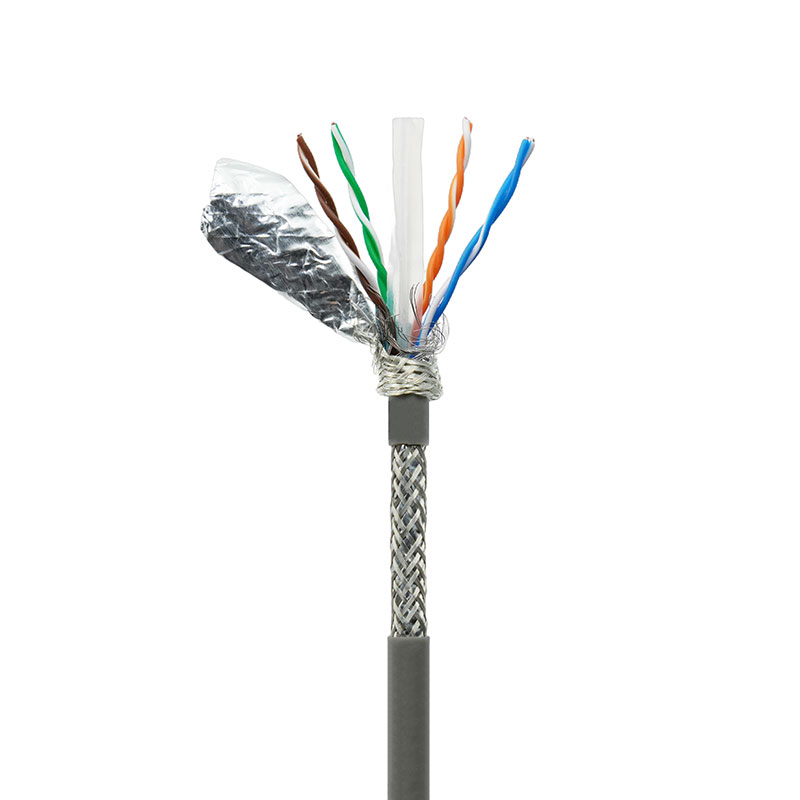
Pair cabling uses two insulated conductors twisted together to carry a signal. In industrial sites, that signal may be RS-485, instrumentation, control data, Ethernet, or a low-level sensor connection. The pair construction helps reject common-mode noise, but it does not by itself make the cable suitable for oil and gas service. The resistance comes from the whole build: conductor stranding, insulation material, fillers, tapes, shields, inner sheath, and outer jacket.
A cable sold for these environments should be treated as an engineered assembly rather than a commodity. The jacket must resist the specific fluids it will meet. The insulation must keep its electrical properties. The shield must remain effective after bending and termination. And the cable must suit the installation method, whether it is fixed in a tray, pulled through conduit, or flexing in a moving machine.
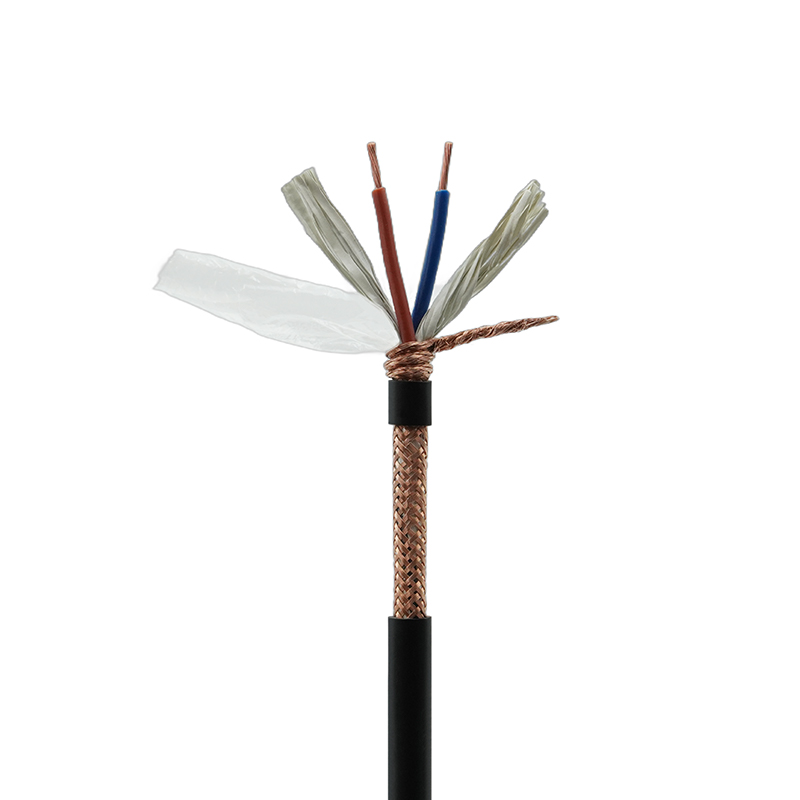
 LIYCY-TP Flexible Shielded Twisted-Pair Data CableIndustrial-grade shielded twisted-pair cable intended for precision signal links; relevant when reviewing jacketed assemblies for demanding environments.View Product →
Why oil and gas environments punish ordinary pair cable
Hydrocarbons are not all the same. Diesel, hydraulic oil, lubricating oil, crude oil, glycol, methanol, drilling fluids, and cleaning chemicals can attack polymers in different ways. Some cause volume swell. Some extract plasticizers and leave a jacket hard and brittle. Others soften the surface, reduce abrasion resistance, or change dimensions enough to affect connectors and glands. A jacket that survives a splash test may fail after long-term immersion or repeated exposure at elevated temperature.
Heat makes chemical attack faster. Cold makes some materials stiff and easier to crack. UV exposure ages outdoor jackets. Salt water and humidity drive corrosion at shields, drains, and terminations. Mechanical stress adds another layer: vibration, pressure washing, cable tray abrasion, tight bend radii, and continuous flexing. In hazardous areas, the cable also has to fit the installation design, including glands, barriers, and sealing arrangements. A cable is not “explosion proof” by itself; it is one part of a compliant system.
Jacket and insulation materials that make the difference
Polyurethane, or PUR, is often a strong choice for flexible industrial pair cables exposed to oil, abrasion, and repeated movement. It offers good oil resistance and tough mechanical behavior, which is why it appears in drag chain, robotics, and washdown applications. It is not universal: hot water and steam exposure need checking, and some formulations behave differently from others. A PUR-sheathed shielded twisted-pair Ethernet cable, for example, can be a sensible fit for oily automation areas where signal integrity and jacket toughness both matter.
 TPU-CAT6-STP PUR-Sheathed Category 6 Shielded CablePUR-sheathed Category 6 shielded twisted-pair cable for Gigabit links in high-wear industrial and outdoor settings; relevant when jacket toughness matters.View Product →
Nitrile rubber, polychloroprene, and other rubber compounds are common where oil resistance, heat resistance, and outdoor durability are needed. They tend to be heavier and less flexible than PUR, so they suit fixed or occasional-flex routes better than high-cycle drag chain use. Polyethylene resists moisture and many chemicals well but is stiffer and less forgiving in movement. PVC is economical and flame retardant, but oil resistance varies widely by formulation, so “PVC jacket” alone tells you very little. FEP and PTFE appear where chemical resistance or high temperature justify the cost.
Insulation choice matters just as much. PE, PP, FEP, and XLPE can each serve different electrical and thermal needs. For pair cabling, capacitance, impedance, and pair unbalance affect signal quality. A thick oil-resistant jacket cannot compensate for poor pair geometry.
Shielding, pairing, and signal integrity
Oil and gas sites are electrically noisy. Motors, drives, welding equipment, radios, and power distribution can all couple noise into signal pairs. Foil shields give high coverage and are good for compact constructions. Braided shields resist flexing and mechanical damage better. Many industrial pair cables combine both. Individual pair shielding can reduce crosstalk, while an overall shield handles external interference.
The shield only works if it is terminated correctly. A drain wire left floating, a shield grounded at the wrong point, or a connector with poor 360-degree bonding can turn a good cable into a source of intermittent faults. In hazardous areas, shield and drain terminations must also fit the grounding and isolation design. Do not assume that more shielding is always better; choose the shield to match the noise problem, the pair type, and the space available.
A practical selection checklist
Selection should start with the exposure, not the catalog headline. The table below is a compact way to compare what a supplier claims with what the application actually needs.
| Selection point | What to verify | Why it matters |
|---|---|---|
| Fluid exposure | Oil type, concentration, contact time, temperature, cleaning chemicals | Different polymers resist different hydrocarbons |
| Electrical duty | Impedance, capacitance, voltage rating, pair count, data rate | Signal performance must survive the chosen construction |
| Temperature | Continuous rating, cold bend, short-term peaks | Heat speeds chemical ageing; cold can cause cracking |
| Mechanical route | Fixed, flexing, torsion, abrasion, pull force, bend radius | A fixed cable in a moving route fails early |
| Shielding | Foil or braid, coverage, drain wire, grounding plan | Noise rejection depends on termination as well as shield |
| Hazardous area | Approval, gas-tight or barrier design, gland compatibility | The cable must fit the certified installation method |
| Documentation | Oil immersion tests, cold bend, flame, batch traceability | Claims without test detail are difficult to compare |
Installation and maintenance details that decide service life
Even a good cable can fail at installation. Respect the bend radius. Avoid tight cable ties that crush the pair geometry. Support long vertical runs. Keep signal pairs separated from power cables where practical, and follow the shielding and grounding design. In washdown areas, check that glands and terminations are compatible with the jacket material and do not create stress concentrations.
If the route moves, use a cable designed and tested for that motion. A high-flex shielded twisted-pair drag chain cable, for example, is built for repeated flexing rather than occasional adjustment. For fixed tray runs, a tougher rubber or PUR jacket may still be the right choice, but the flex life does not need to be the limiting factor. During maintenance, inspect for jacket swelling, cracks, flattening, shield corrosion, and loose terminations. Replace cable that has changed shape or hardness after chemical exposure; it has already lost part of its safety margin.
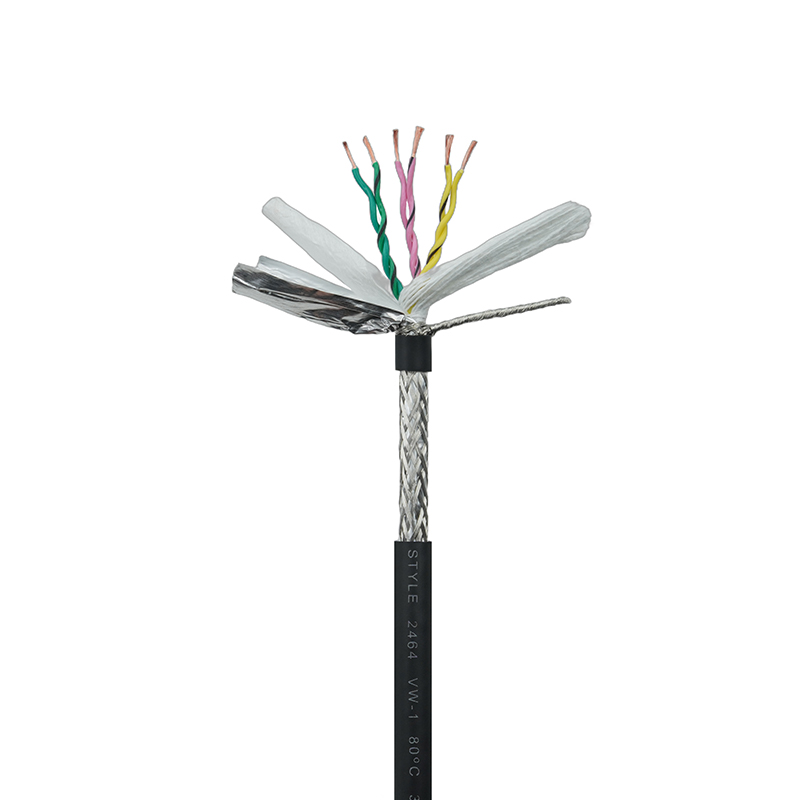
 TRVVSP High-Flex Shielded Twisted-Pair Drag Chain CableShielded twisted-pair drag-chain cable for high-speed signal and power transmission in moving routes; inspect when repeated flexing is part of the installation.View Product →
Quality checks and documentation to ask for
Ask for more than a material name. Useful evidence includes oil immersion test conditions, tensile and elongation results before and after exposure, volume swell, cold bend performance, flame behavior, shield continuity, conductor resistance, and voltage withstand. For data pairs, capacitance and impedance data help confirm that the cable will support the intended signal. For moving applications, flex test conditions matter more than a general “high flex” description.
Batch traceability, jacket marking, and a clear statement of the tested temperature range are also practical buying points. If a supplier cannot explain how the cable was tested, or cannot match the jacket to the actual fluid list, keep asking questions. Our laboratory and testing resources are the kind of detail worth reviewing before a specification is locked.
Matching the cable to the application
- Offshore platforms and drill floors: salt water, oil, vibration, UV, and hazardous-area installation methods.
- Refineries and petrochemical plants: heat, hydrocarbons, EMI, and long fixed runs mixed with local flexing.
- Tank farms and fuel terminals: outdoor ageing, fuel contact, vapor sealing, and long cable routes.
- Pipelines and compressor stations: wide temperature swings, vibration, and instrumentation signal integrity.
- Machinery and automation in oily plants: coolant, hydraulic oil, repeated flexing, and abrasion.
The same cable grade should not be expected to solve every case. A fixed instrument pair in a hot refinery and a moving pair cable on an oily machine may both be called “oil resistant,” but they are different designs. Good selection separates those duties early, then matches jacket, shield, pair construction, and approval to the route.
Bringing the specification together
Industrial gas and oil resistant pair cabling is a detail item with a large effect on reliability. Start with the fluid list and temperature, then work through electrical performance, shielding, mechanical movement, hazardous-area requirements, and documentation. Where the route is fixed, prioritize chemical and thermal resistance. Where it moves, add flex life and abrasion resistance to the same review. That order keeps the specification honest and avoids paying for a jacket feature that does not address the real failure mode.
If you are narrowing a cable for a specific refinery, terminal, skid, or offshore package, talk to our team with the fluid exposure, route, and signal details. A short, clear application note usually saves more time than a long list of generic “oil resistant” claims.