 EN
EN
 English
 русский
 Español
4 Types of Network Cables: Complete Guide to Ethernet & Data Cables
 2026.02.05
 Industry News
Content
The four primary types of network cables used in modern networking are twisted pair cables (including Cat5e, Cat6, Cat6a, and Cat7), coaxial cables, fiber optic cables, and patch cables. Each serves distinct purposes based on bandwidth requirements, distance limitations, and environmental factors. Twisted pair cables dominate home and office networks, fiber optics handle long-distance and high-speed transmissions, coaxial cables support cable internet and legacy systems, while patch cables provide flexible short-distance connections.
Twisted Pair Cables: The Backbone of Modern Networks
Twisted pair cables contain copper wires twisted together in pairs to reduce electromagnetic interference. They represent over 80% of all network installations worldwide due to their cost-effectiveness and versatility.
Categories and Performance Specifications
| Cable Type | Maximum Speed | Bandwidth | Maximum Distance |
|---|---|---|---|
| Cat5e | 1 Gbps | 100 MHz | 100 meters |
| Cat6 | 10 Gbps | 250 MHz | 55 meters (10 Gbps) |
| Cat6a | 10 Gbps | 500 MHz | 100 meters |
| Cat7 | 10 Gbps | 600 MHz | 100 meters |
UTP vs STP: Shielding Differences
Twisted pair cables come in two configurations:
- Unshielded Twisted Pair (UTP): The most common type, accounting for approximately 90% of installations. UTP cables are lighter, more flexible, and cost around $0.10-$0.30 per foot. They work well in standard office environments with minimal electromagnetic interference.
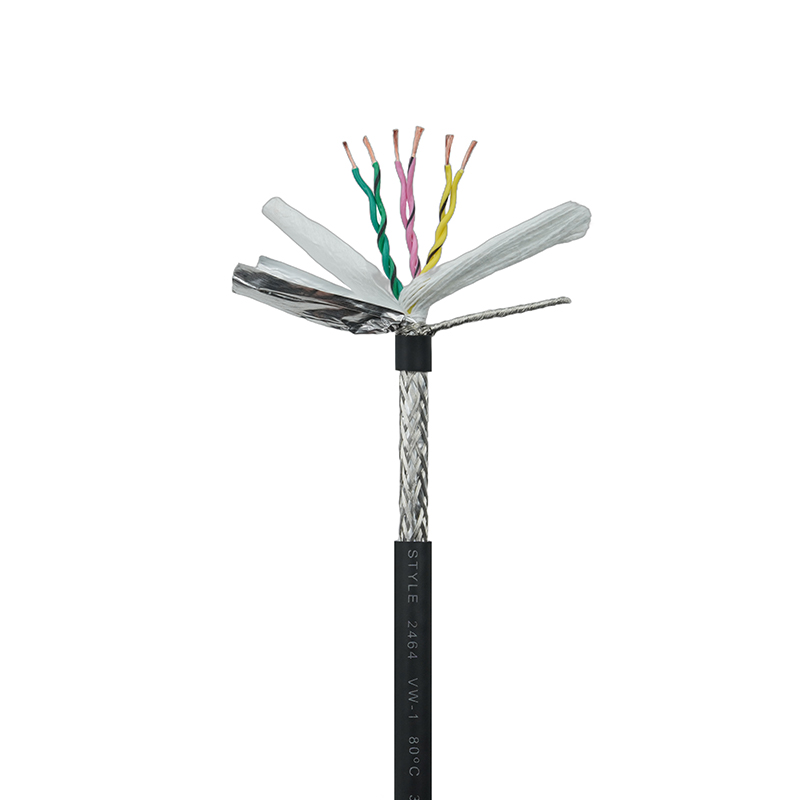
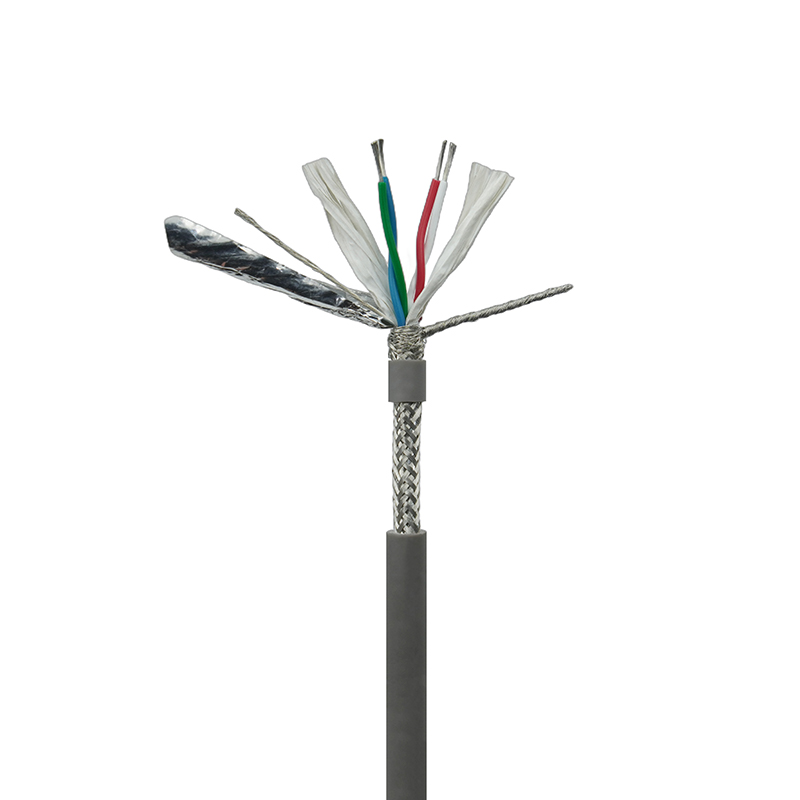
- Shielded Twisted Pair (STP): Features additional foil or braided shielding around wire pairs. STP cables cost $0.50-$1.00 per foot but provide superior protection in industrial settings, near heavy machinery, or in data centers with dense cable runs.
For example, a manufacturing facility installing network cables near assembly line equipment would benefit from STP to prevent signal degradation from motor interference, while a typical home office can reliably use UTP Cat6 cables.
Coaxial Cables: Legacy and Specialized Applications
Coaxial cables feature a central copper conductor surrounded by insulation, a braided metal shield, and an outer jacket. While less common in modern Ethernet networks, they remain critical for cable internet connections delivering speeds up to 1 Gbps through DOCSIS 3.1 technology.
Common Coaxial Cable Types
- RG-6: The standard for cable television and internet with 75-ohm impedance. RG-6 cables can transmit signals up to 500 meters with minimal loss, making them ideal for residential broadband installations.
- RG-59: Thinner cable typically used for short-run CCTV applications and analog video. Its maximum effective distance is approximately 200 meters before signal degradation becomes noticeable.
- RG-11: Thicker, low-loss cable for long-distance runs exceeding 500 meters. Commercial buildings often use RG-11 for backbone connections between distribution points.
A practical example: Comcast and Spectrum cable internet services deliver connection to homes via RG-6 coaxial cables from street pedestals, supporting download speeds of 940 Mbps and upload speeds of 35 Mbps in typical configurations.
Fiber Optic Cables: High-Speed Data Transmission
Fiber optic cables transmit data as light pulses through glass or plastic fibers, enabling speeds from 10 Gbps to 100 Gbps over distances exceeding 40 kilometers without signal loss. They are immune to electromagnetic interference and offer superior security since they don't emit signals that can be intercepted.
Single-Mode vs Multi-Mode Fiber
| Characteristic | Single-Mode Fiber | Multi-Mode Fiber |
|---|---|---|
| Core Diameter | 8-10 microns | 50-62.5 microns |
| Maximum Distance | 40-100 km | 300-550 meters |
| Light Source | Laser | LED |
| Cost per Meter | $1.50-$3.00 | $0.75-$1.50 |
| Typical Application | Long-distance, telecom | Data centers, campus networks |
Data centers commonly implement multi-mode OM4 fiber for server-to-switch connections within the same building, achieving 10 Gbps speeds over 400 meters. Meanwhile, telecommunications companies use single-mode fiber for metropolitan area networks connecting cities, maintaining signal integrity across 80-kilometer spans without repeaters.
Real-World Implementation Costs
Installing fiber optic infrastructure requires specialized equipment and expertise. A typical enterprise installation costs $1-$6 per foot including labor, termination, and testing. For perspective, wiring a 10,000 square foot office building with fiber backbone connections might require a $15,000-$25,000 investment compared to $3,000-$5,000 for comparable twisted pair infrastructure.
Patch Cables: Flexible Connectivity Solutions
Patch cables are short-length network cables (typically 0.5 to 15 meters) designed for connecting devices to wall outlets, switches to routers, or equipment within server racks. They use the same twisted pair or fiber optic technology as permanent installation cables but feature molded strain-relief boots and flexible jackets for frequent handling.
Types and Applications
- Straight-through patch cables: Connect different device types (computer to switch, router to modem). These represent 95% of all patch cable usage and follow the T568A or T568B wiring standard on both ends.
- Crossover patch cables: Connect similar devices directly (computer to computer, switch to switch). Modern devices with Auto-MDIX technology have largely eliminated the need for crossover cables, reducing their usage to less than 5% of applications.
- Fiber patch cables: Available with LC, SC, ST, or MTP connectors for connecting fiber optic equipment. Data centers commonly use LC duplex connectors due to their small footprint, allowing 144 fiber connections in a single 1U rack panel.
Quality Considerations
Patch cable quality significantly impacts network performance. Professional-grade patch cables with gold-plated connectors and 50-micron gold plating cost $5-$15 each but provide corrosion resistance and reliable connections over thousands of insertion cycles. Budget cables at $1-$3 each may suffice for static installations but often fail prematurely in environments requiring frequent reconnections.
Network administrators in enterprise environments typically stock multiple patch cable lengths. A standard server rack configuration might use twenty 1-meter Cat6a patch cables for switch-to-server connections, five 3-meter cables for inter-rack connections, and ten 0.5-meter cables for high-density patch panel applications.
Choosing the Right Network Cable
Selecting appropriate network cables depends on specific requirements including distance, speed, environment, and budget constraints.
Decision Framework
- For home networks and small offices under 100 meters: Cat6 or Cat6a twisted pair cables provide excellent performance at reasonable cost, supporting current gigabit speeds and future 10 Gbps upgrades without replacement.
- For cable internet connections: RG-6 coaxial cables remain the standard for connecting modems to service provider networks, supporting speeds up to 1 Gbps with DOCSIS 3.1 technology.
- For building backbone connections exceeding 100 meters: Multi-mode fiber optic cables provide reliable high-speed connectivity for campus networks and multi-floor buildings, with OM4 fiber supporting 10 Gbps over 400 meters.
- For long-distance telecommunications: Single-mode fiber optic cables enable data transmission over tens of kilometers without signal degradation, essential for metropolitan and wide area networks.
Environmental Factors
Environmental conditions significantly influence cable selection. Industrial facilities with heavy machinery require shielded twisted pair cables to prevent electromagnetic interference. Outdoor installations demand burial-rated or aerial cables with UV-resistant jackets and waterproof construction, typically costing 2-3 times more than indoor equivalents. Plenum-rated cables meeting fire safety codes are mandatory for installation in air-handling spaces, featuring special insulation that costs approximately 40% more than standard PVC-jacketed cables.
Understanding these four network cable types and their specific applications ensures reliable network infrastructure that meets current needs while providing scalability for future requirements.