 EN
EN
 English
 русский
 Español
Electrical Installation Cables: Types, Specs & Selection Guide
 2026.03.17
 Industry News
Content
- 1 What Are Electrical Installation Cables?
- 2 Common Types and Model Designations
- 3 Key Technical Specifications Explained
- 4 Insulation and Sheath Materials: Why It Matters
- 5 Application Environments and Use Cases
- 6 Compliance Standards You Should Know
- 7 How to Select the Right Electrical Installation Cable
What Are Electrical Installation Cables?
Electrical installation cables are purpose-built conductors designed to safely carry electrical current in fixed or flexible wiring systems — across residential, commercial, and industrial environments. They are not interchangeable with general-purpose wire; each cable type is engineered to meet specific voltage, temperature, flexibility, and environmental demands.
At their core, these cables consist of three primary components: a conductor (typically multi-strand oxygen-free or tinned copper), an insulation layer (commonly PVC, XLPE, or low-smoke halogen-free compounds), and an outer sheath that provides mechanical and chemical protection. Optional shielding — bare or tinned copper braided mesh with ≥80% coverage — is added when electromagnetic interference (EMI) is a concern.
The conductor structure typically conforms to VDE0295 CLASS 5 standards, meaning fine multi-strand construction that delivers both conductivity and mechanical flexibility — critical for machine tools, assembly lines, and control panel wiring.
Common Types and Model Designations
Understanding the naming system helps you select the right cable quickly. Each letter in a cable model designation carries a specific meaning:
- S — Conductors consist of two or more strands twisted together
- P — Cable includes a shielding layer, typically copper braid
- Y — Oil-resistant outer material
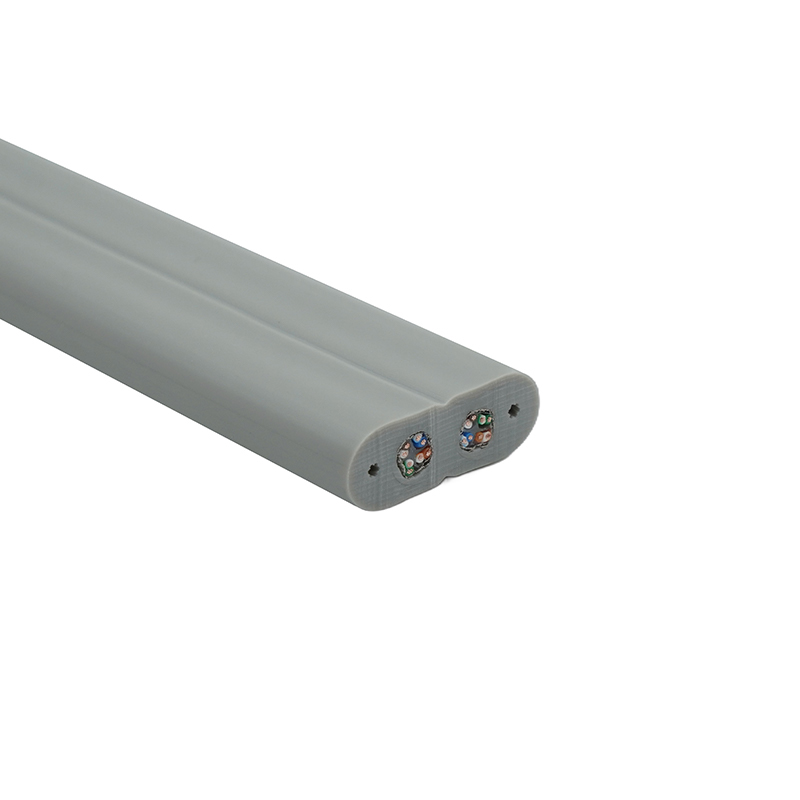
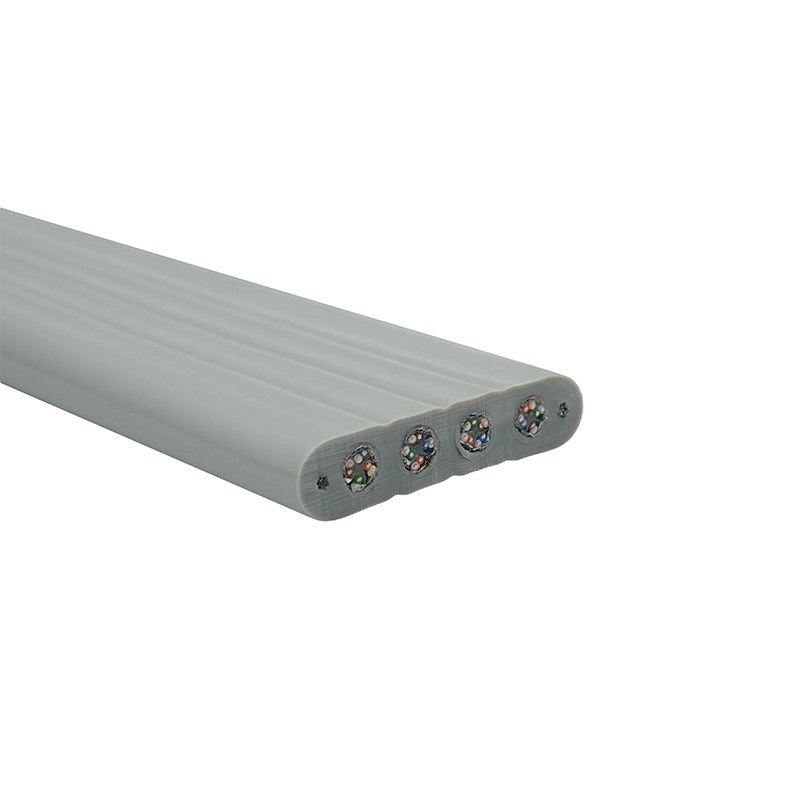
- B — Flat cable construction
- G — Steel wire rope reinforcement for high-tension applications
Commonly used installation cable types include:
| Cable Type | Key Feature | Typical Application |
|---|---|---|
| RV(V)(S)(P)(B)(Y)(G) | Multi-variant control cable | Industrial control panels, machine tools |
| H05V(K) / H07V(K) | Fine-stranded flexible wire | Internal wiring of appliances and panels |
| UL1007 / UL1015 | UL-listed, 300V/600V rated | North American market appliances and equipment |
| UL2586 / UL3820 | High flexibility, oil-resistant | Portable tools, moving machinery |
| BV(V)(R) | Single-core PVC insulated | Building wiring, distribution boards |
Key Technical Specifications Explained
Choosing the wrong spec is one of the most common and costly mistakes in electrical installation. Here are the critical parameters you need to evaluate:
Working Voltage
Voltage rating is not a maximum peak value — it defines the sustained operational limit. For cables with cross-sections below 0.75mm², the standard rating is 300/300V. For 0.75mm² and above, it rises to 300/500V. American-standard cables (e.g., UL1015) are typically rated at 600V or 1000V. Exceeding these ratings accelerates insulation breakdown and significantly increases fire risk.
Test Voltage
Cables undergo dielectric withstand testing before leaving the factory. Cables under 0.5mm² are tested at 2000V, while those 0.5mm² and above are tested at 2500V. This verifies that the insulation can handle voltage spikes without breakdown.
Temperature Range
Operating temperature affects both insulation longevity and conductor resistance. Standard installation cables support:
- Mobile installation: -10°C to 70°C
- Fixed installation: -30°C to 70°C
- Custom configurations can extend this range to -40°C to 105°C, making them suitable for cold storage facilities or high-heat industrial ovens
Minimum Bending Radius
Bending radius is expressed as a multiple of the cable's outer diameter (D). Violating this limit causes internal conductor fatigue and insulation cracking over time:
- Mobile (dynamic) installation: minimum bending radius = 12D
- Fixed installation: minimum bending radius = 6D
For a cable with a 10mm outer diameter used in a cable track system, the bend radius must be at least 120mm — a detail often overlooked during mechanical design.
Insulation and Sheath Materials: Why It Matters
The choice of insulation and sheath compound determines how a cable performs in its specific environment. The three most widely used materials each offer distinct advantages:
| Material | Key Advantage | Limitation | Best Use |
|---|---|---|---|
| PVC (Flame-retardant) | Cost-effective, widely available | Releases HCl gas when burned | General industrial wiring |
| XLPE (Cross-linked PE) | Higher thermal stability, excellent dielectric | Less flexible at low temperatures | High-temperature environments |
| LSZH (Low Smoke Zero Halogen) | Minimal toxic smoke in fire | Higher cost | Tunnels, data centers, public spaces |
Sheath color also serves a functional purpose. Black (RAL9005) is the standard for outdoor or UV-exposed runs, while gray (RAL7001) is common in control cabinets and indoor conduit systems. Color-coding of individual cores follows DIN47100, using brown, black, blue, purple, pink, and orange for identification in multi-core assemblies — with green-yellow reserved for earth/ground conductors in cables with 3 or more cores.
Application Environments and Use Cases
Electrical installation cables are deployed across a wide range of settings. Their performance characteristics must match the demands of each environment:
Machine Tool Manufacturing
In CNC machines and robotic arms, cables undergo continuous flexing, exposure to cutting oils, and vibration. Oil-resistant sheaths and fine-stranded conductors (CLASS 5 or CLASS 6) are essential here. Cables rated for mobile installation with a 12D bending radius are specifically chosen to withstand millions of flex cycles without failure.
Complete Equipment Assembly
Assembly plants require cables that can be routed through tight conduits, terminated easily, and color-coded for fast diagnostics. Multi-core cables with clear DIN-standard color coding reduce wiring errors during installation and cut diagnostic time during maintenance.
Electrical Distribution Panels
Fixed wiring in distribution boards demands cables with robust insulation, high voltage tolerance, and flame-retardant properties. BV and H07V-K type cables are standard here, often routed in conduit or cable trays. The fixed installation temperature tolerance of -30°C to 70°C ensures reliable performance even in unheated industrial buildings during winter.
Consumer Appliances
Washing machines, refrigerators, and HVAC units use thinner gauge installation cables internally (often 0.5mm² to 1.5mm²) where space is constrained. UL1007 and UL1015-rated cables serve the North American market for these applications, certified to 300V and 600V respectively.
Compliance Standards You Should Know
Electrical installation cables must comply with regional and international standards that define testing methods, construction requirements, and performance thresholds. Specifying the wrong standard for your market can result in failed inspections or rejected shipments.
- JB8734.4-1998 — Chinese standard for flexible cables and cords for electrical installations
- GB5023.5-2008 — Chinese national standard aligned with IEC 60227 for PVC-insulated cables
- EN 60228 — European standard for conductors of insulated cables, defining CLASS 1–6 stranding
- UL 758 — American standard for appliance wiring material (AWM), covering construction and testing
- VDE0295 — German standard for conductor classification, widely referenced in European cable specs
When sourcing cables for export projects, always confirm which standard governs the destination market. A cable certified to GB5023.5 may not satisfy UL758 requirements even if the physical dimensions appear identical.
How to Select the Right Electrical Installation Cable
Selection is not just about picking the correct cross-sectional area. A systematic approach across five dimensions prevents costly mistakes:
- Determine the installation type: Is the cable fixed in conduit, or will it flex continuously in a cable track? This immediately defines whether you need 6D or 12D bending radius compliance.
- Define the voltage and current load: Calculate maximum current draw and select conductor cross-section accordingly. Factor in ambient temperature derating — a cable rated for 16A at 25°C may only be rated for 12A at 50°C.
- Assess environmental exposure: Oil, UV, moisture, and chemicals all degrade insulation over time. Specify oil-resistant sheaths for machine environments and LSZH compounds for enclosed public spaces.
- Check for EMI sensitivity: Control signal cables running alongside power cables should use shielded versions (P-type) with braid coverage of at least 80% to prevent signal corruption.
- Confirm applicable standards: Match the cable certification to the destination market (UL for North America, VDE/EN for Europe, GB for China) before placing orders.
Cross-section and voltage rating alone do not define a cable's suitability. Two cables with identical conductor sizes can have vastly different lifespans depending on insulation compound, stranding class, and environmental rating.