 EN
EN
 English
 русский
 Español
Flexible Electrical Cables: Types, Applications & Selection Guide
 2026.05.19
 Industry News
Content
What Makes a Cable Truly "Flexible"
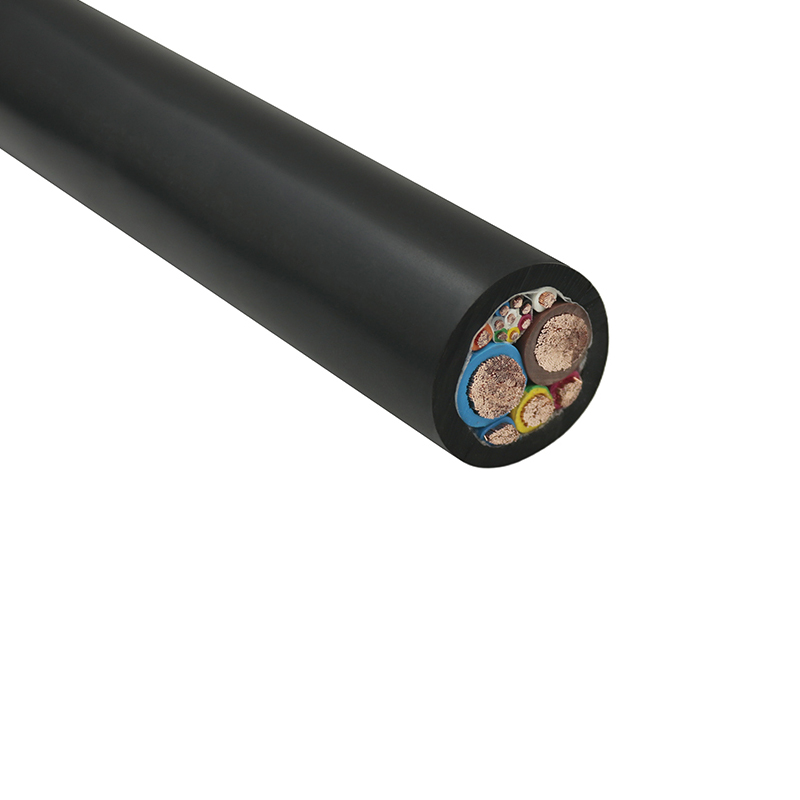
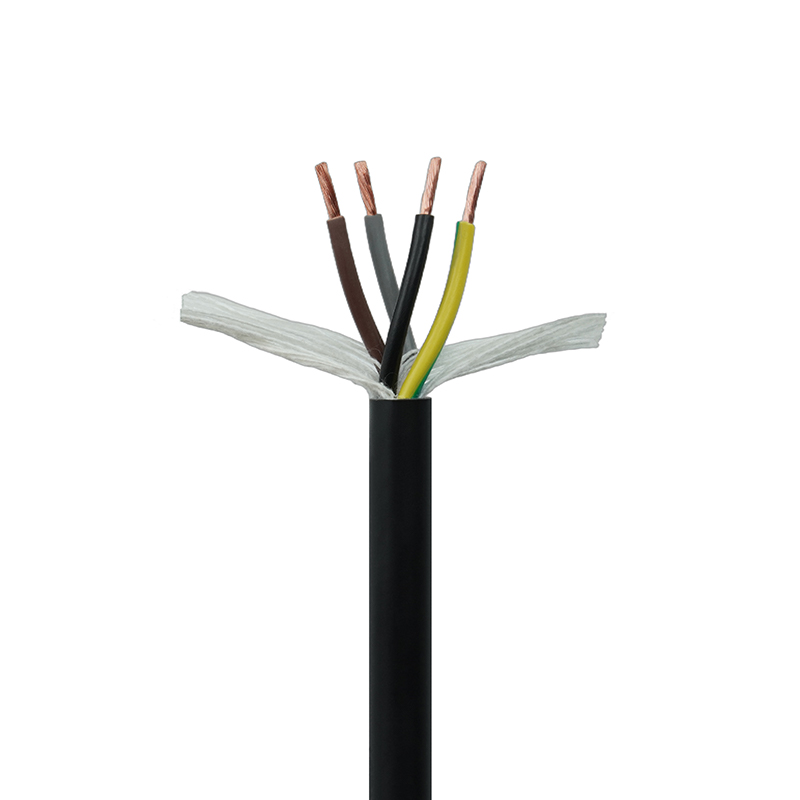
Not every cable that bends qualifies as a flexible electrical cable. The distinction lies in how the conductor is built. Standard fixed-wiring cables use solid or lightly stranded conductors — reliable when stationary, but prone to cracking or fatigue when subjected to repeated movement. Flexible cables, by contrast, use finely stranded copper conductors: dozens or even hundreds of individual wires twisted together, distributing mechanical stress across the entire bundle rather than concentrating it at one point.
Beyond the conductor, the insulation and outer sheath materials play an equally important role. Flexible cables rely on soft, elastomeric compounds — PVC, rubber, silicone, or polyurethane — that maintain their pliability across a wide temperature range without hardening or cracking over time. The result is a cable that can be routed through tight spaces, bent around corners, or cycled through millions of movements while continuing to conduct electricity safely and reliably.
In short: conductor stranding + soft insulation materials = genuine flexibility. A cable missing either element will underperform — and eventually fail — in any dynamic application.
Four Levels of Flexibility — and Why It Matters
One of the most common and costly mistakes in cable selection is treating "flexible" as a single category. There is no universal industry scale, but most cable engineers work with four practical tiers. Choosing the wrong tier means either paying a premium for performance you don't need, or — more dangerously — using an under-rated cable in a demanding application that wears it out prematurely.
| Flexibility Level | Typical Use Case | Flex Cycles |
|---|---|---|
| Static / Fixed | Conduit runs, panel wiring, building infrastructure | None — installed once |
| Occasional Flex | Appliance leads, portable tools, connection cables moved infrequently | Up to ~10,000 |
| Flexible | Machinery with periodic repositioning, wind and solar installations, cable tray applications | Up to ~1 million |
| Continuous High-Flex | Drag chains, robotic arms, reeling systems, CNC axes | 1–20 million+ |
The practical implication: a cable rated for "occasional flex" installed inside a continuously moving robotic joint will not last a season. Always match the cable's tested flex cycle rating to the actual motion profile of your equipment — and verify that rating against the manufacturer's specific test conditions, not just the label.
Common Types of Flexible Electrical Cables
Flexible cables are manufactured with different insulation and sheath materials, each optimized for a distinct set of operating conditions. Understanding the trade-offs between them is the fastest way to narrow your selection.
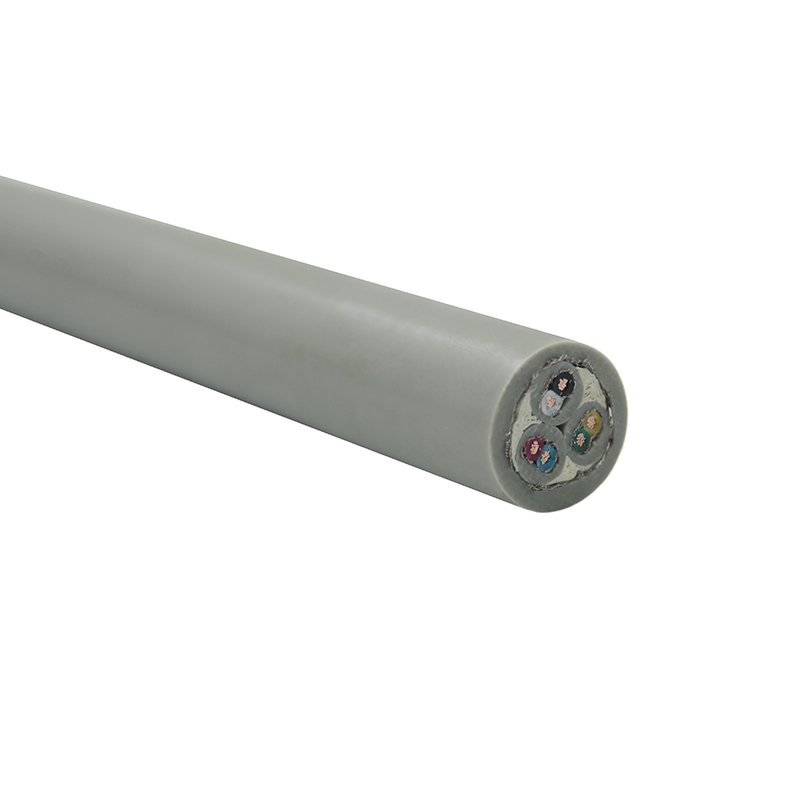
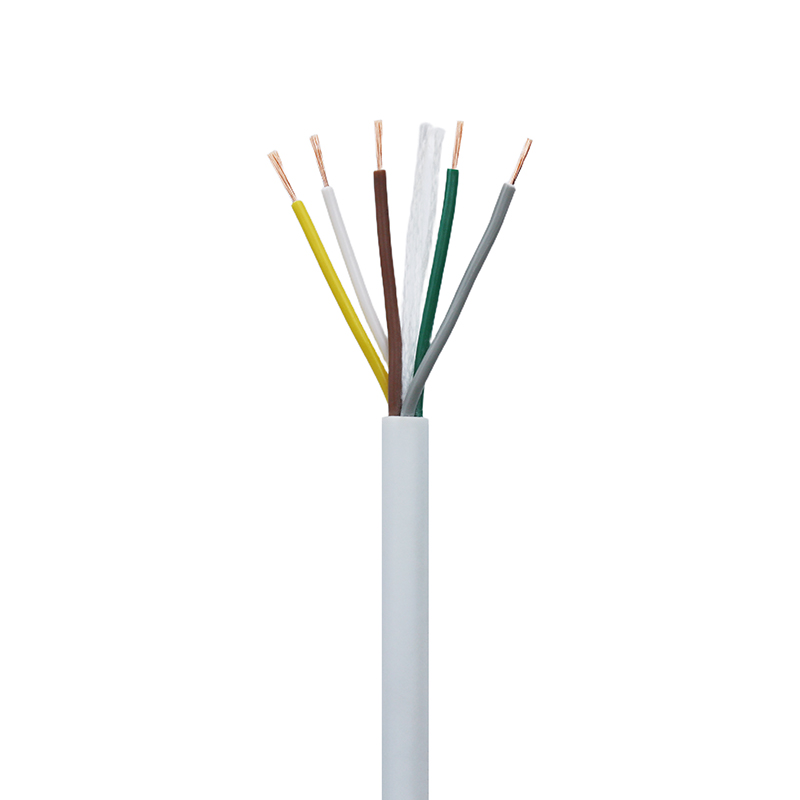
PVC (Polyvinyl Chloride) flexible cables are the most widely used type across residential, commercial, and light industrial environments. They offer solid moisture resistance, good abrasion tolerance, and a relatively low cost. For general indoor control wiring and signal connections, soft-sheath flexible cables for indoor control wiring built with PVC insulation represent a dependable and cost-effective baseline.
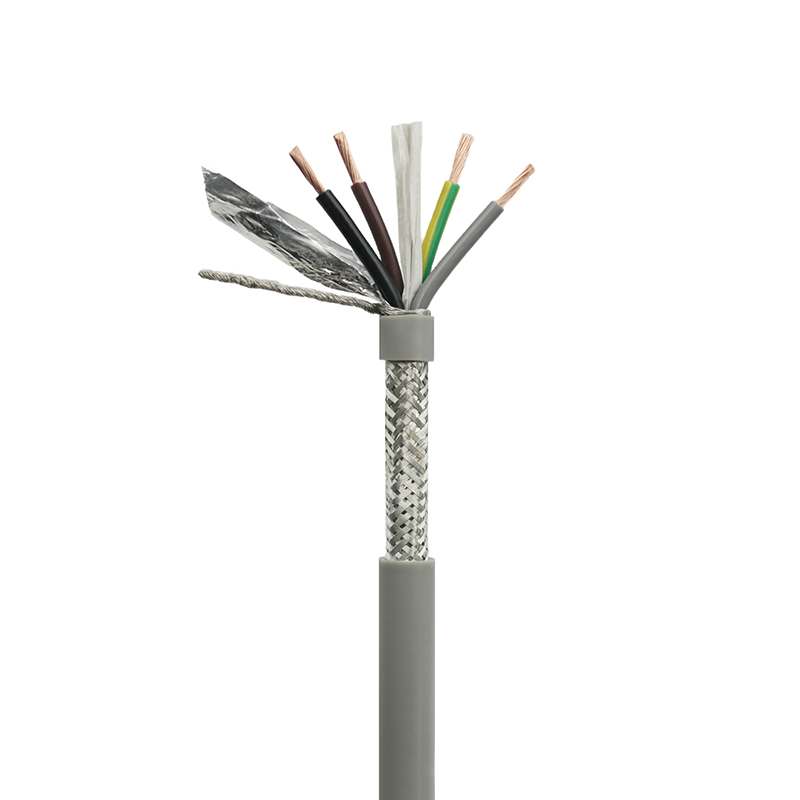
Rubber-sheathed flexible cables step up where PVC falls short — particularly in environments with exposure to oils, mechanical impact, UV radiation, or extreme temperatures. Natural and synthetic rubber compounds maintain their elasticity in conditions that would cause PVC to stiffen or crack. For outdoor equipment, construction sites, and heavy machinery, rubber-sheathed flexible cables for outdoor and heavy-duty use deliver the resilience these environments demand.
Silicone rubber cables are engineered for high-temperature applications — food processing equipment, industrial ovens, and anywhere the operating environment exceeds what PVC or standard rubber can safely handle. Their temperature range typically extends well beyond 150 °C, and they remain flexible even at very low temperatures.
Polyurethane (PUR) sheathed cables occupy a premium position in demanding industrial applications. PUR offers outstanding resistance to cutting, abrasion, and hydrolysis, combined with a high continuous flex life. They are the preferred choice for drag chain systems and harsh factory-floor environments where PVC would degrade too quickly.
| Material | Temp. Range | Oil Resistance | Abrasion Resistance | Typical Applications |
|---|---|---|---|---|
| PVC | -15 °C to +70 °C | Limited | Moderate | Indoor wiring, appliances, control panels |
| Rubber (EPR/Neoprene) | -40 °C to +90 °C | Good | Good | Outdoor equipment, welding, heavy machinery |
| Silicone | -60 °C to +180 °C | Moderate | Moderate | High-temp environments, food processing |
| Polyurethane (PUR) | -40 °C to +80 °C | Excellent | Excellent | Drag chains, robotics, continuous-flex systems |
Key Applications Across Industries
Flexible electrical cables appear wherever the wire must move with the machine rather than remain fixed in the structure. That covers more industries than most people initially expect.
Industrial automation and drag chain systems represent the most demanding use case. In CNC machining centers, linear gantries, and pick-and-place systems, cables must travel back and forth inside a drag chain at high speed and high cycle counts — sometimes for years without a break. Drag chain cables for high-cycle industrial motion are specifically engineered to survive millions of flex cycles without conductor fatigue or insulation cracking.
Robotics present a unique challenge: combined bending, torsion, and lateral movement in multiple axes simultaneously. Cables routed through robot joints must withstand torsion forces that would quickly destroy a standard flexible cable. High-flex, torsion-rated designs with finely stranded conductors and strain-relief construction are the only reliable choice.
Cranes, hoists, and reeling systems require cables that extend and retract continuously under tension. Reeling cables designed for continuous pay-out and retrieval are wound on drums and must tolerate both the cyclic bending at the drum edge and the tensile loads during operation — a combination that demands robust construction and carefully selected sheath materials.
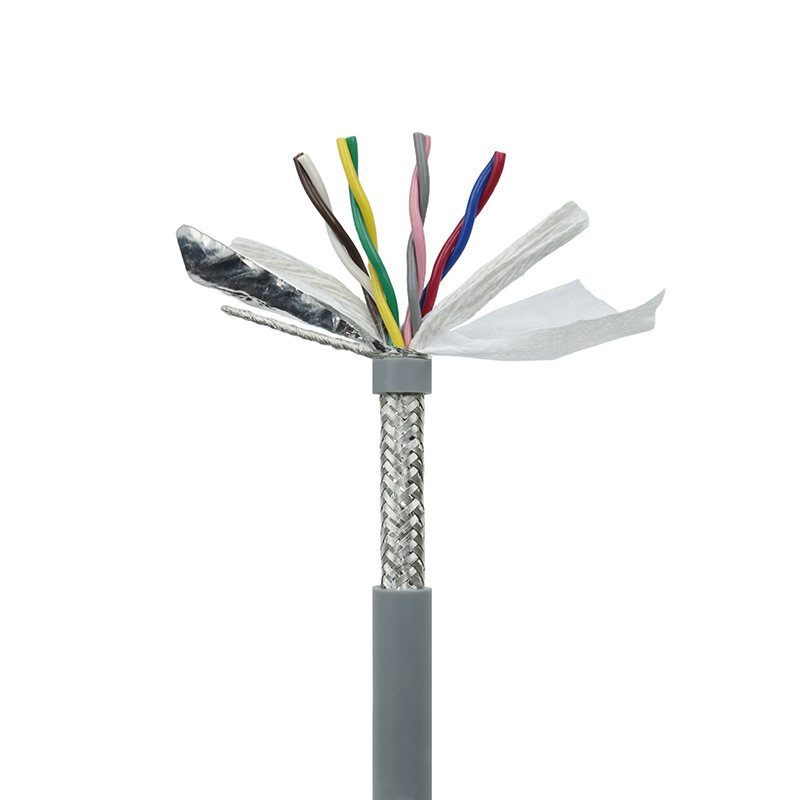
Variable frequency drives (VFDs) introduce a further complication: the high-frequency switching signals they generate create significant electromagnetic interference. VFD cables built to handle drive-generated electrical noise combine the mechanical flexibility needed for motor connections with shielded construction that suppresses EMI and protects sensitive control electronics nearby.
New energy systems — EV charging infrastructure, wind turbines, and solar installations — place their own demands on flexible cable. EV charging cables must be handled repeatedly by end users across a wide temperature range; wind power cables must withstand continuous vibration and outdoor exposure over a multi-decade service life. New energy cables for EV charging and wind power systems are engineered to meet these dual requirements of mechanical durability and electrical performance.
How to Choose the Right Flexible Cable
Selection errors are expensive. A cable that fails mid-production shuts down the line; a cable that is over-specified adds unnecessary cost to every meter purchased. Work through these five parameters in order to land on the right specification.
- Voltage and current rating. Match the cable's rated voltage to your system voltage (common ratings: 300/500 V, 450/750 V, or higher for medium-voltage applications). Then confirm the conductor cross-section provides sufficient current-carrying capacity for your load, with margin for the actual installation conditions — a cable in a conduit or bundle carries less current than the same cable in free air.
- Flexibility requirement and flex cycles. Identify your actual motion profile: static, occasional repositioning, or continuous high-cycle movement. Match this to the cable's tested flex cycle rating, and verify the test conditions (bending radius, speed, temperature) reflect your real application.
- Minimum bending radius. Every flexible cable has a minimum bending radius below which the conductor structure begins to degrade. For drag chain applications this is especially critical — the chain geometry must be compatible with the cable's specified minimum dynamic bending radius, not just the static minimum.
- Environmental conditions. Consider temperature range, UV exposure, oil and chemical contact, moisture, and mechanical impact. These factors drive the choice of insulation and sheath material more than any other single parameter.
- Certifications and regulatory compliance. Match your target market's requirements. The IEC 60227-5 international standard for PVC flexible cables governs rated voltages up to 300/500 V and defines construction, dimensional, and test requirements. UL certification covers North American markets; RoHS compliance is required across the EU and increasingly expected globally.
Flexible Cable vs. Standard Cable: A Practical Cost View
Flexible cables cost more per meter than standard fixed-wiring cables — that much is straightforward. The purchasing decision looks different, however, when viewed through total cost of ownership rather than unit price alone.
Consider a production line where cables are repositioned weekly for changeovers. A standard cable might cost 30–40% less upfront but fail within months under those conditions, requiring replacement labor, downtime, and possibly damage to connected equipment. A properly specified flexible cable, by contrast, may last for years in the same application — delivering a lower cost per operating hour despite the higher initial purchase price.
The calculation tilts further in favor of flexible cable when unplanned downtime is factored in. In automated manufacturing, even a one-hour line stoppage typically costs far more than the price difference between a standard and a high-flex cable. For any application involving repeated movement, the right flexible cable is rarely the most expensive choice over its working life.
Where standard cables remain the right answer is in genuinely static installations — building infrastructure, fixed panel wiring, or any run where the cable will never move after commissioning. In those cases, the extra cost and specialized construction of a flexible cable adds no value.