 EN
EN
 English
 русский
 Español
Type K Compensating Cable: Construction, Selection & Applications Guide
 2026.05.12
 Industry News
Content
A temperature reading is only as reliable as the signal path between the thermocouple and the measuring instrument. For Type K thermocouples — the most widely used thermocouple type in industrial processes — that path almost always runs through a Type K compensating cable. Choosing the wrong cable introduces EMF errors that no calibration routine can correct. This guide covers how these cables work, how they compare to extension cables, what the standards require, and how to make the right selection for your specific application.
What Is a Type K Compensating Cable?
A Type K compensating cable is a signal cable designed to connect a Type K thermocouple (NiCr-Ni) to a temperature controller, recorder, or data acquisition system while preserving the accuracy of the thermocouple's EMF output. It achieves this by using conductor alloys whose thermoelectric properties closely match those of the Type K thermocouple — but only within a defined ambient temperature range, typically up to 100 °C or 200 °C depending on the grade.
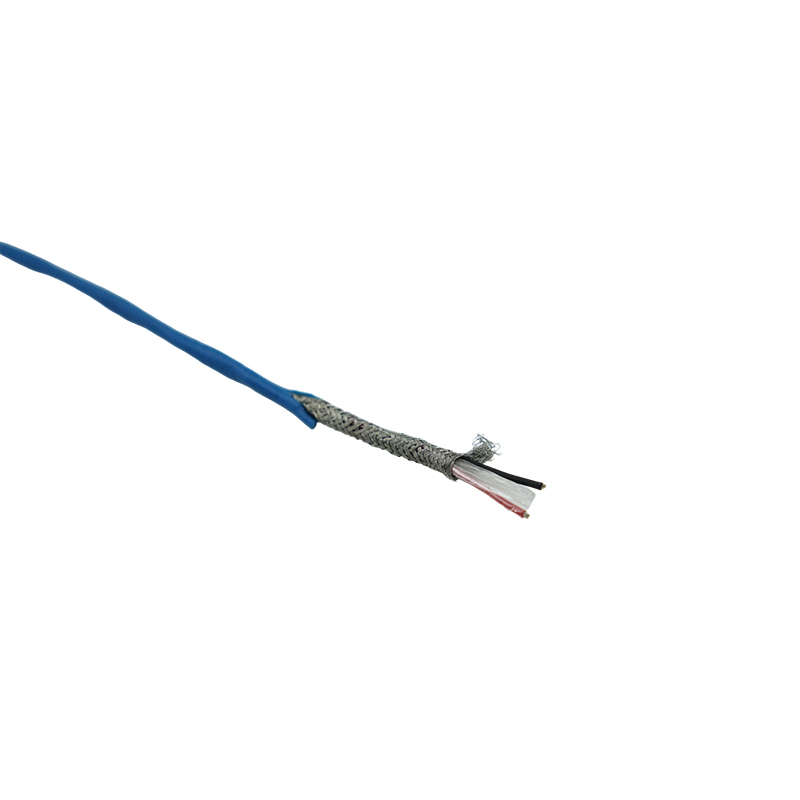
Under the IEC 60584-3 naming convention, compensating cables are designated with the letter C following the thermocouple type letter. For Type K, the cable is marked KC. This distinguishes it from extension cables, which carry the designation KX and are made from the same alloys as the thermocouple itself. The conductor polarity follows a standard color code: the positive leg uses a specific color per the IEC table, the negative leg is white, and the outer sheath matches the positive leg color — unless the circuit requires intrinsic safety, in which case a blue sheath is mandatory.
The underlying physics is straightforward: in any thermocouple circuit, any dissimilar metal junction in the signal path generates its own EMF. A compensating cable minimizes the net error from those junctions by mimicking the Type K EMF-temperature curve closely enough that any residual deviation falls within the specified tolerance band.
Compensating Cable vs. Extension Cable: Key Differences
Engineers often encounter both "compensating" and "extension" cable options for Type K thermocouples and want to know which to specify. The distinction matters more than many realize.
| Property | KC (Compensating) | KX (Extension) |
|---|---|---|
| Conductor Material | Lower-cost alloys that approximate the Type K EMF curve | Same NiCr/NiAl alloys as the thermocouple itself |
| Accuracy | Good within specified ambient range; higher tolerance band | Matches thermocouple accuracy class; tighter tolerance |
| Max. Ambient Temperature | Typically 100 °C (Grade B) or 200 °C (Grade A) | Higher — up to 200 °C or beyond depending on insulation |
| Cost | Lower — suitable for long cable runs | Higher — reserved for critical or elevated-ambient paths |
| Typical Use Case | Connecting monitoring thermocouples to control panels in normal ambient environments | High-accuracy paths or where cable routes pass through elevated temperatures |
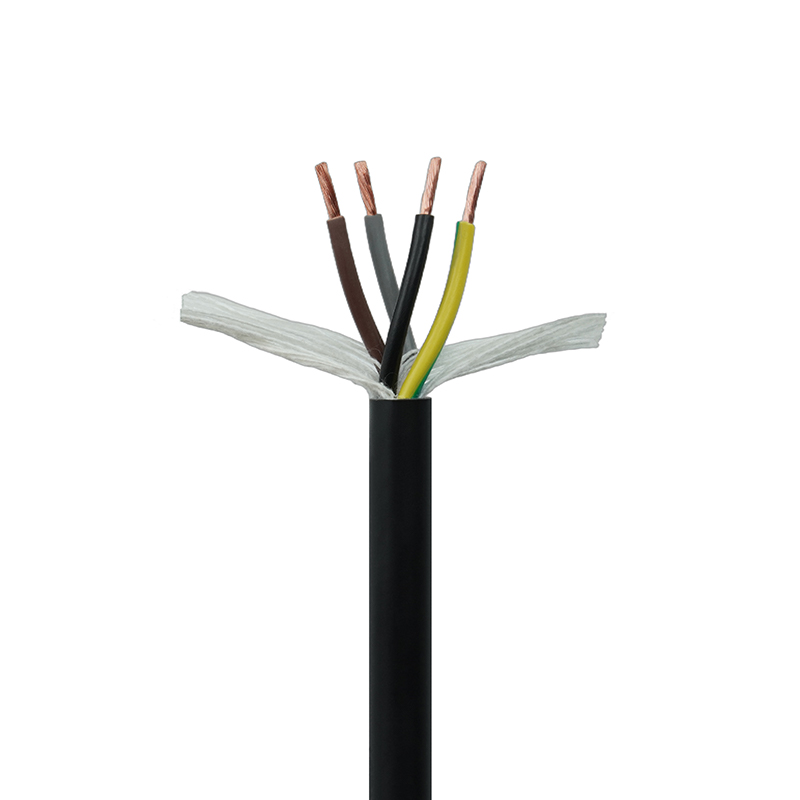
The practical rule: use a compensating cable (KC) when the cable route stays within its rated ambient temperature and the process tolerance allows it. Switch to an Type KX thermocouple extension cable with PVC insulation and sheathing when the ambient along the cable run is elevated, or when measurement uncertainty requirements are tighter than a compensating cable can satisfy.
Construction and Specifications
Understanding what goes into a Type K compensating cable helps when comparing options from different suppliers — and prevents costly mismatches between cable and environment.
Conductors
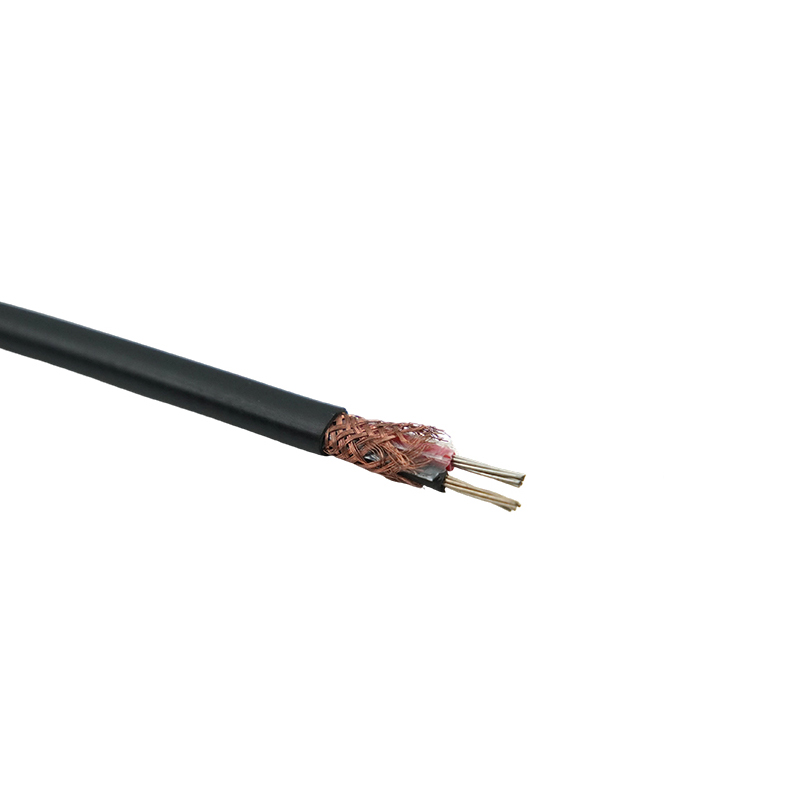
The core conductors are drawn from alloys selected to closely replicate the NiCr-NiAl EMF curve within the compensating range. Conductor cross-sections commonly available range from 0.22 mm² to 1.5 mm², with 0.5 mm² and 1.0 mm² being the most frequent choices for industrial monitoring applications. Larger cross-sections reduce resistance over long runs and improve signal integrity in noisy environments.
Insulation Options
PVC insulation is the standard choice for ambient environments up to about 80–105 °C. For cable routes that pass near heat sources or run in warm enclosures, heat-resistant PVC (rated to 105 °C) provides additional margin. Where fire resistance or chemical exposure is a concern, options include PTFE and fiberglass braid insulation — both of which also extend the usable temperature range of the cable jacket.
Shielding
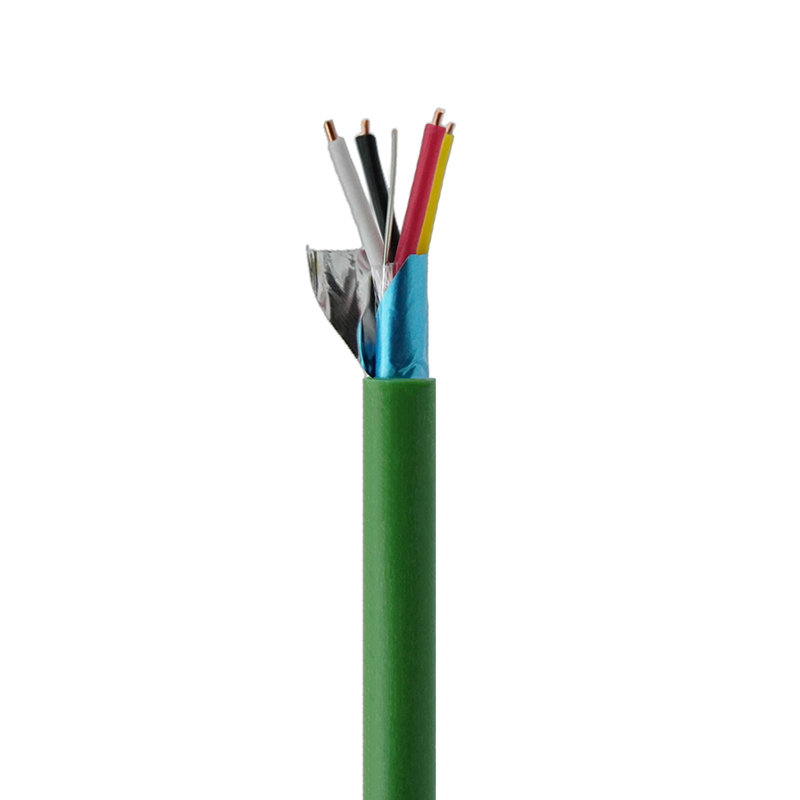
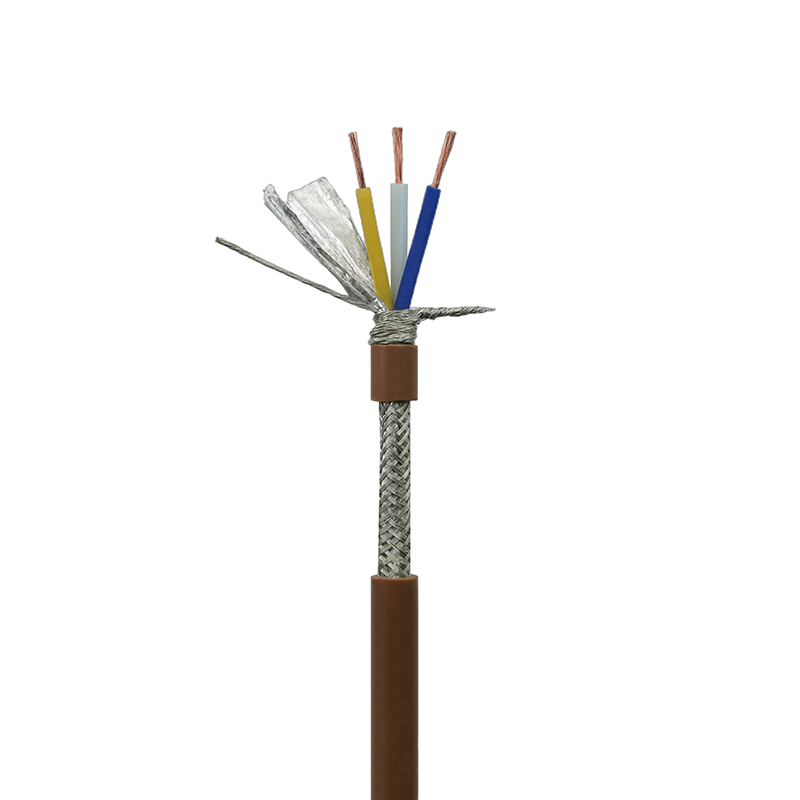
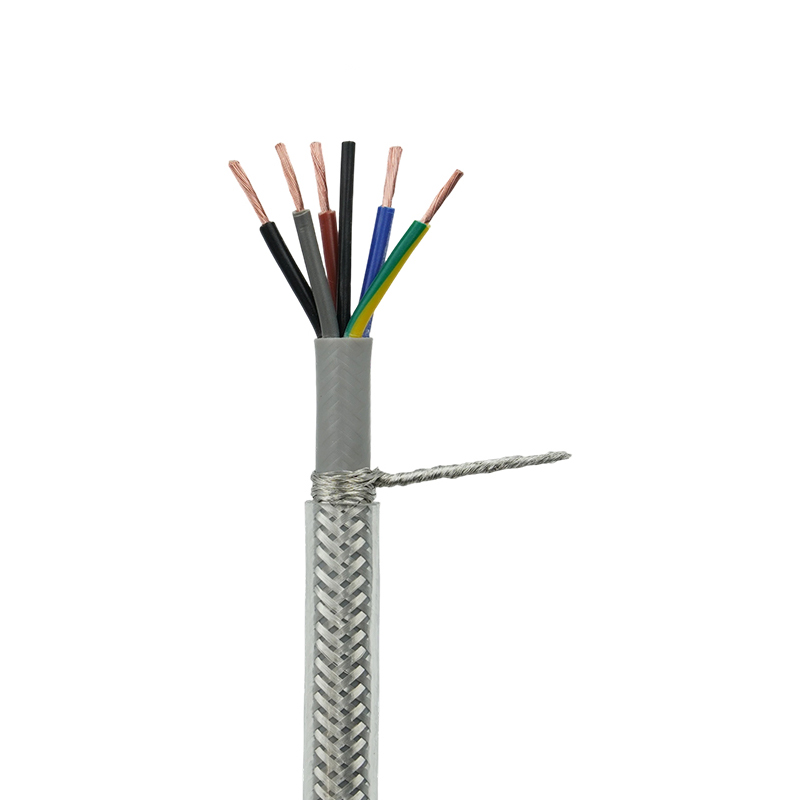
Thermocouple signals are low-level millivolt outputs, making them susceptible to electromagnetic interference from variable-frequency drives, transformers, and other industrial equipment nearby. Unshielded compensating cable is appropriate only in low-noise environments. In most industrial settings, a shielded construction is strongly recommended. For a detailed comparison of foil, braid, and spiral shielding geometries and their respective noise-rejection performance, see this overview of shielded cable construction options including foil and braid variants.
Common Specification Summary
| Parameter | Typical Range |
|---|---|
| Conductor Cross-Section | 0.22 mm² – 1.5 mm² |
| Insulation Material | PVC, Heat-Resistant PVC, PTFE, Fiberglass |
| Shielding | Unshielded / Copper Foil / Copper Braid |
| Rated Ambient Temp. (Grade B) | Up to 100 °C |
| Rated Ambient Temp. (Grade A) | Up to 200 °C |
| Number of Pairs | 1 pair (standard); multi-pair available for multi-point monitoring |
| Available Lengths | 3 m, 30 m, 100 m rolls; custom cut lengths |
Browse the full range of thermocouple compensating cables to review available configurations and request a quotation for specific cross-sections or custom lengths.
IEC 60584-3 Compliance and Color Coding
IEC 60584-3 is the governing international standard for extension and compensating cable tolerances and identification. Its third edition (2021) defines the permissible EMF deviation that a compensating cable may introduce relative to the reference EMF-temperature curve of IEC 60584-1, as well as the mandatory color-coding system that allows cables to be unambiguously identified in the field.
For Type K compensating cables, the standard specifies two tolerance classes. The tighter class is intended for precision measurement loops; the standard class covers the majority of industrial monitoring applications. Both classes define the maximum permissible temperature error that the cable adds to the overall measurement chain — a figure that must be factored into the uncertainty budget for any process where temperature control is safety-critical or quality-critical.
Color identification under IEC 60584-3 follows a consistent rule: the negative conductor is always white, the positive conductor and outer sheath use the color assigned to the thermocouple type. For a complete reference table of IEC 60584-3 color codes and tolerance values across all thermocouple types, see this detailed guide to thermocouple cable colour codes and tolerances under IEC 60584-3.
Specifying IEC 60584-3 compliance — and the specific tolerance class — in your purchase order protects you from receiving cable that meets a visual standard but misses the electrical one.
Typical Applications
Type K compensating cables appear wherever Type K thermocouples are used and the signal needs to travel more than a meter or two to reach instrumentation. In practice, that covers a broad range of industries.
Industrial Heat Treatment
Post-weld heat treatment (PWHT) of pressure vessels and pipework requires multiple monitoring thermocouples distributed across the workpiece — often 10 to 30 or more on a single job. Running individual KX extension cables for every monitoring point is cost-prohibitive; KC compensating cable is the standard solution for those secondary monitoring loops, routed back to the temperature recorder or chart recorder in the control trailer.
Furnaces and Kilns
Batch and continuous furnaces used in ceramics, metallurgy, and glass production rely on multiple Type K thermocouples to map temperature uniformity. The thermocouples themselves operate at process temperatures; the compensating cable connects them to the zone controllers or SCADA system via a cooler panel or junction box. Communication cables for industrial control systems often run in parallel in the same installation, handling setpoint commands and data logging traffic.
Process Industries and Power Generation
Boilers, heat exchangers, and steam turbines all require continuous temperature monitoring. Compensating cables in these installations often span tens of meters from the measurement point to the control room, passing through cable trays shared with power cables — a scenario that demands shielded construction and careful cable routing.
Laboratory and Test Equipment
Environmental test chambers, ovens used in materials testing, and calorimetry setups use compensating cable to connect thermocouples to data acquisition systems. Here, the emphasis shifts toward repeatability and low-noise signal transmission over mechanical robustness.
How to Select the Right Type K Compensating Cable
Narrowing down the correct specification requires answering four questions in sequence.
1. What is the maximum ambient temperature along the cable route?
If the cable never exceeds 80–100 °C, a standard PVC-insulated KC cable is the most cost-effective choice. If portions of the cable route pass through areas that reach 100–200 °C — near furnace walls, inside heated enclosures, or adjacent to hot pipework — select Grade A cable with heat-resistant insulation. If the route passes through zones that exceed 200 °C, a KX extension cable or a thermocouple-grade mineral-insulated cable is required instead. For particularly aggressive environments, a rubber-sheathed flexible cable for demanding industrial environments may be the appropriate outer protection layer.
2. What accuracy class does the measurement loop require?
Most industrial monitoring applications — process control, heat treatment verification, furnace surveys — can tolerate the standard IEC 60584-3 tolerance class for compensating cables. If the loop feeds a safety instrumented system or a quality-critical measurement with a tight uncertainty budget, specify the tighter tolerance class or switch to a KX extension cable.
3. How much electromagnetic interference is present?
Any installation with nearby VFDs, contactors, welding equipment, or high-current power cables should use shielded KC cable. A copper braid shield provides the best coverage (typically 85–95% optical coverage); a foil shield is lighter and easier to route but offers less mechanical durability. The shield must be grounded at one end only — grounding both ends creates a ground loop that introduces exactly the kind of noise the shield is supposed to eliminate.
4. What is the cable run length and conductor cross-section needed?
Longer cable runs increase the DC resistance of the signal path, which can introduce small offset errors in some instrument input types. For runs exceeding 50 m, using a 1.0 mm² or 1.5 mm² conductor rather than 0.5 mm² keeps loop resistance well within the instrument's input specification. Multi-pair cables are available for multi-point monitoring installations where routing individual cables for each thermocouple would be impractical.
Why Source from a Specialized Cable Manufacturer
Type K compensating cable is not a commodity item in the same sense as general-purpose control cable. The conductor alloy composition, the tightness of the extrusion tolerances on the insulation, and the quality of the shielding all directly affect measurement accuracy — and none of those parameters are visible on a finished reel of cable without test data.
A manufacturer that specializes in thermocouple and instrumentation cables can provide batch-level calibration data, confirm IEC 60584-3 tolerance class compliance, and offer custom configurations — non-standard cross-sections, specific sheath colors for installation identification, multi-pair constructions, or cut-to-length supply — without the minimum order quantities that standard distribution imposes.
Fast lead times and flexible order quantities matter particularly in heat treatment and maintenance applications, where cable requirements are often known only days before a job starts. Working directly with a cable manufacturer removes the distribution layer and the inventory constraints that come with it.
To discuss your specific requirements — conductor cross-section, insulation type, shielding, length, and quantity — contact us or explore the complete product range on our full range of thermocouple compensating cables page.