 EN
EN
 English
 русский
 Español
Robot Cable Manufacturer | High-Flex Cables for Industrial Robotics
 2026.05.09
 Industry News
Content
- 1 Why Robot Cables Demand a Different Standard
- 2 Core Properties That Define a High-Performance Robot Cable
- 3 Types of Robot Cables: Matching the Right Cable to Your Application
- 4 Materials and Construction: What Sets Quality Apart
- 5 How to Evaluate a Robot Cable Manufacturer
- 6 Ready to Source Robot Cables That Last?
Why Robot Cables Demand a Different Standard
A single industrial robot arm can repeat the same motion five million times before its first scheduled maintenance. Every one of those cycles puts mechanical stress on the cables routed through it — bending, twisting, stretching, and compressing in patterns that would destroy a standard wire within weeks. The cables, in other words, must outlast the harshest conditions the machine itself can produce.
This is not a niche concern. According to the International Federation of Robotics' World Robotics 2025 Report, global industrial robot installations reached 542,000 units in 2024 — more than double the figure recorded a decade ago. With over 4.6 million robots now in active operation worldwide, the demand for cables engineered specifically for robotic environments has never been greater. Choosing the wrong supplier doesn't just risk cable failure; it risks unplanned downtime across an entire production line.
A qualified robot cable manufacturer understands this pressure and builds every product around it — not as a marketing claim, but as an engineering baseline.
Core Properties That Define a High-Performance Robot Cable
Robot cables fail in ways that general-purpose cables never encounter. The failure modes are specific: conductor fatigue from repeated micro-bending, insulation cracking under torsional load, shield breakdown from abrasion, and jacket embrittlement caused by heat or chemical exposure. A cable designed for robotic use must resist all of these simultaneously.
The properties that matter most are:
- Bending cycle endurance — Premium robot cables are rated for 5 million or more bending cycles, far beyond the capacity of standard flexible cables. This rating must be validated at a defined bend radius, typically expressed as a multiple of the cable's outer diameter.
- Torsional resistance — Robot arms rotate in three dimensions. Cables in these applications must withstand torsional stress of ±180° per meter or more without conductor fatigue or jacket delamination.
- Temperature range — Industrial environments routinely expose cables to heat from servo drives, welding arcs, and ambient machinery. Quality robot cables operate reliably across a range of at least −30°C to +90°C; high-temperature variants extend well beyond that.
- Chemical and media resistance — Welding spatter, cutting oils, hydraulic fluids, and industrial cleaners are standard hazards. The cable jacket must resist surface degradation from all of them without becoming brittle or losing flexibility.
- EMI shielding integrity — Signal cables in robotic systems carry precision control data. A braided or served copper shield must maintain electrical continuity throughout the cable's full range of motion to prevent signal noise from corrupting position feedback or communication protocols.
These are not optional features. They define the minimum performance floor for any cable used in a robotic application.
Types of Robot Cables: Matching the Right Cable to Your Application
No single cable type serves every robotic need. The right choice depends on the robot's motion profile, the signals and power levels it handles, and the environment it operates in. Here is a practical breakdown of the main categories.
Drag Chain Cables (Energy Chain Cables)
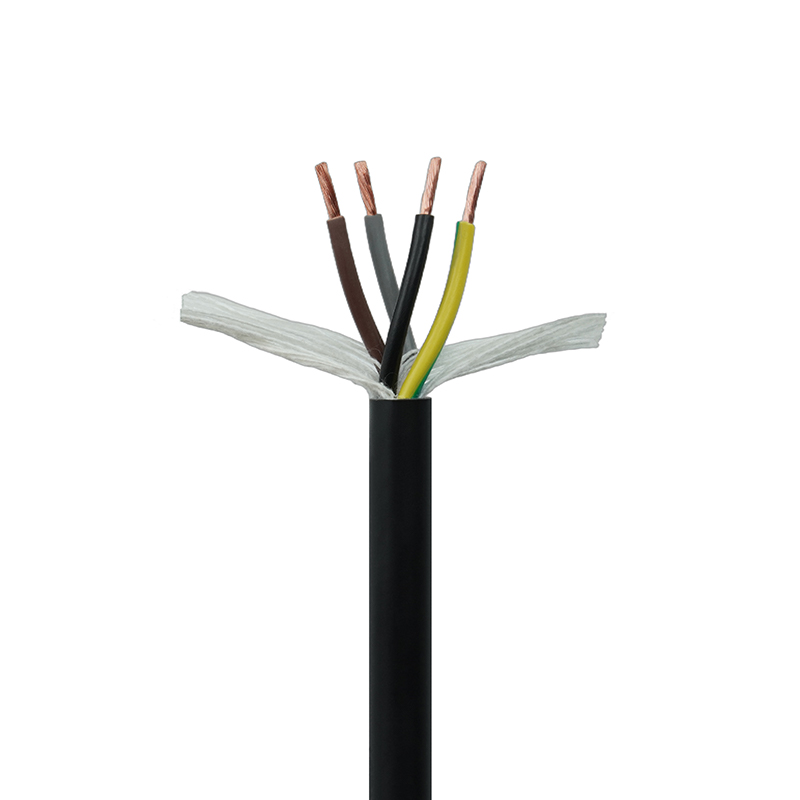
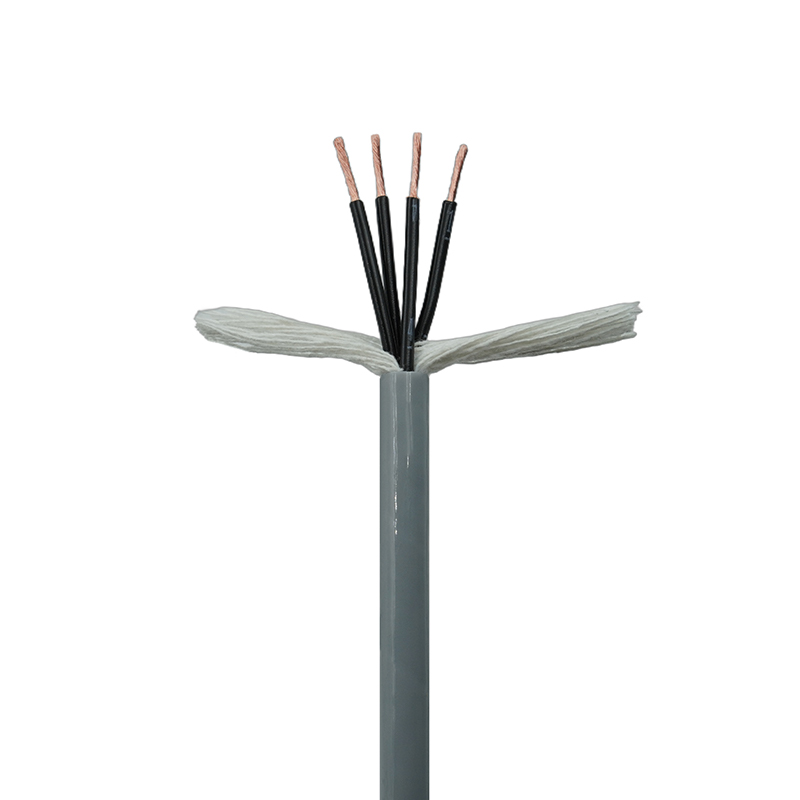
Used wherever cables must travel back and forth within a guided track, drag chain cables are built for relentless linear bending cycles. The conductors are stranded in a configuration that distributes stress evenly, and the jacket — typically polyurethane (PUR) — is selected for both flexibility and abrasion resistance. These are the standard choice for gantry robots, CNC systems, and linear axis applications. For demanding applications in continuous motion, highly flexible drag chain cables designed for continuous motion provide the structural integrity needed across millions of cycles. A commonly specified variant is the high-flex control drag chain cable, which combines power and control conductors in a single durable jacket.
Torsion Cables (Robotic Arm Cables)
Six-axis robotic arms twist their cables in multiple planes simultaneously. Torsion cables are designed specifically for this: the conductor stranding, lay length, and jacket compound are all engineered to distribute torsional stress without causing internal damage over time. These cables are common in welding robots, assembly robots, and any articulated arm that rotates at the wrist or elbow.
Control and Signal Cables
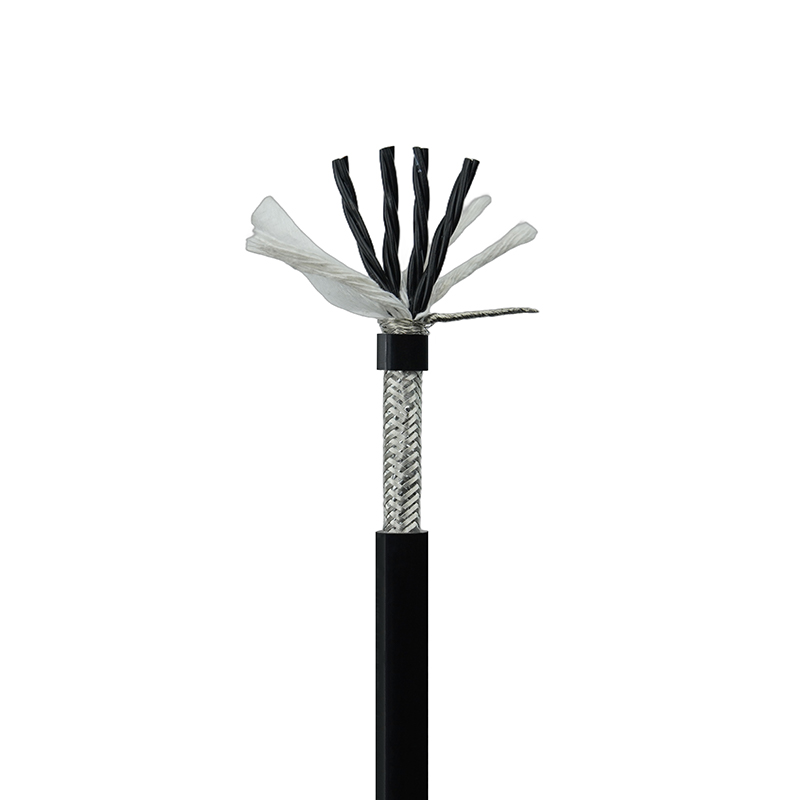
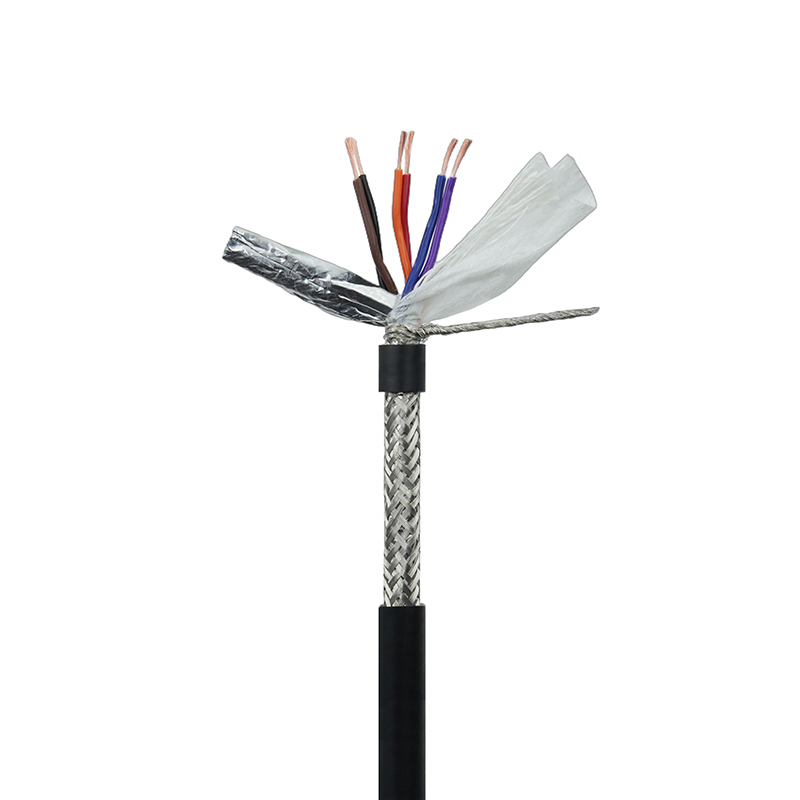
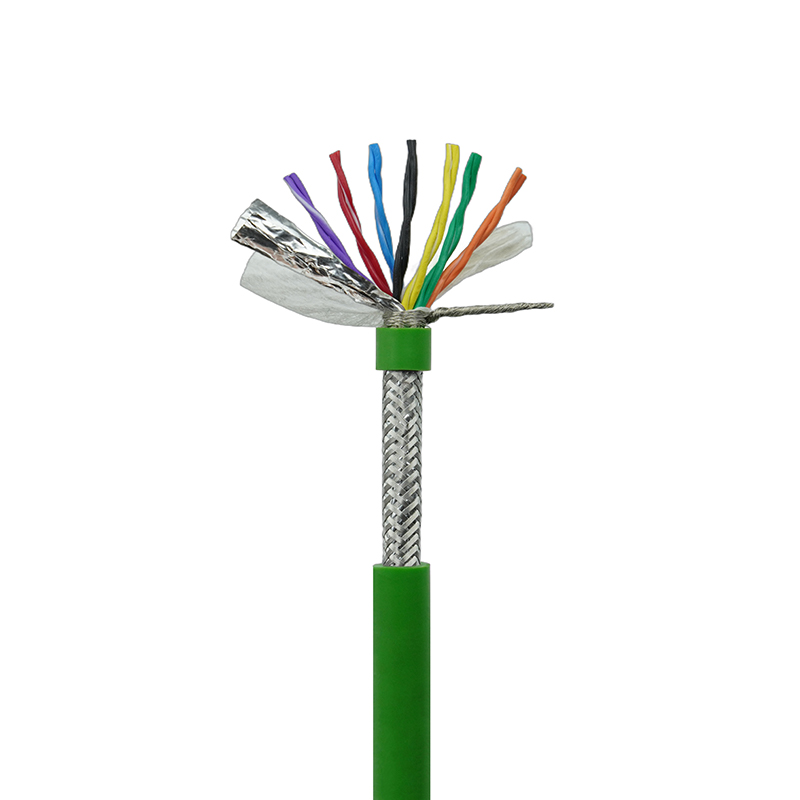
These carry encoder feedback, sensor signals, and digital bus data — information where signal integrity is non-negotiable. Shielded twisted pairs protect against electromagnetic interference, and the overall construction must maintain consistent impedance characteristics even under repeated flexing. Industrial communication cables for control systems cover a range of bus protocols including RS-485, CC-Link, and KNX, each suited to different automation architectures.
VFD and Motor Power Cables
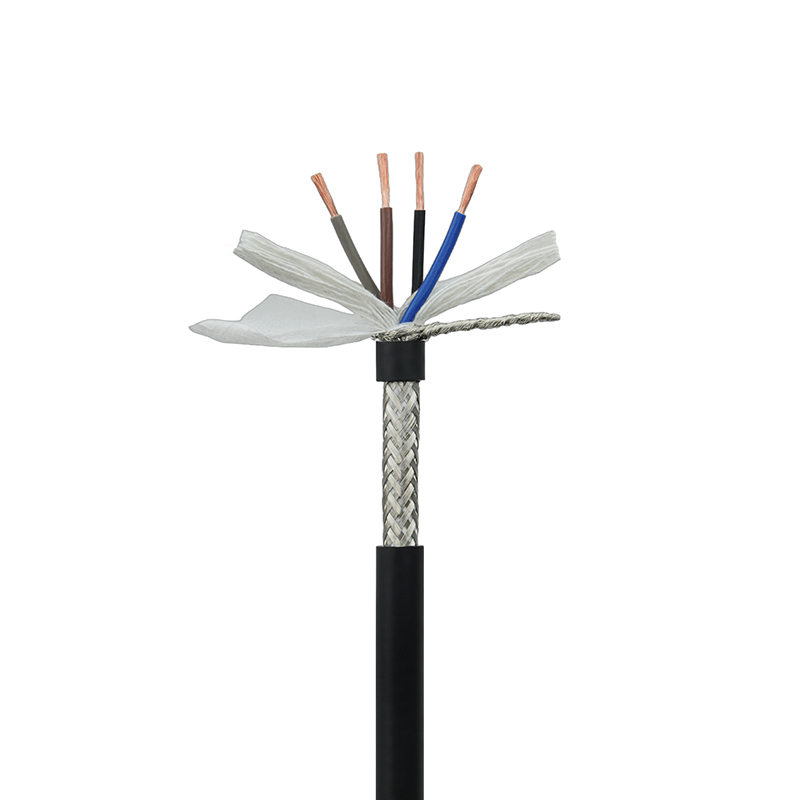
Variable frequency drives generate high-frequency switching noise that can damage poorly shielded power cables and corrupt nearby signal lines. VFD cables optimized for servo drive applications use heavy shielding and specialized insulation to suppress this interference while delivering clean power to servo motors across the full speed range.
Hybrid Cables
Combining power, signal, and sometimes pneumatic elements in a single outer jacket, hybrid cables reduce cable count inside a robot arm — which simplifies dress packs, reduces weight, and improves cable management. They are increasingly common in collaborative robots and compact automation cells where space is limited.
Materials and Construction: What Sets Quality Apart
Two cables can look identical on the outside and perform completely differently under load. The difference almost always comes down to material selection and construction discipline.
Conductor Design
High-flex robot cables use finely stranded copper conductors — often with hundreds of individual wires per conductor, each very thin — rather than the coarser stranding found in standard flexible wire. This fine stranding distributes bending stress across a larger surface area, dramatically reducing the per-wire fatigue load and extending the cable's operational life. For applications requiring extreme flexibility, soft sheath flexible cables with copper-core construction offer an additional layer of compliance under repeated bending.
Insulation and Jacket Materials
PVC is the standard choice for fixed-installation cables. For robotic applications, polyurethane (PUR) is generally the better option: it remains flexible at low temperatures, resists oil and most industrial chemicals, and handles abrasion far better than PVC. In environments with welding spatter or extreme heat, specialty compounds such as cross-linked polyethylene (XLPE) or silicone may be specified.
Shielding Architecture
Braided copper shields provide the broadest EMI coverage and maintain their effectiveness even when the cable flexes. Served (spiral) shields are more flexible but can open slightly under repeated torsion — a meaningful concern for articulated arm applications. High-end robot cables often combine both: a served shield for flexibility and a braided outer shield for EMI performance. The shield should be made from tinned or high-conductivity copper alloy to prevent corrosion from moisture or chemicals over time.
Structural Geometry
Beyond materials, how the cable is built matters. The lay length (how tightly conductors are twisted), the core filler (which maintains round cross-section under bending), and the orientation of shield wraps all affect how the cable behaves under motion. A well-engineered robot cable is not assembled — it is designed, with every layer calculated for the specific motion profile it will face.
How to Evaluate a Robot Cable Manufacturer
The robotics cable market includes suppliers ranging from engineering-led specialists to generic resellers applying robotic labels to standard flexible wire. The distinction matters enormously when the cable is inside a robot running 24 hours a day. Here is what to look for when qualifying a manufacturer.
| Evaluation Area | What to Ask | Why It Matters |
|---|---|---|
| Certifications | UL, CE, RoHS, ISO 9001 — which are current and verifiable? | Confirms compliance with regional safety and quality standards |
| Test Data | Can they provide bending cycle test reports and torsion test records for specific products? | Separates rated performance from claimed performance |
| Customization Capability | What is the minimum order for custom constructions? How long does prototyping take? | Critical for OEM applications with non-standard requirements |
| Material Traceability | Can they trace conductor and jacket materials back to the raw material supplier? | Protects against substitution and supports quality audits |
| Lead Times | What are typical lead times for standard stock vs. custom orders? | Affects production scheduling and inventory risk |
| Technical Support | Is there an engineering team available for application review before ordering? | Prevents specification errors that lead to premature cable failure |
One additional consideration: manufacturers who produce cables exclusively for industrial motion applications tend to have more refined processes than those who offer robotic cables as one line among hundreds. Specialization drives the engineering discipline that high-reliability applications require.
Ready to Source Robot Cables That Last?
Robotic automation is a long-term capital investment. The cables inside those systems should be treated the same way — specified carefully, sourced from a manufacturer with demonstrable technical capability, and matched precisely to the motion environment they will operate in. A cable failure in a robotic cell is rarely just a cable problem. It is a production stoppage, a maintenance event, and often a root-cause investigation that traces back to an underspecified component.
Explore our full cable product range to find constructions suited to your robot's specific requirements, or contact our technical team directly to discuss custom specifications, certifications, and lead times. We build cables for environments where failure is not an option.