 EN
EN
 English
 русский
 Español
2 Wire Ampacity: Copper vs. Aluminum Ratings, NEC Standards & Selection Guide
 2026.04.27
 Industry News
Content
When sizing conductors for any electrical system, knowing the ampacity of your wire is non-negotiable. Use too small a gauge and you risk overheating, insulation failure, or fire. Choose correctly and your system runs safely, efficiently, and within code. This guide covers everything you need to know about 2 AWG wire ampacity — from NEC-rated tables to real-world installation factors and industrial cable selection tips.
What Is Wire Ampacity and Why Does It Matter
Ampacity refers to the maximum amount of electrical current a conductor can carry continuously under defined conditions without exceeding its temperature rating. The term combines "ampere" and "capacity," and it is the single most important parameter when selecting wire or cable for any circuit.
Exceeding a conductor's ampacity causes resistive heating. Over time, this degrades insulation, weakens connections, and — in worst-case scenarios — triggers electrical fires. National and international electrical codes exist precisely to prevent this: by specifying maximum allowable current for each conductor size, material, and installation method, they give engineers and electricians a reliable safety baseline.
In the United States, the primary reference is NEC Table 310.16 (National Electrical Code), which lists allowable ampacities for insulated conductors rated up to 2,000 V in conduit or buried applications, based on an ambient temperature of 30°C (86°F). Understanding how to read and apply this table — along with its correction factors — is the foundation of safe wiring practice.
2 AWG Wire Ampacity: Copper vs. Aluminum
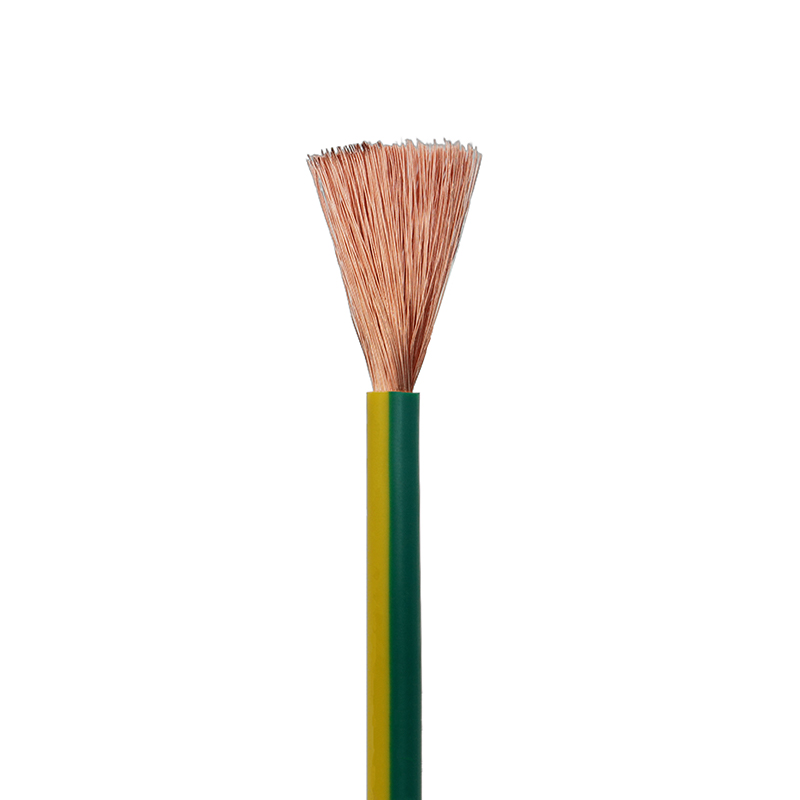
2 AWG is a large-diameter conductor widely used for service entrances, subpanel feeders, large appliance circuits, and industrial equipment connections. Its ampacity varies based on two primary variables: conductor material (copper or aluminum) and insulation temperature rating.
The table below summarizes standard 2 AWG ampacity values based on NEC 310.16, assuming no more than three current-carrying conductors in a raceway or cable and an ambient temperature of 30°C.
| Conductor | Insulation Type | Temp. Rating | Ampacity (A) |
|---|---|---|---|
| Copper | TW, UF | 60°C | 95 |
| Copper | RHW, THHW, THW, THWN, XHHW, USE | 75°C | 115 |
| Copper | TBS, SA, SIS, THHN, THWN-2, RHH, RHW-2, USE-2, XHH, XHHW-2 | 90°C | 130 |
| Aluminum | TW, UF | 60°C | 75 |
| Aluminum | RHW, THHW, THW, THWN, XHHW, USE | 75°C | 90 |
| Aluminum | TBS, SA, SIS, THHN, THWN-2, RHH, RHW-2, USE-2, XHH, XHHW-2 | 90°C | 100 |
A few key takeaways from this comparison. First, copper consistently outperforms aluminum at every temperature grade — a 90°C copper conductor carries 30% more current than its aluminum equivalent at the same gauge. Second, upgrading insulation temperature rating from 60°C to 90°C yields a meaningful ampacity gain: 37% for copper (95 A → 130 A) and 33% for aluminum (75 A → 100 A). Third, while aluminum is more economical by weight, its lower conductivity means you'll often need to step up one gauge size to match the ampacity of copper — an important trade-off in large runs where material cost is significant.
For projects requiring UL certified cables, always verify that the specific product listing matches the insulation type and temperature class you're sizing for, as UL listing conditions can affect the applicable ampacity.
Key Factors That Affect 2 AWG Ampacity
The values in NEC Table 310.16 represent baseline ratings under controlled conditions. In practice, several installation variables require you to apply correction or adjustment factors before finalizing conductor selection.
Ambient Temperature
NEC ampacity tables assume 30°C ambient. In hotter environments — such as rooftop installations, engine rooms, or industrial furnace areas — the available ampacity decreases. NEC provides temperature correction multipliers; for example, a 90°C-rated copper conductor derated at 50°C ambient would be multiplied by approximately 0.87, reducing its effective ampacity from 130 A to roughly 113 A. Always apply these corrections when the installation environment exceeds 30°C.
Number of Conductors in a Raceway
When more than three current-carrying conductors share a conduit or cable assembly, mutual heating reduces each conductor's ability to dissipate heat. NEC Table 310.15(C)(1) specifies adjustment factors: four to six conductors require a 0.80 multiplier; seven to nine conductors require 0.70, and so on. This is particularly important in multi-circuit conduit runs common in industrial panel wiring.
Installation Method: Conduit vs. Free Air
Conductors installed in free air dissipate heat more readily than those pulled through conduit or buried underground. NEC Table 310.17 provides free-air ampacity ratings, which are generally higher than those in Table 310.16. For instance, a 90°C copper 2 AWG conductor in free air can carry up to 170 A — significantly more than the 130 A conduit rating.
Insulation and Jacket Material
Beyond temperature class, the physical composition of the insulation matters. PVC insulation is the most common and cost-effective, but it softens at elevated temperatures and can crack in cold environments. Cross-linked polyethylene (XLPE) offers superior thermal stability and chemical resistance. Polyurethane (PUR) jackets provide exceptional flexibility and abrasion resistance — critical in dynamic applications such as drag chains or reeling systems where the cable is in constant motion.
Common Applications for 2 AWG Wire
2 AWG conductors occupy a practical middle ground: large enough to handle substantial current loads, yet manageable in terms of bend radius and installation labor. Common application areas include the following.
Residential and Commercial Service Entrances. A 2 AWG copper conductor at 75°C is rated for 115 A, making it well-suited for service entrance connections in mid-sized residential buildings or light commercial occupancies. In dual-service configurations, paired 2 AWG runs provide the necessary capacity for typical household demand.
Large Circuit Loads. High-draw appliances — central air conditioners, electric water heaters, large EV chargers, and industrial-grade HVAC equipment — frequently require 2 AWG feeders. When the load is close to 100 A, the higher ampacity of a 90°C-rated conductor may allow the designer to avoid stepping up to 1 AWG, saving material cost.
Solar, Battery, and Backup Power Systems. Off-grid and grid-tied solar installations, battery banks, and backup generator connections often use 2 AWG for trunk runs between inverters, charge controllers, and distribution panels. In these DC applications, voltage drop over long cable runs is a critical secondary consideration alongside ampacity.
Industrial Equipment Feeders. Factory automation systems, CNC machinery, and heavy-duty motors regularly draw 80–120 A at operating load. 2 AWG is commonly specified as the feeder conductor for these loads, especially where the distance from the distribution panel to the equipment is short enough to keep voltage drop within the 3% guideline.
Choosing the Right 2 AWG Cable for Industrial Use
Standard building wire — THHN or XHHW pulled through conduit — is adequate for fixed installations in controlled environments. However, industrial applications introduce demands that go well beyond static wiring: continuous flexing, exposure to oils and chemicals, wide temperature swings, high-frequency electrical noise, and mechanical stress from vibration or movement. In these scenarios, conductor ampacity is just one specification in a broader selection matrix.
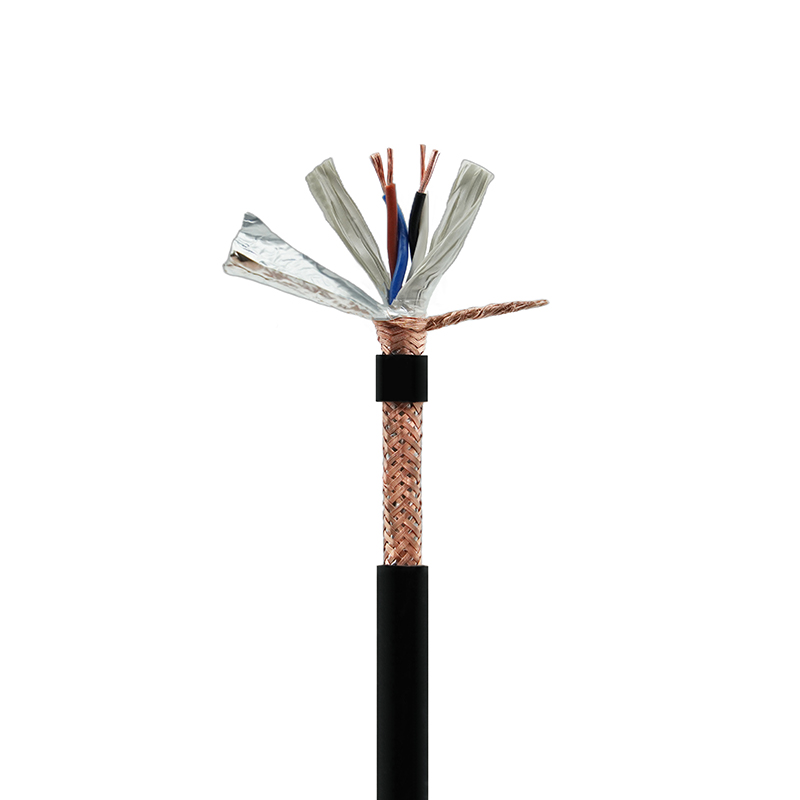
For variable-frequency drive (VFD) systems powering motors in the 2 AWG range, a standard THHN conductor in conduit is often insufficient. VFDs generate high-frequency harmonics and common-mode noise that can cause premature insulation degradation and interference with nearby control circuits. A purpose-built VFD cable with symmetrical grounding conductors, foil and braid shielding, and robust insulation is the correct choice, preserving both system performance and conductor longevity.
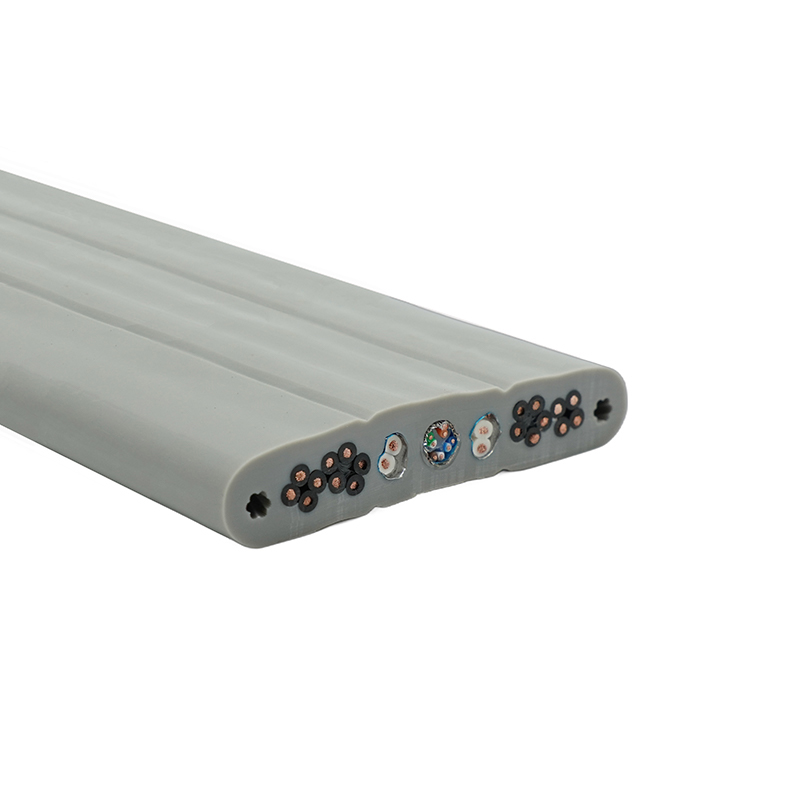
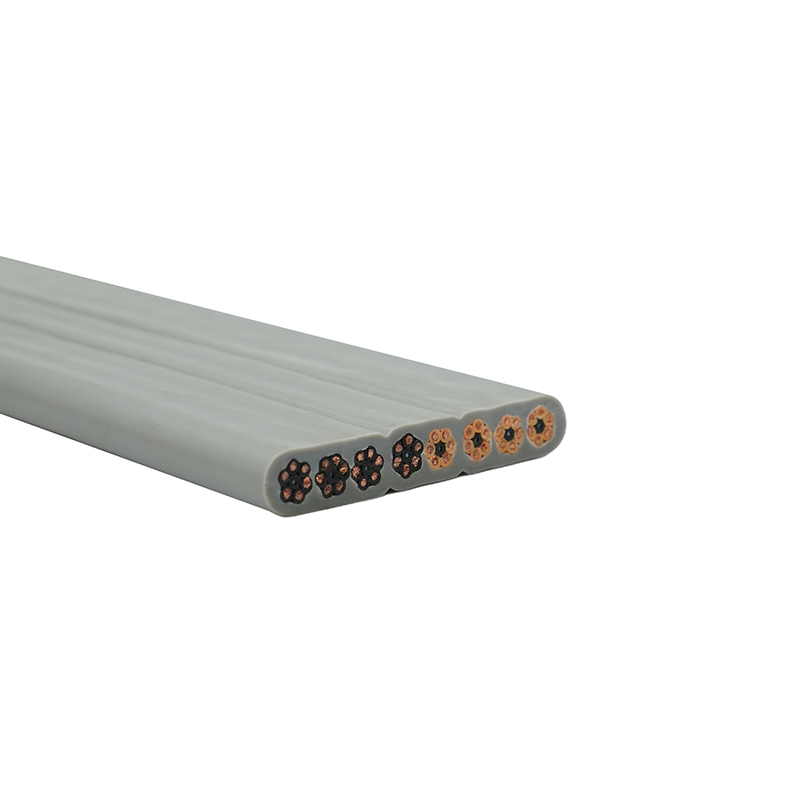
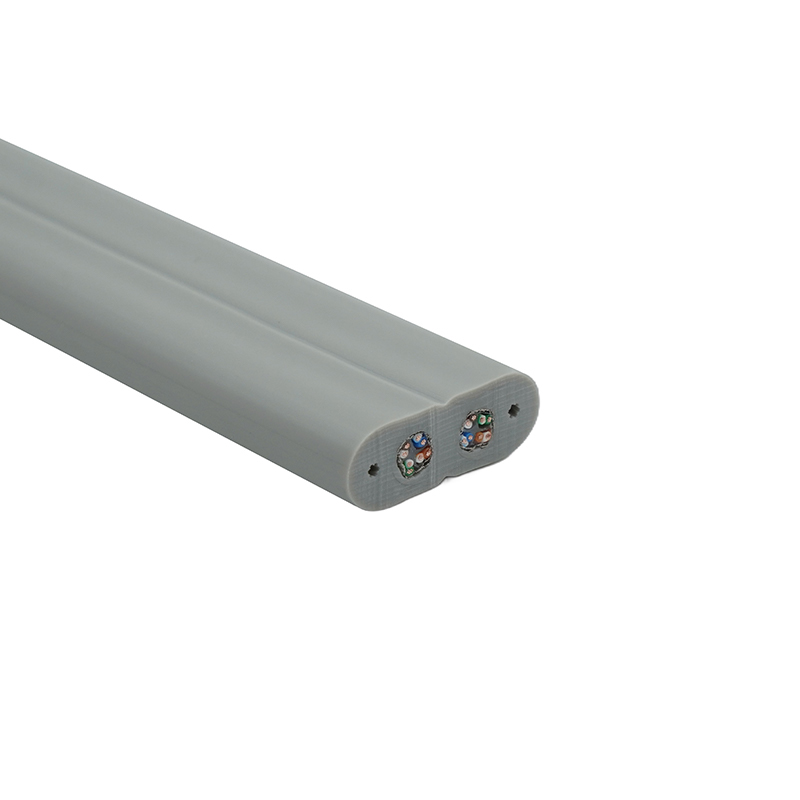
In applications where cables are routed through drag chain systems — robotic arms, gantry cranes, automated storage and retrieval systems — the cable must withstand millions of flex cycles without conductor fatigue or insulation cracking. A standard 2 AWG conductor will fail quickly in these conditions. A purpose-engineered drag chain cable uses finely stranded conductors, flexible insulation compounds, and a tough outer jacket precisely optimized for repetitive bending.
Similarly, for applications involving outdoor exposure, moisture ingress, or aggressive chemical environments, a rubber sheathed cable offers significantly better environmental resistance than PVC-jacketed building wire. Rubber compounds maintain flexibility across a wider temperature range and resist cracking under UV exposure — important for outdoor machinery, marine equipment, or foundry environments.
The underlying principle is straightforward: match not just the electrical rating but also the mechanical and environmental demands of the application. A cable that meets the ampacity requirement but fails mechanically within months creates far greater cost and safety risk than a properly specified product from the outset.
Final Tips for Safe and Code-Compliant Wiring
Selecting the correct 2 AWG conductor ampacity rating is a multi-step process. Before finalizing any conductor selection, work through the following checklist.
- Start from NEC Table 310.16 (or 310.17 for free-air installations) to establish the baseline ampacity for your chosen conductor material and insulation temperature class.
- Apply ambient temperature correction factors if the installation environment exceeds 30°C.
- Apply conductor bundling adjustment factors if more than three current-carrying conductors share a raceway or cable assembly.
- Check voltage drop independently — especially for runs exceeding 30 meters — and upsize the conductor if needed to stay within the 3% guideline.
- Verify that the overcurrent protection device (breaker or fuse) rating does not exceed the derated ampacity of the conductor.
- For industrial or dynamic applications, evaluate mechanical requirements (flex life, chemical resistance, shielding) in addition to electrical ratings.
- Always use UL-listed or otherwise certified cable products to ensure the ampacity rating on the label has been independently verified.
Following this process ensures your conductor selection is not only theoretically correct but also safe, durable, and compliant with applicable electrical codes. When in doubt — particularly in complex industrial systems or high-stakes installations — consult a licensed electrician or electrical engineer, and work with a cable manufacturer that can provide certified, application-specific products.