 EN
EN
 English
 русский
 Español
VFD Cable Requirements: Shielded & Flexible Cable Manufacturer Guide
 2026.01.06
 Industry News
Content
- 1 Why VFD cable requirements are different from standard motor leads
- 2 Core VFD cable requirements that you should specify in every RFQ
- 3 Shielded VFD cable: when it is required and how to specify it
- 4 Flexible VFD cable: what to check beyond “it bends”
- 5 A practical table for selecting shielded VFD cable by application scenario
- 6 How to evaluate VFD cable manufacturers without relying on marketing claims
- 7 Example construction: XLPE insulation + PVC sheath + copper braid shield
- 8 Common VFD cable issues and practical corrective actions
- 9 Conclusion: define VFD cable requirements in measurable terms
Variable frequency drives (VFDs) improve efficiency and control, but they also create a harsher electrical environment for the cable between the drive and motor. If you are comparing “standard tray cable” versus purpose-built VFD cable, the right choice is usually determined by EMI risk, peak-voltage stress, installation mechanics, and the documentation you need from your supplier. This guide summarizes practical VFD cable requirements and how to evaluate VFD cable manufacturers using measurable criteria.
Why VFD cable requirements are different from standard motor leads
A VFD does not output a smooth sine wave. Most drives use PWM switching with very fast voltage edges, which increases electrical stress on insulation and increases conducted and radiated interference. On longer runs, the cable behaves more like a transmission line, and reflections can create higher peak voltage at the motor terminals than you would expect from the nameplate voltage.
In one documented field example (460 VAC system, 100 ft / 30 m motor lead), measured peaks reached ~1300 V with a ~0.19 μs rise time—conditions that accelerate insulation aging if the cable and motor system are not designed for PWM stress.
Practically, this is why “VFD cable requirements” should be specified as a combined electrical + EMC + mechanical problem, not only as conductor size and voltage rating.
Core VFD cable requirements that you should specify in every RFQ
Insulation system designed for PWM voltage stress
Your insulation choice is not only about steady-state voltage. PWM edges increase peak voltage and dV/dt stress, especially on longer cable lengths. A practical approach is to specify:
- Insulation material suitable for elevated temperature and electrical stress (for example, XLPE is commonly chosen for improved thermal performance and aging resistance).
- A clear voltage rating and a defined test/verification method (hipot, insulation resistance, and routine production checks).
- Guidance on maximum recommended cable length for the selected drive model, or an output filter plan (dV/dt filter or sine filter) for long runs.
Shielding and grounding built for high-frequency leakage currents
EMI problems in VFD systems are often installation-driven, but cable construction materially changes the outcome. A shield is not cosmetic; it is a current-carrying path at high frequency. When specifying a shielded VFD cable, define shield type and coverage and confirm how the shield is intended to be terminated (360° termination is typically preferred where hardware allows).
Conductor stranding and mechanical construction for the installation style
A flexible VFD cable is not automatically the right answer for every site. Flexibility is essential for frequent bending, compact routing, or vibration, but it should be paired with a shield that can maintain continuity during movement. For fixed tray runs, prioritize robust EMC and jacket performance; for moving equipment, prioritize fine stranding, stable shield geometry, and jacket compounds suited to repeated flex.
Jacket performance matched to the environment
State the expected exposure conditions in your RFQ (oil, coolant, UV, humidity, abrasion, temperature range). Many premature failures traced to “electrical issues” are actually jacket damage that leads to moisture ingress or shield degradation.
Shielded VFD cable: when it is required and how to specify it
If your facility includes sensitive instrumentation (encoders, PLC I/O, Ethernet, low-level analog signals) near motor leads, shielding is usually not optional. A shielded VFD cable helps contain radiated emissions and provides a lower-impedance return path for high-frequency currents that would otherwise couple into adjacent wiring or control cabinets.
Practical shield specification language
Use procurement language that can be verified at incoming inspection. For example:
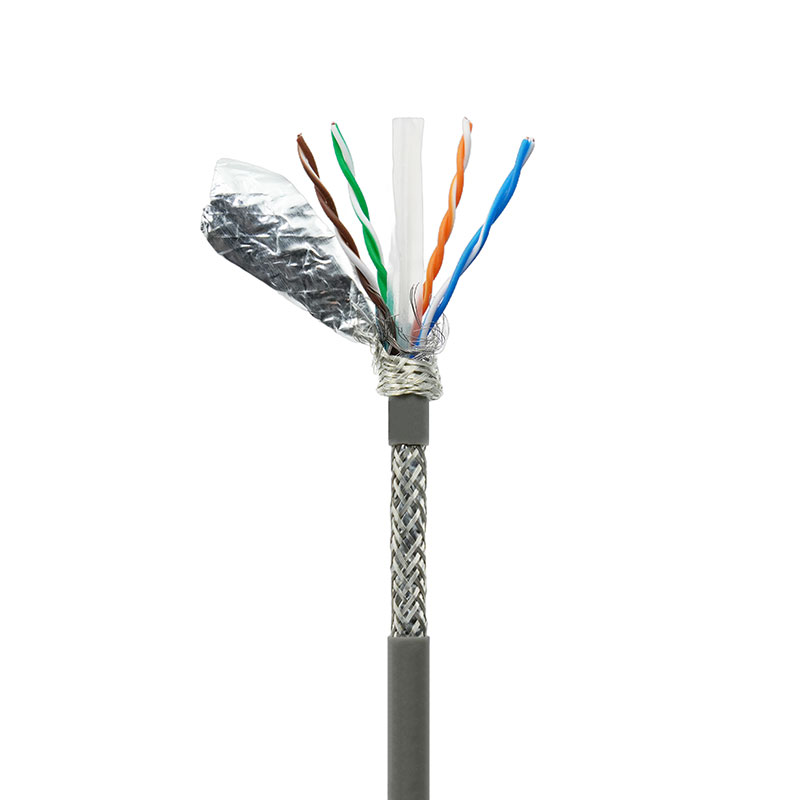
- Shield type: tinned copper braid, foil + braid composite, or multi-layer shield (define the layers).
- Coverage/quality target: many industrial guidance documents specify braid coverage targets (for example, ≥75% braid coverage is commonly cited as a baseline, with foil improving containment further).
- Termination plan: specify whether shield is bonded at drive end only, or at both ends, based on plant grounding practice and EMC goals.
Example: braid density as a measurable requirement
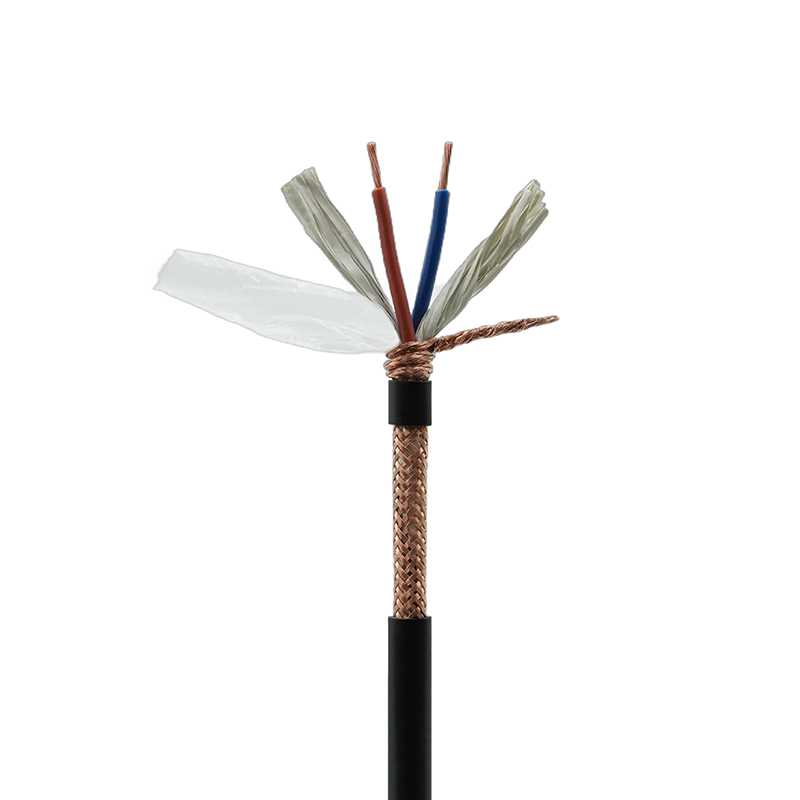
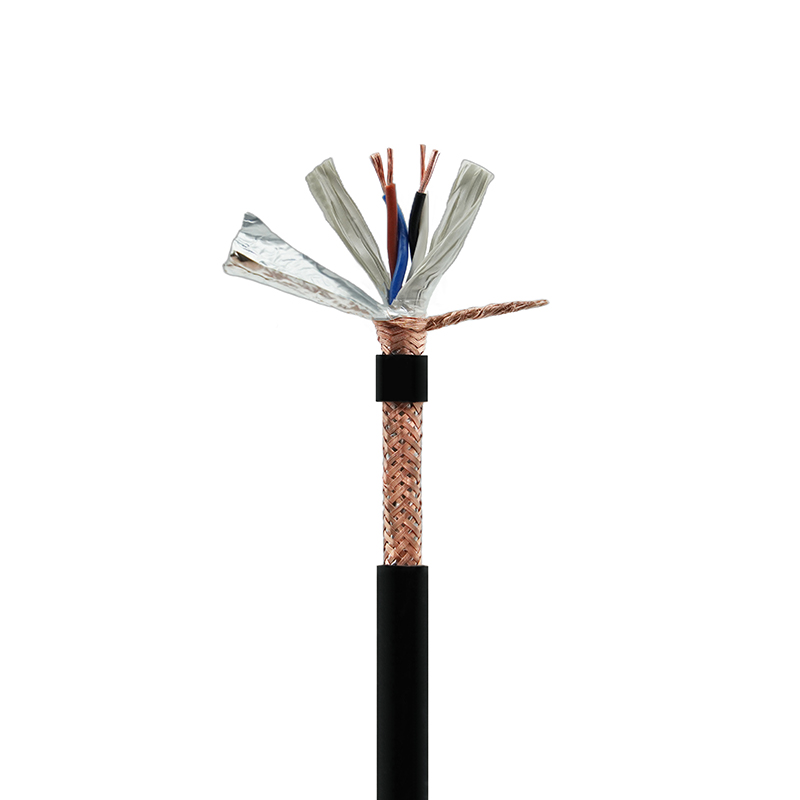
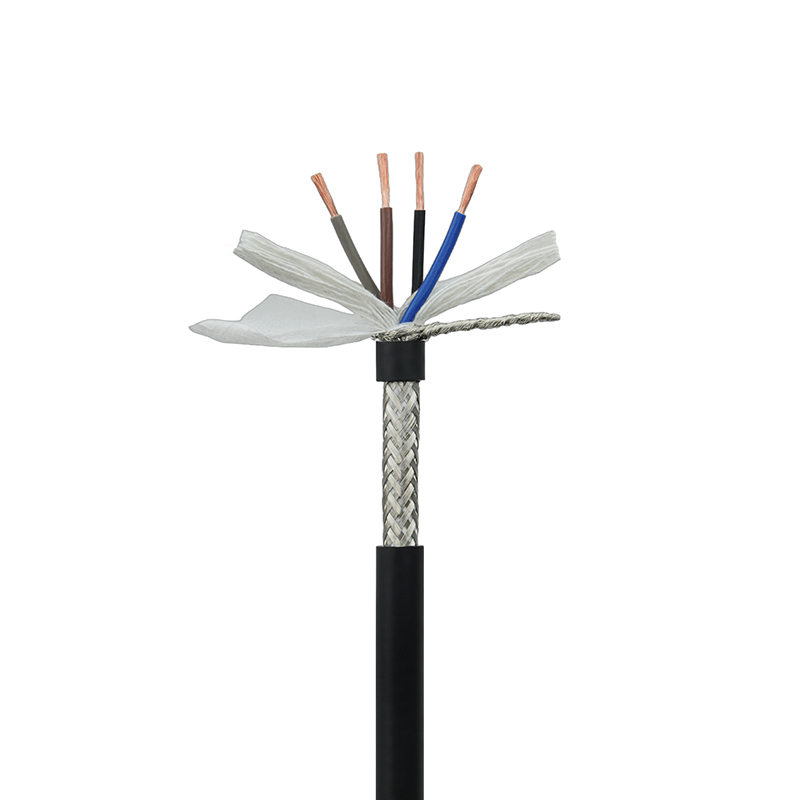
For applications that need good EMI suppression while retaining routing flexibility, a braided shield is a common choice. As an example construction, our BPYJVRP series uses a tinned copper braided shield with braiding density ≥80%, which targets stable anti-interference performance in noisy industrial environments. You can review the construction details on our shielded VFD flexible cable product page .
Flexible VFD cable: what to check beyond “it bends”
When buyers search for “flexible VFD cable,” they often mean one of three cases: compact cabinet routing, frequent repositioning/maintenance bending, or continuous motion (carriers, reels, moving machine axes). Each case places different stress on the shield and conductor.
Confirm conductor class and bending suitability
Flex life starts with stranding. A common expectation for flexible power/control constructions is a multi-strand conductor (often Class 5/6 for flexible builds). Fine stranding reduces work hardening under repeated bending and helps maintain stable electrical contact at terminations when vibration is present.
Shield continuity under movement is the make-or-break detail
In moving applications, a shield can fail mechanically before the conductors do. Ask your supplier how shield continuity is verified (continuity test method, sampling plan, and any flex testing). If you must route the cable through tight bends, prioritize constructions that preserve braid geometry and avoid shield “bird-caging.”
Use a short installation checklist during commissioning
- Route motor leads away from low-level signal wiring where possible; use separate conduits/trays if separation is limited.
- Avoid coiling excess motor cable near the drive; coils can worsen EMI and transient behavior.
- Implement shield termination consistently (drive end bonding is a common baseline); document the grounding approach for maintenance teams.
A practical table for selecting shielded VFD cable by application scenario
| Scenario | Primary risk | Shield recommendation | Flex requirement | Notes to add to RFQ |
|---|---|---|---|---|
| Short run, isolated motor circuit | Moderate EMI | Braid or foil + braid if controls are nearby | Low | Define shield termination and jacket environment |
| Longer runs (typical plant distances) | Higher peak voltage, reflections | Foil + braid or higher-performance shield | Low to medium | Request capacitance data and recommend output filter plan |
| High-noise automation cells (encoders/PLC adjacent) | Nuisance trips, signal corruption | High-coverage composite shield, controlled termination | Medium | Specify shield coverage target and continuity tests |
| Moving equipment or frequent maintenance repositioning | Mechanical fatigue, shield damage | Braid optimized for flex; consider composite if needed | High | Define bend radius, motion cycles, and jacket abrasion exposure |
Use the table as a starting point, then confirm with your drive manufacturer’s recommendations and site EMC practices. If you are unsure, request a short technical review from your cable supplier based on cable length, motor power, switching frequency, and proximity to sensitive wiring.
How to evaluate VFD cable manufacturers without relying on marketing claims
When you compare VFD cable manufacturers, focus on what can be verified: test records, material traceability, and consistency controls. A strong supplier should be able to provide objective evidence that the cable shipped matches the cable qualified.
Documentation you should request (minimum set)
- Construction sheet: conductor stranding/class, insulation and jacket materials, shield type, and shield coverage/density target.
- Electrical test records: routine hipot/withstand, insulation resistance, conductor resistance, and shield continuity checks.
- Quality system and certifications relevant to your region or industry (for example, ISO-based quality control and any needed compliance marks for the project).
- Application references: examples of similar VFD installations (motor type, length range, environment) and lessons learned.
Supplier capability signals that reduce project risk
From a buyer’s risk perspective, the most valuable capability is not “standard stock,” but stable manufacturing control for your requested construction. On our side, we support custom builds and maintain production/testing equipment with certification coverage (e.g., CCC/UL/ISO/CE) for projects that require traceable documentation. If you want to compare options, start from our VFD cable category overview and match the construction to your installation scenario.
Example construction: XLPE insulation + PVC sheath + copper braid shield
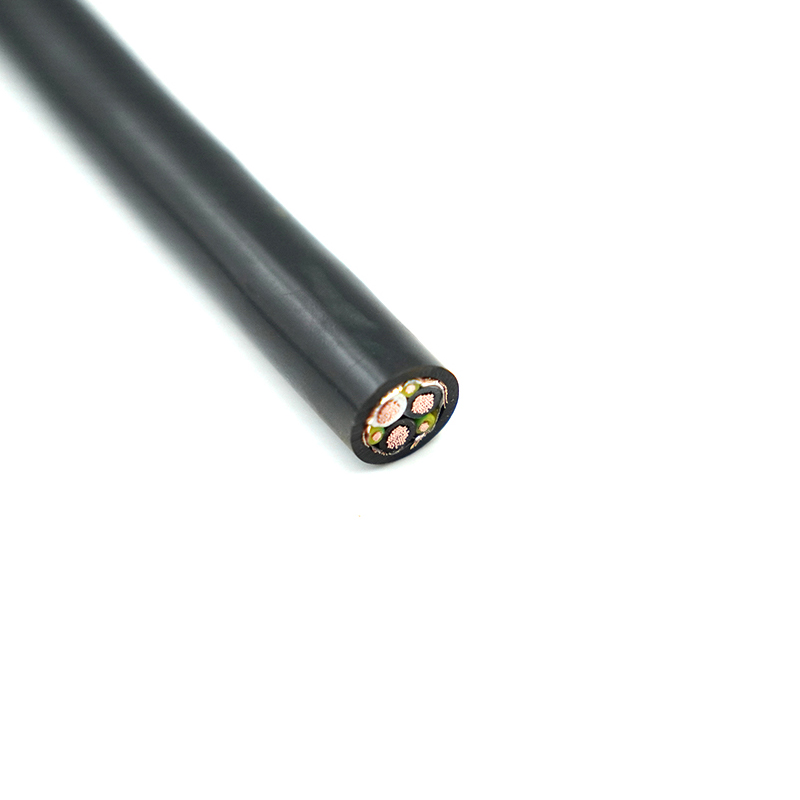
If your application needs both power transmission and anti-interference performance, a common and practical architecture is XLPE insulation plus a PVC sheath with an overall copper braided shield. This style is widely used in industrial automation and “noisy” electrical rooms because it balances electrical robustness, routing practicality, and EMI control.
As one example, our BPYJVRP construction uses XLPE insulation (90–125℃), a PVC sheath, a tinned copper braided shield (braiding density ≥80%), and a flexible multi-strand copper conductor (Class 5/6), supporting use cases that call for stable operation in industrial environments with oil/humidity exposure. For full construction details and typical applications (including industrial equipment and new energy cabinet wiring), see the XLPE insulated PVC sheathed copper braided shielded VFD flexible cable page.
If you are building to a project spec, align the cable voltage class to the system design. This series is described for higher-voltage adaptation (up to 600V–10KV) depending on model configuration, so the correct selection should be confirmed against the drive, motor, and local compliance requirements.
Common VFD cable issues and practical corrective actions
Many “mystery” VFD problems are repeatable once you check shielding, bonding, and routing discipline. The actions below are low-cost checks that often stabilize the system before more complex mitigation.
- Nuisance trips or unstable sensors: verify shield termination quality and continuity; improve bonding and physical separation from control cables.
- Severe EMI complaints: upgrade from unshielded cable to a shielded VFD cable construction and ensure the shield is treated as part of the grounding system.
- Motor overheating on long runs: review cable capacitance impact and consider output filtering (dV/dt or sine filter) rather than only increasing conductor size.
- Intermittent faults on moving machinery: confirm that the selected flexible VFD cable construction is rated for the motion profile and that the shield remains intact under repeated bending.
Conclusion: define VFD cable requirements in measurable terms
The most effective way to prevent drive commissioning delays is to specify VFD cable requirements in a form that your incoming inspection can verify: insulation system intent, shield type and coverage/density target, conductor stranding class for flex needs, and environment-driven jacket properties. When those are defined up front, you reduce EMI troubleshooting time and avoid premature insulation aging on long runs.
If your project requires a shielded, flexible construction with XLPE insulation and a copper braid shield, our VFD cable range (including BPYJVRP) is built around those requirements with documented construction details and industrial application targeting. The best next step is to align the cable selection to your drive model, cable length, grounding practice, and installation mechanics, then request a production-linked test and documentation package from your chosen supplier.