 EN
EN
 English
 русский
 Español
CNC Drag Chain Cable Guide: Coolant, Oil, Speed & Flex Life
 2025.12.31
 Industry News
Content
- 1 Quick Answer: What Matters Most in CNC Drag Chains
- 2 Why CNC Machines Are Tough on Drag Chain Cables
- 3 Coolant & Oil: How We Choose Jacket Strategy for CNC
- 4 Speed, Travel Length & Bend Radius: What Drives Flex Life
- 5 When Shielding Matters in CNC (Servo/Encoder/Noise)
- 6 Our Selection Workflow for CNC Drag Chains
- 7 RFQ Checklist (What We Need to Specify the Right Cable)
- 8 Common Failure Modes in CNC Drag Chains (and Prevention)
- 9 Documentation & Compliance Notes for Export CNC Projects
Quick Answer: What Matters Most in CNC Drag Chains
In CNC drag chain applications, cable selection succeeds when you match the construction to the actual operating conditions. From our manufacturing experience across machine-tool and automation projects, the three highest-impact factors are coolant/oil exposure, continuous-flex mechanics (bend radius, travel, speed), and EMC needs (shielding/grounding).
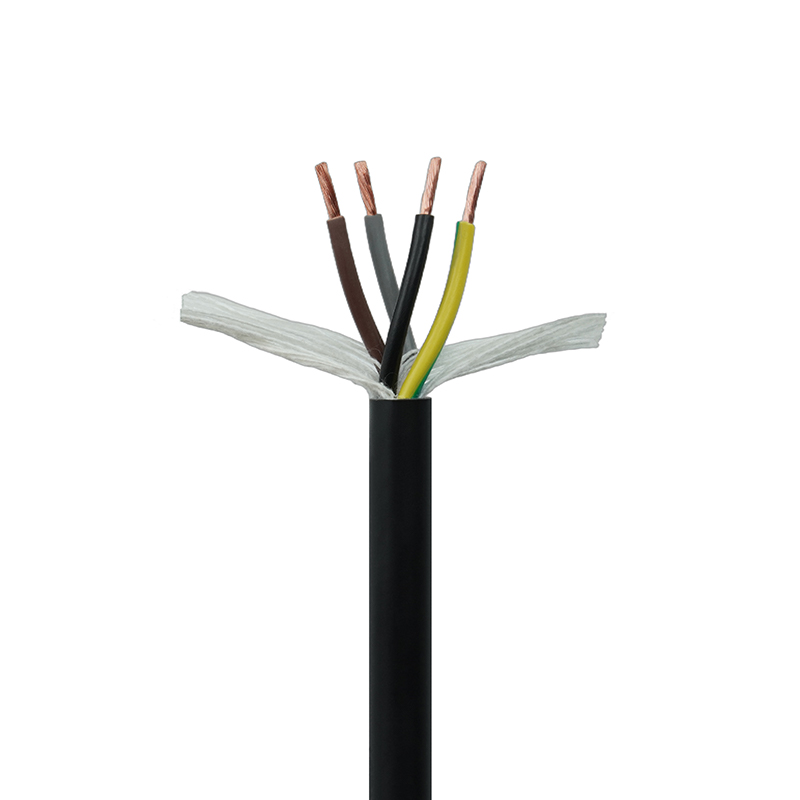
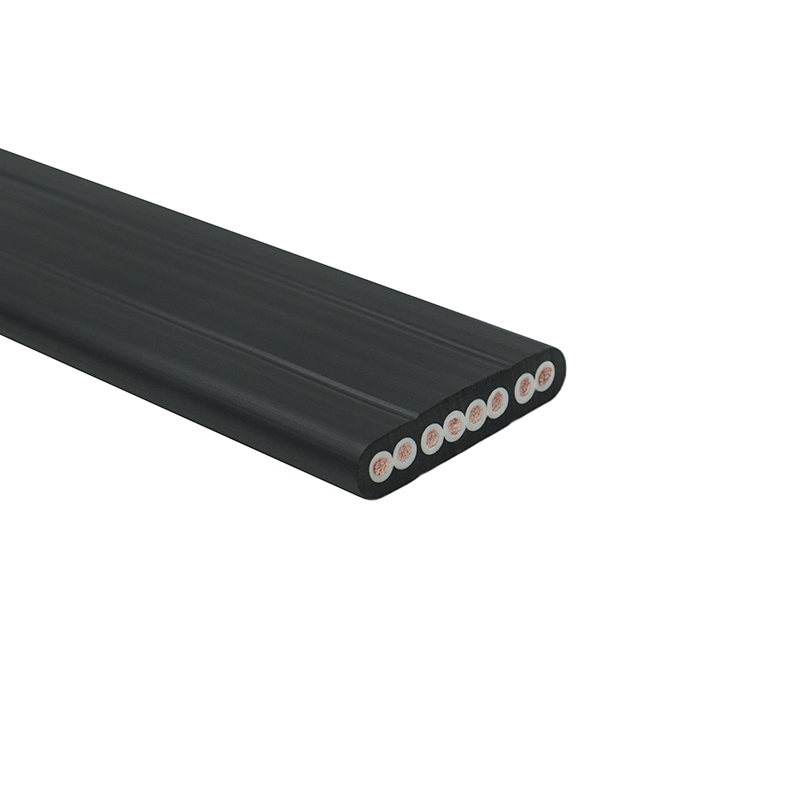
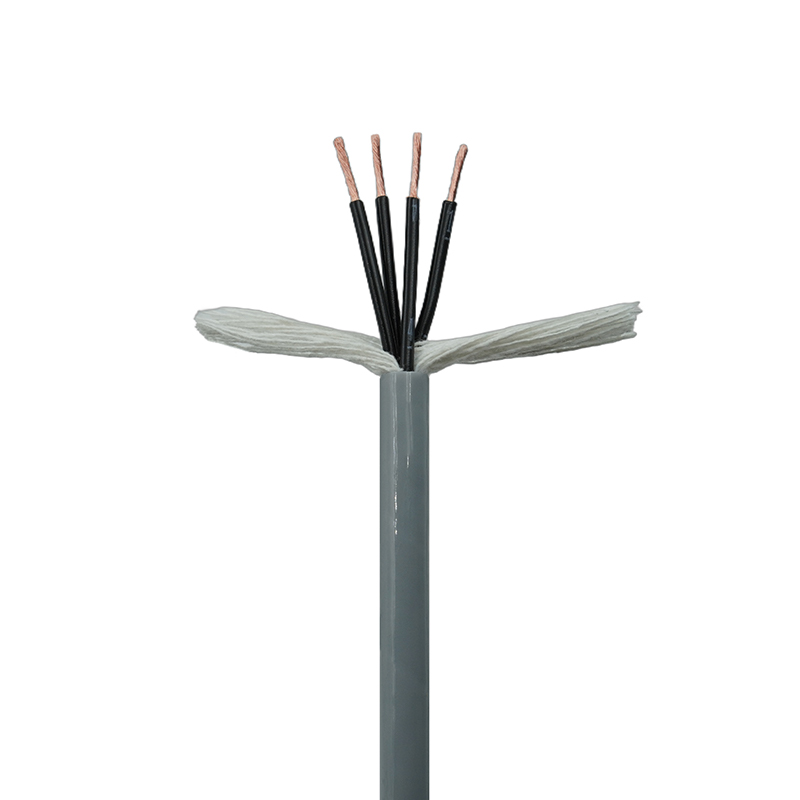
If you want to quickly see how we structure our drag chain cable portfolio (unshielded, shielded, PUR jacket options), start from our Drag Chain Cable category and then narrow down by motion and environment.
Why CNC Machines Are Tough on Drag Chain Cables
CNC machines combine repeated bending with contamination (coolant, oil, chips) and vibration. This combination accelerates mechanical wear and can also trigger intermittent electrical issues that only appear during motion.
Typical stressors we design around
- Coolant mist or direct splash that ages jackets and attracts abrasive chips.
- Oil exposure (lubricants, hydraulic fluids, cutting oils) that can change polymer properties over time.
- High travel speed and frequent cycles that amplify conductor fatigue risk under tight bend radii.
- EMI sources (servo drives, VFDs) that may require shielding and disciplined grounding practice.
In practice, most early failures are not “random quality issues.” They are mismatches between motion/environment and the chosen construction.
Coolant & Oil: How We Choose Jacket Strategy for CNC
In CNC drag chains, the jacket is both the chemical barrier and the wear surface. When buyers tell us “coolant and oil are present,” we do not stop at the fluid name. We first confirm the exposure pattern and abrasion risk, then select a jacket strategy that prioritizes compatibility + wear resistance.
Step 1: Define exposure level
- Direct splash: frequent wetting, pooling, or strong contact with coolant.
- Mist and residue: continuous coating that traps chips and abrasive dust.
- Occasional contact: intermittent exposure that still matters over long service intervals.
Step 2: Select jacket compound and verify when uncertain
For harsher CNC environments, we often recommend a PUR-jacket direction because it can provide strong abrasion performance and stable behavior across a wider range of operating conditions. If your application also needs shielding, our TRVVP-PUR series shows how we combine a PUR jacket with a shielded high-flex structure.
If coolant chemistry is uncertain or proprietary, the safest engineering approach is compatibility verification (sample trial or supplier confirmation) before committing to volume production.
Speed, Travel Length & Bend Radius: What Drives Flex Life
Flex life is primarily mechanical. Even the best compound can fail quickly if the installation forces the cable below a practical bend radius or if chain layout increases friction at high speed.
The three parameters we ask for first
- Minimum bend radius allowed by the chain and routing space.
- Travel length (stroke) and chain support conditions.
- Max speed and acceleration, especially for high-cycle axes.
Where “high-flex” becomes a real spec, not a slogan
When we position a cable specifically for towline/drag chain duty, we focus on conductor stranding, lay stability, and jacket friction behavior. For example, our TRVV page specifies a designed bending service life of ≥5 million cycles for continuous reciprocating motion scenarios. If you need the same motion logic with a PUR jacket, our TRVV-PUR is the matching direction for upgraded sheath performance.
| Input | Why it matters | Selection impact |
|---|---|---|
| Coolant/oil type & exposure | Chemical attack, jacket aging, chip adhesion | Jacket compound selection and verification plan |
| Min bend radius | Conductor fatigue and insulation cracking risk | Continuous-flex construction and routing guidance |
| Speed/acceleration/cycle rate | Dynamic stress, friction heating, wear rate | Abrasion resistance requirements and chain layout checks |
| Power vs signal function | Noise sensitivity and stability under motion | Shielding, separation rules, grounding strategy |
When Shielding Matters in CNC (Servo/Encoder/Noise)
Not every CNC drag chain cable must be shielded, but shielding becomes important when the chain carries encoder/feedback signals or runs close to high-noise power electronics. In these cases, we build shielded drag chain constructions to maintain stable EMC performance during high-frequency movement.
What a practical shielded construction looks like
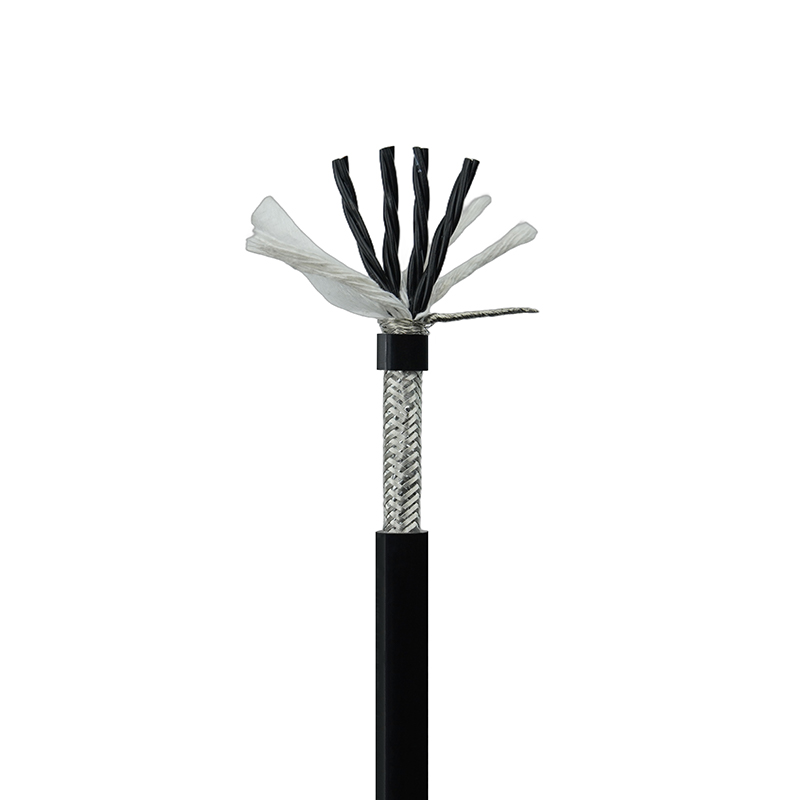
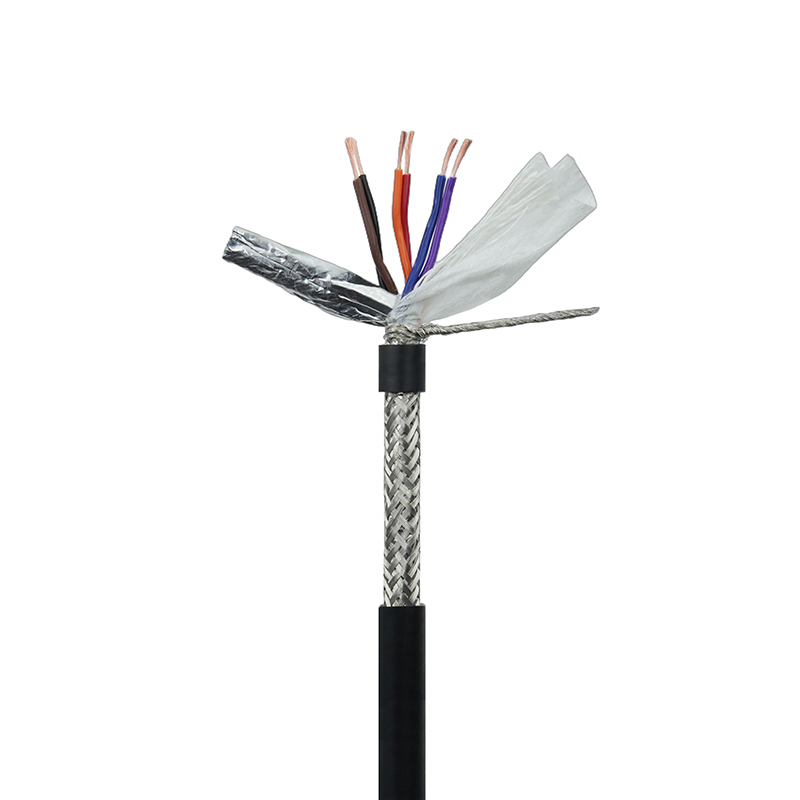
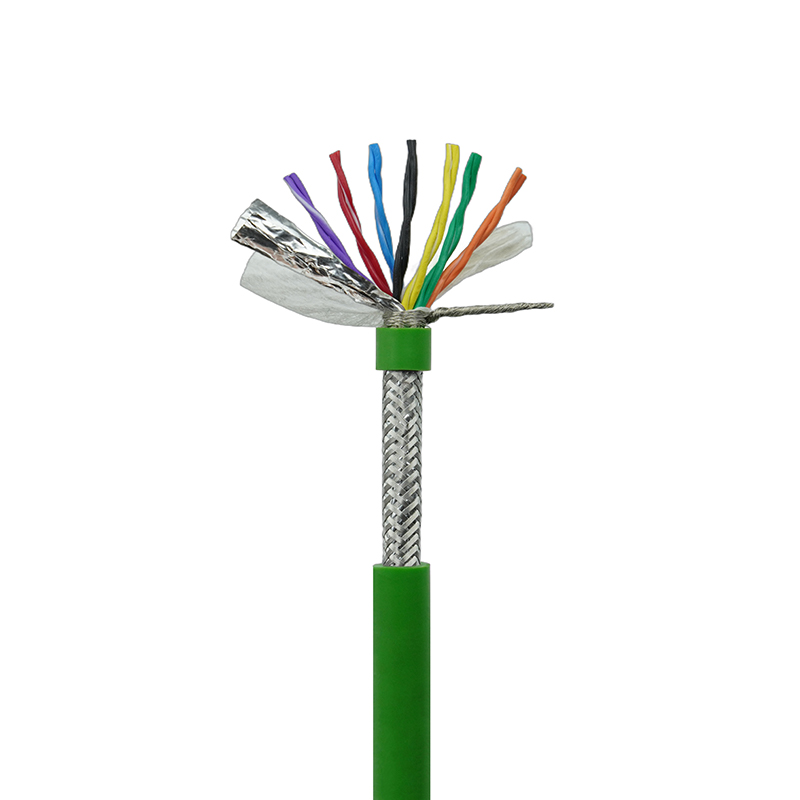
In our TRVVP design, we add a tinned copper braided shield with 80% coverage, and we use an isolation layer to reduce wear between the shield and the sheath during bending. This structure helps keep shielding effectiveness stable under motion and is supported by a stated transfer impedance ≤50 mΩ/m @100MHz on the product page.
If you need both shielding and harsher fluid/UV performance
When the environment is more aggressive (oil/coolant plus higher abrasion or broader temperature requirements), we typically steer buyers to a PUR-jacket shielded option like TRVVP-PUR, which is positioned for upgraded sheath performance.
Our Selection Workflow for CNC Drag Chains
When customers ask us to recommend a CNC drag chain cable, we follow a consistent workflow to avoid both early failures and unnecessary over-specification. You can use the same workflow internally to standardize RFQs across different CNC models.
- Define motion: chain type, travel length, max speed, acceleration, routing space, fixed points.
- Define electrical function: power/control/encoder, voltage/current, core count, conductor size.
- Define environment: coolant/oil exposure level, chips/abrasion, temperature range, cleaning chemicals.
- Choose construction: jacket compound, shielding (if needed), reinforcement, separation requirements.
- Validate: sample trial in the real CNC machine environment and confirm acceptance criteria.
If you want to align terminology between your RFQ and our catalog, our Drag Chain Cable category is the best starting point because it organizes constructions by application positioning.
RFQ Checklist (What We Need to Specify the Right Cable)
To quote accurately and recommend the correct construction, we need the same inputs our engineers use for selection. Providing these details reduces back-and-forth and shortens the lead time from RFQ to sample.
- Application: CNC model/axis and whether the cable is power, control, encoder/feedback, or hybrid.
- Motion: travel length (m), max speed (m/s), acceleration (if known), duty cycle, chain constraints.
- Installation: minimum bend radius, routing space, separation rules inside the chain.
- Electrical: voltage/current, core count, conductor size, and any signal requirements (if applicable).
- Environment: coolant type and exposure level, oil type, chip abrasion risk, temperature range, cleaning chemicals.
- EMC: shielded vs unshielded preference and your grounding/termination approach if standardized.
- Compliance: required standards/certifications and target country/market.
- Commercial: expected annual demand, sample requirement, delivery timeline.
Fastest path to a correct recommendation: send the motion + fluid details first; we can then propose the construction and confirm conductor sizing in parallel.
You can submit the above details directly via our Contact page.
Common Failure Modes in CNC Drag Chains (and Prevention)
Most CNC drag chain cable failures follow predictable patterns. Identifying the pattern helps you correct the spec or the installation method instead of repeatedly replacing the same construction.
Failure modes we see most often
- Jacket cracking or swelling caused by coolant/oil incompatibility or aggressive cleaning agents.
- Conductor breakage driven by tight bend radius, high acceleration, or poor strain relief.
- Abrasion wear from chips, overcrowded chain fill, or unstable cable layout.
- Signal instability from insufficient shielding, incorrect grounding, or power/signal coupling.
Prevention actions that usually pay off
- Confirm chain bend radius and routing before finalizing the cable construction.
- Separate power and sensitive signals and keep a stable layout inside the chain.
- Select jacket compounds based on real exposure and validate when coolant chemistry is uncertain.
- Use proper strain relief so tensile loads do not enter the bending zone.
Documentation & Compliance Notes for Export CNC Projects
For export CNC machines, documentation and compliance expectations can be as important as the cable construction itself. When customers ask us what “UL certified” means in purchasing and inspection, we keep a practical, buyer-oriented explanation in our UL Certified Electrical Cable and Wire guide.
If you want a broader technical background on drag chain cables (definitions, typical designs, and market context), we also maintain an industry overview in Comprehensive Guide to Drag Chain Cables and Their Market Growth.