
 EN
EN
 English
 русский
 Español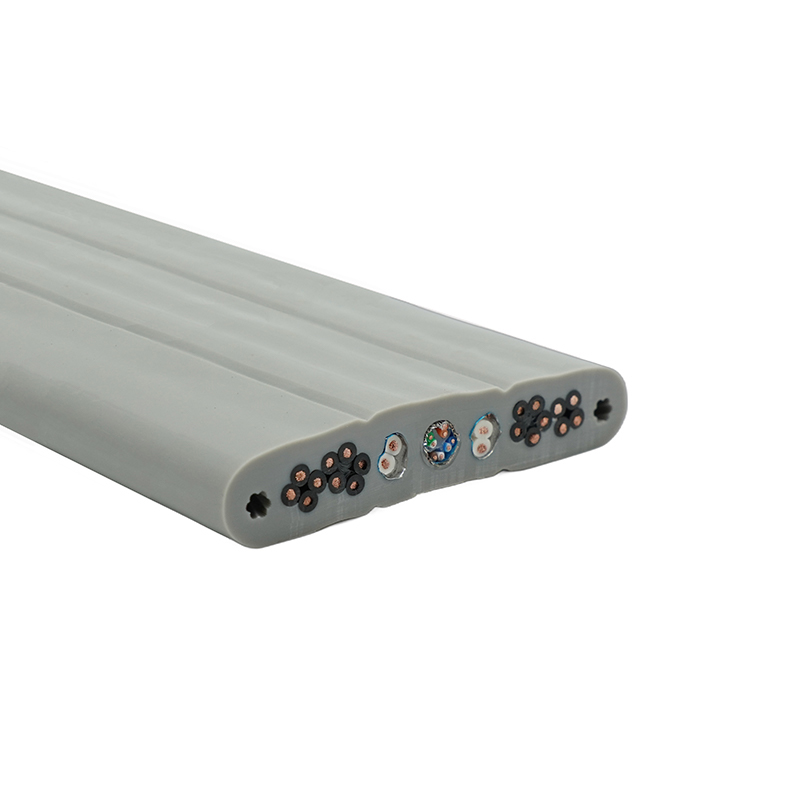
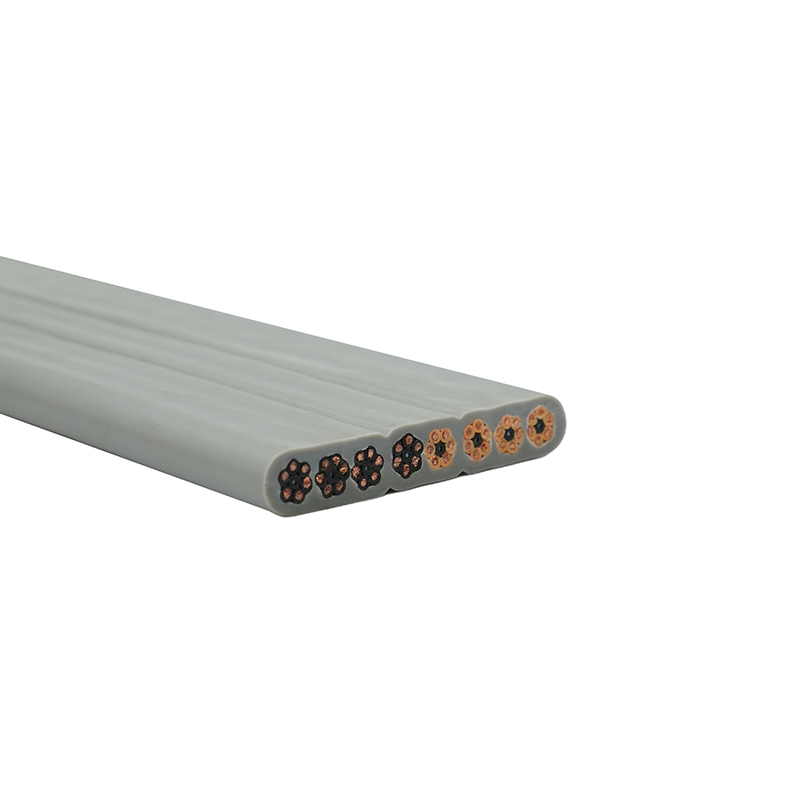







Flat Cable Design for Drag Chains
Flat cables are widely used in drag chain applications because their geometry allows for reduced bending stress and smoother motion along guide systems. A key factor is the conductor arrangement—conductors should be evenly spaced and parallel to minimize friction and abrasion during repeated flexing.
High-quality flat cables often use finely stranded copper conductors to improve flexibility. Insulation materials such as PUR or PVC are selected based on their abrasion resistance and resistance to oils, chemicals, or UV exposure. Proper installation includes ensuring the bend radius does not fall below manufacturer specifications to prevent internal conductor fatigue.
Multi Core Flat Cables in Automated Systems
Multi core flat cables consolidate multiple circuits into a single compact cable, saving space in automated machinery and robotics. Each core can carry different signals, from power to control, while maintaining clear separation to reduce crosstalk.
Shielded versions of multi core flat cables are recommended in high-interference environments. For example, in CNC machines or production lines with servo motors, a shielded flat cable reduces electromagnetic interference while maintaining flexibility. Selecting the correct number of cores and cross-sectional area is essential for current-carrying capacity and voltage drop control.
Material Selection for High-Durability Flat Cables
Durable flat cables require a careful combination of conductor and insulation materials. Copper is standard for conductivity, while insulation is chosen based on mechanical and chemical resistance. PUR is preferred for environments requiring high abrasion resistance and UV stability, while PVC can be suitable for indoor low-stress applications.
- Consider TPE or elastomeric compounds for applications requiring extreme flexibility at low temperatures.
- Reinforced or laminated flat cables can resist crushing and mechanical wear in compact industrial setups.
- Flat cables with color-coded cores simplify installation and maintenance in multi-core systems.
Installation Best Practices for Multi Core Flat Cables
Proper installation ensures the longevity and performance of multi core flat cables. Key considerations include avoiding sharp bends, minimizing twisting, and ensuring that cables are supported along their entire length to reduce mechanical stress.
In long travel applications, it is important to calculate the correct loop length to prevent overstretching. Cable carriers or trays should be selected to accommodate the flat cable's width while maintaining smooth motion.
Electrical Considerations for Multi Core Flat Cables
Voltage rating, current capacity, and insulation resistance are critical when designing multi core flat cables for industrial applications. Using undersized conductors can lead to overheating, while excessive spacing reduces flexibility and increases the cable footprint.
| Parameter | Flat Cable | Multi Core Flat Cable |
| Typical Voltage Rating | 300/500V | 300/500V or customized |
| Flexibility | High | Medium-High |
| Typical Application | Simple drag chains | Robotic arms, multi-signal automation lines |
Troubleshooting Common Issues in Flat Cable Systems
Flat cable systems may develop mechanical or electrical issues over time. Abrasion, conductor fatigue, and insulation cracking are common mechanical problems. Electrical issues often involve voltage drops or signal interference due to improper shielding.
- Inspect flat cables regularly for surface wear, especially at bend points.
- Ensure multi-core cables are installed without crossing or overlapping, which can lead to uneven stress.
- Use shielded flat cables in high EMI environments to maintain signal integrity.