 EN
EN
 English
 русский
 Español
3/0 Welding Cable Guide: Ampacity, AWG Specs, and Selection Tips for Pros
 2026.09.11
 Industry News
Content
- 1 What the 3/0 AWG Designation Actually Means
- 2 Inside a 3/0 Welding Cable: Construction Details
- 3 Ampacity, Duty Cycle and Voltage Drop
- 4 How to Choose the Right 3/0 Welding Lead
- 5 Typical Applications for 3/0 Welding Cable
- 6 Installation and Maintenance Tips
- 7 Buying 3/0 Welding Cable from a Specialty Manufacturer
- 8 Frequently Asked Questions
If you are sizing leads for a stick welder, a MIG power source, or an engine-driven machine parked 150 feet away from the work, the 3/0 welding cable is often the size that settles the argument. It carries serious current, it stays flexible enough to be dragged across a fabrication floor all day, and it is common enough that lugs, quick connectors, and replacement leads are easy to source. This guide walks through what 3/0 actually means, how the cable is built, what it can carry, and how to choose the right lead for your work.
A quick note on spelling: this product is written as 3/0 welding cable, 3-0 welding cable, or simply "three-oh". All of them refer to the same American Wire Gauge size, and everything below applies to each of those searches.
What the 3/0 AWG Designation Actually Means
American Wire Gauge works in the opposite direction to what most people expect: bigger numbers mean smaller conductors, until you reach 1/0, 2/0, 3/0 and 4/0. The "0" sizes are called aughts, so 3/0 is also written as 000. Each step up the aught scale adds roughly a quarter more copper, which is why moving one size can visibly change how a lead performs on a long run.
For a 3/0 welding cable, the core numbers look like this:
- Conductor area: about 167,800 circular mils, or roughly 85 mm²
- Nominal bare copper diameter: 0.4096 in (about 10.4 mm)
- DC resistance for annealed copper at 20 °C: approximately 0.064 ohms per 1,000 ft
- Typical voltage rating: 600 V
- Typical temperature rating: -40 °C to +90 °C or +105 °C, depending on the insulation and jacket compounds
- Copper content: about 26 percent more than 2/0, and roughly 60 percent more than 1/0
That last point matters more in welding than in almost any other low-voltage application. A welding arc runs at roughly 20 to 35 volts, so every volt lost in the leads is a large share of the total. Engineers who are chasing a stable arc on a 200-foot run usually solve it by going up one or two sizes rather than by buying a bigger machine.
Inside a 3/0 Welding Cable: Construction Details
Welding cable is not ordinary building wire with a softer jacket. The construction is designed around repeated flexing, outdoor use, and resistance to oil, water and abrasion.
Stranding
Most 3/0 welding cable uses rope-lay bunch-stranded copper. Class K stranding uses strands around 30 AWG, while Class M uses finer strands near 34 AWG for a longer flex life and a tighter bend radius. The finer the strands, the more the cable feels like a rope and the less likely individual strands are to fatigue and break at the connector.
Insulation and jacket
A typical construction pairs an EPDM or EPR rubber insulation with a tough outer jacket of CPE, neoprene or polyurethane. That combination resists oil, grease, ozone, sunlight, moisture and the mechanical scuffing that comes with being thrown over steel plate. Welding leads are normally unshielded, since shielding would add cost and stiffness without improving arc performance.
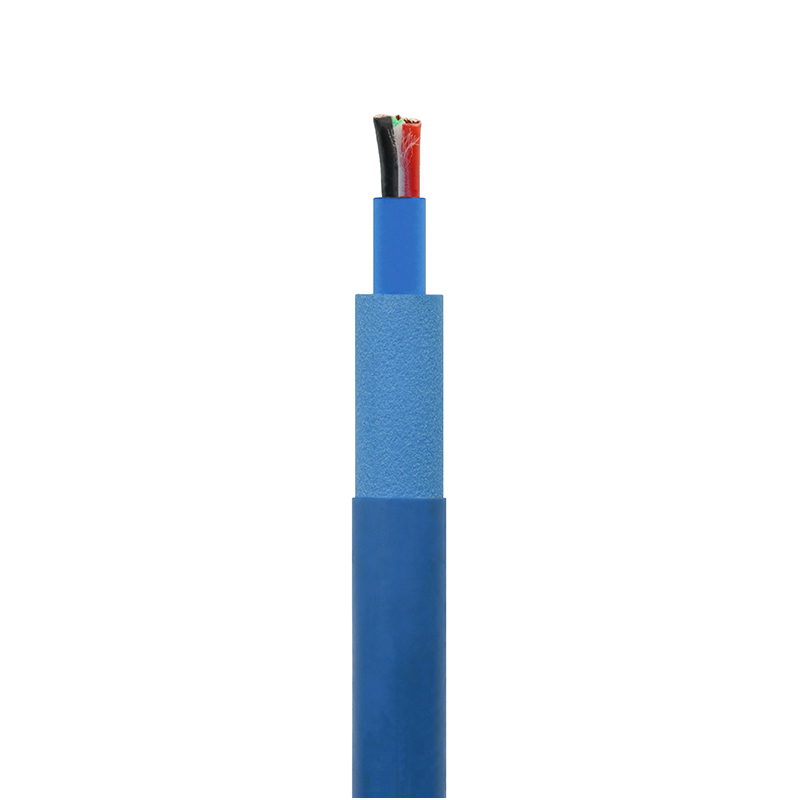
Where leads are expected to survive gravel yards, dragging over concrete, and constant exposure to oil mist, a heavier rubber-sheathed construction is often the better long-term investment than a standard welding jacket.
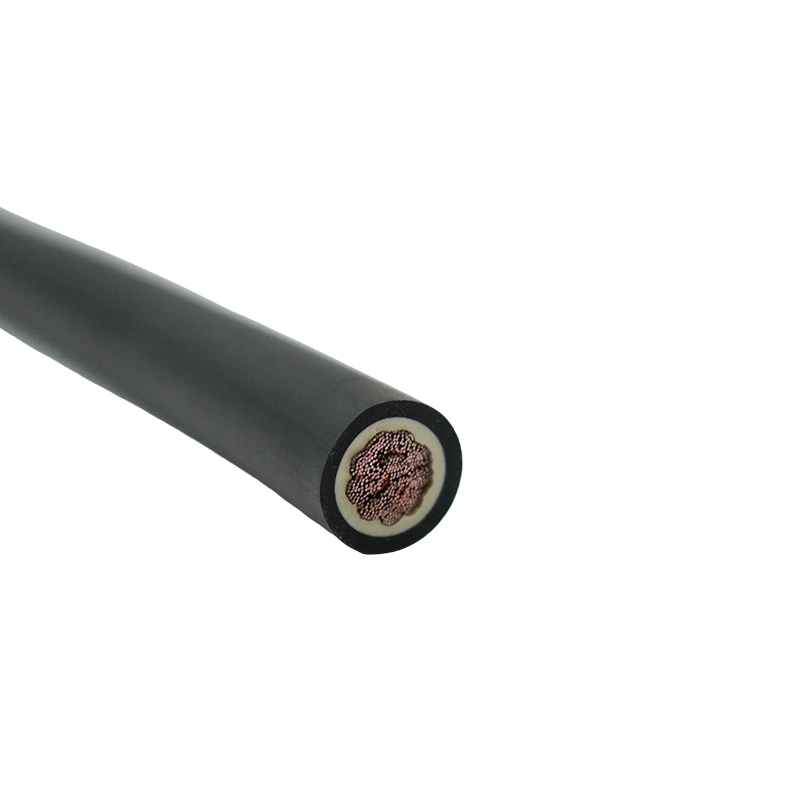 High-Strength Rubber Welding Cable YH for Heavy-Duty LeadsA flexible Class 6 copper welding cable with oil-resistant rubber sheath, useful where leads face dragging, abrasion, and oil mist while feeding welding torches and grounding clamps.View Product →
Ampacity, Duty Cycle and Voltage Drop
Welding cable ampacity is never a single number, because it depends on duty cycle. Duty cycle describes how long the operator welds out of a ten-minute window: welding six minutes out of ten is a 60 percent duty cycle. The less the cable is loaded, the more current it can safely carry, because heat has time to dissipate between passes.
| Welding cable size | 100% duty cycle | 60% duty cycle | 30% duty cycle |
|---|---|---|---|
| 1/0 AWG | 285 A | 335 A | 415 A |
| 2/0 AWG | 325 A | 380 A | 470 A |
| 3/0 AWG | 380 A | 445 A | 550 A |
| 4/0 AWG | 440 A | 515 A | 635 A |
These figures assume a single conductor in free air with reasonable ventilation. Coiled leads, hot engine compartments, bundled cables and direct sunlight all reduce the effective number. Codes such as NEC Article 630 for arc welding equipment and the flexible cord tables exist precisely because welding circuits behave differently from fixed wiring. If you want a wider comparison across every welding lead size, our reference on welding lead size and ampacity charts breaks the sizes down side by side.
Why 3/0 is often chosen for long runs
Voltage drop in a two-conductor welding circuit is straightforward to estimate: multiply the one-way length by the cable resistance per foot, multiply by the current, then double the result for the return path. Because 3/0 has roughly 37 percent less resistance per foot than 1/0, it holds the arc voltage noticeably better over distance. On a 150-foot lead at 300 amps, the difference between a 1/0 and a 3/0 return path can be several volts at the electrode, which is often the difference between a smooth arc and one that stutters.
For high-current or long-distance work, 3/0 is frequently the practical compromise between voltage drop, weight, and cost, while 4/0 is reserved for the longest runs or the highest duty cycles.
How to Choose the Right 3/0 Welding Lead
Use the following checklist before you order. It reflects the questions we ask customers every week.
- Confirm the maximum output current of the machine and the duty cycle you actually weld at, not the peak rating on the nameplate.
- Measure the real run length, including the route around columns, over beams and back to the work clamp. Then check voltage drop, not just ampacity.
- Look at the environment: oil mist, water, outdoor UV, hot spatter, gravel yards and sharp edges each favor a different jacket compound.
- Decide how much flexibility you need. Class M stranding costs more but pays back quickly on leads that are coiled and uncoiled daily.
- Match connectors and lugs to the 3/0 conductor so the termination does not become the weakest thermal point in the circuit.
- Check the certifications that apply to your market, whether that is UL for North America, CE for Europe, or CCC for domestic projects.
- Ask about cut lengths and custom assemblies, since a lead that arrives at the right length avoids extra connection points.
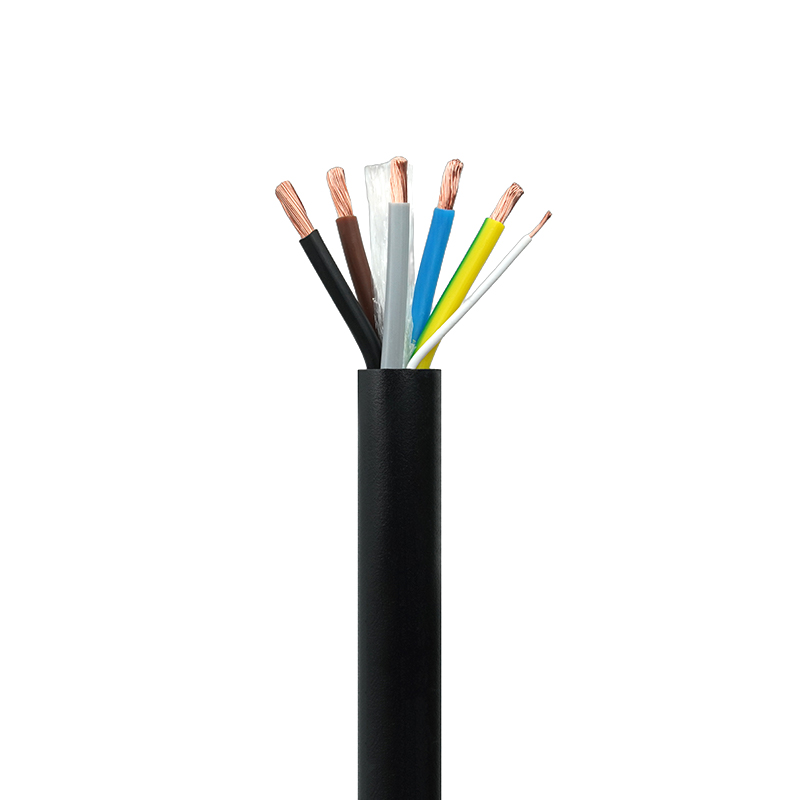
For yards and outdoor sites where oil, weather and abrasion are constant, a heavy-duty outdoor oil-resistant rubber flexible cable is often paired with a welding lead for the power feed and control circuits around the machine.
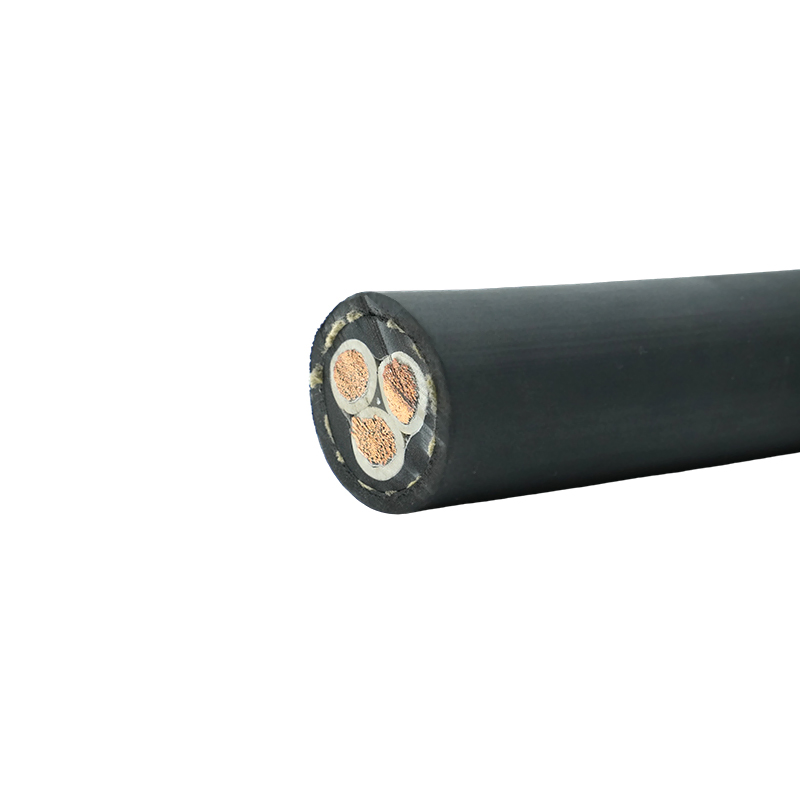 Heavy-Duty Outdoor Oil-Resistant Rubber Flexible Cable YCWOil-resistant rubber power cable for outdoor and industrial equipment, with Class 5 copper conductors and wear-resistant sheath; useful for moving machinery in yards, mines, ports, and oil-exposed sites.View Product →
Typical Applications for 3/0 Welding Cable
- Electrode holder and work clamp leads on stick (SMAW) machines
- MIG, flux-cored and TIG power leads where current demand is high
- Engine-driven welders used in maintenance trucks and remote sites
- Fabrication shops running long leads across bays and mezzanines
- Shipyards, steel erection and heavy equipment repair
- Automated and robotic welding cells that need a durable, flexible power path
- Heavy-duty jumper and ground leads on large machinery
In all of these cases the cable is doing the same job: delivering low-voltage, high-current power to a moving hand tool without stiffening up in cold weather or cracking at the connector.
Installation and Maintenance Tips
- Respect the minimum bend radius recommended by the manufacturer, and never bend a lead sharply right behind a lug.
- Coil leads loosely in large loops instead of wrapping them tightly around a hook.
- Keep cables off sharp edges and away from hot work areas where spatter can land on the jacket.
- Inspect the jacket routinely for cuts, gouges, swelling and exposed strands, and retire any lead with conductor damage.
- Re-terminate rather than re-use a corroded lug; a loose or oxidized connection generates heat and shortens cable life.
- Clean jackets with a dry cloth. Solvent wiping can degrade rubber compounds over time.
- Store leads indoors or under cover, and keep them off wet floors between shifts.
Buying 3/0 Welding Cable from a Specialty Manufacturer
Welding cable sits at the heart of a specialist cable maker's product range, because it demands exactly what specialty production is good at: fine stranding, rubber compounding, tight process control and consistent jackets. Our factory operates around 80 advanced machines for drawing, stranding, extrusion and testing, and our quality system is supported by CCC, UL, ISO 9001 and CE certification, which means the same lead can be supplied for domestic projects, North American equipment builds and European installations.
Because so much of our work is custom, we can produce 3/0 welding cable in the jacket compound, temperature rating, length and termination you need rather than forcing you into a catalogue size. The same capability applies across our full range of specialty cables, including drag chain cables, flat crane and elevator cables, reeling cables, floating cables, communication cables and new energy cables.
If you are unsure whether 3/0 is the right step up from your current leads, send us the machine rating, the run length and the environment, and we will recommend a size and construction that keeps the arc stable without overspending on copper.
Frequently Asked Questions
Is 3/0 welding cable the same as 3/0 battery cable?
They are related but not identical. Both use fine-stranded copper, but welding cable is built for extreme flexibility and repeated handling, while battery cable may prioritize higher temperature insulation and different jacket performance. Match the cable to the application rather than to the size alone.
How many amps can a 3/0 welding cable carry?
Typical published values range from around 380 amps at 100 percent duty cycle up to roughly 550 amps at a 30 percent duty cycle, in free air. Real-world capacity drops when leads are coiled, bundled or run in hot areas.
Should I choose 2/0 or 3/0 welding cable?
Choose 2/0 for shorter runs at moderate current, and step up to 3/0 when the run is long, the current is high, or the duty cycle is heavy. The extra 26 percent of copper buys a measurable reduction in voltage drop at the arc.
Sizing a welding lead is ultimately about the arc you want at the end of the run. Once the current, duty cycle and distance are clear, 3/0 welding cable is one of the most versatile answers available for professional fabrication and field repair work, and choosing a manufacturer who can customize the jacket, length and termination makes it an even better fit for your operation.