 EN
EN
 English
 русский
 Español
How to Identify High-Quality Oil Resistant Wire: Key Tests and Buying Checklist
 2026.09.04
 Industry News
Content
When a cable jacket touches hydraulic oil, coolant, or machine tool lubricant, the result is not always visible at first. Over weeks, the jacket can absorb oil, lose plasticizer, and become brittle or swollen. That often ends in an intermittent short circuit on a press line, a conveyor, or a robotic cell. The time to catch this problem is before the cable is installed. A truly high-quality oil resistant wire is one that can be judged by data, not by a label.
What "Oil Resistant" Actually Means
No single material resists every oil. The phrase "oil resistant" is a broad claim unless it specifies the type of oil, the temperature, and the exposure duration. For example, a cable that withstands mineral oil at 60°C may fail early in synthetic ester coolant at 90°C. The failure mechanism is either swell, extraction of plasticizers, or both. When a jacket swells, it loses mechanical strength and can split under bending. When plasticizers are extracted, the jacket hardens and cracks. The best cables have a jacket compound formulated for a specific oil family, with documented test results.
Oil types and temperature effects
Mineral oils, synthetic esters, and water-based coolants behave differently. A jacket that resists mineral oil can still have its plasticizers leached out by synthetic ester oil. Temperature accelerates every reaction. At 70°C, a compound might show only a small hardness shift, while at 90°C the same compound can fail in a quarter of the time. That is why a good specification should state the maximum continuous oil temperature, not just a general "oil resistant" claim.
The Key Tests That Reveal True Quality
An oil resistance test is only useful if you know what the numbers mean. The most common method is immersion testing based on standards such as ASTM D471. A sample of jacket material is immersed in the specified oil for a defined time and temperature. The changes in hardness, volume, tensile strength, and elongation are measured before and after. The table below shows the typical acceptance criteria used by quality engineers for industrial cable jackets.
| Test Property | Acceptable Change | Why It Matters |
|---|---|---|
| Hardness change (Shore A) | ±5 to ±8 points | High values indicate plasticizer loss or excessive hardening. |
| Volume swell | ≤10% after 100 h at elevated temperature | Moderate swell is normal; high swell means poor dimensional stability. |
| Tensile strength retention | ≥85% of original | Low values show chemical attack on the polymer network. |
| Elongation at break retention | ≥70% of original | Loss of flexibility leads to cracking under movement. |
| Dielectric strength after immersion | No breakdown at rated voltage | Oil penetration can create a conductive path. |
These numbers are not overly strict. A reputable supplier should have a test report for the exact jacket compound used in your cable. If the report is missing or only gives a meaningless pass/fail statement, that is a warning sign.
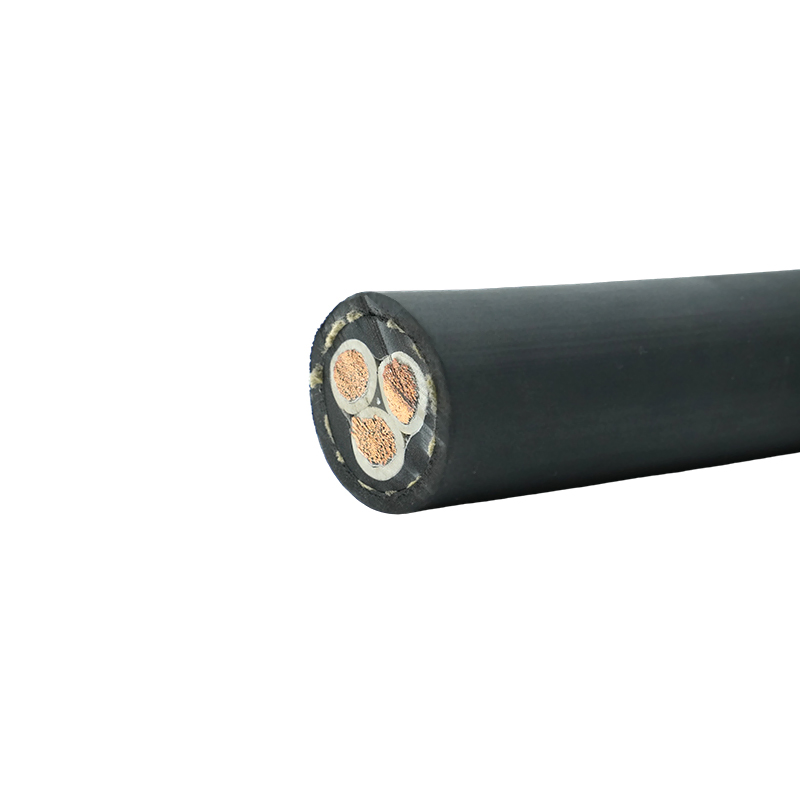 Heavy-Duty Oil-Resistant Rubber Flexible Cable for Industrial MachineryThis YCW cable uses oil-resistant rubber for both insulation and sheath, withstanding mineral and lubricating oils. It endures 100,000 friction tests and operates from -30°C to 80°C, making it suitable for heavy equipment like excavators and cranes that move frequently in oily conditions.View Product →
Jacket Material and Construction: What You Should Verify
The jacket material is the first line of defense against oil. Thermoplastic polyurethane (PUR) is a common choice for flexible and oil resistant cables because it combines good oil resistance with mechanical durability. Polychloroprene (neoprene) and chlorinated polyethylene (CPE) also perform well in oil and weather. In contrast, ordinary PVC has limited oil resistance and is best avoided in continuously wet environments. The choice of material is not the only factor. The jacket thickness, the way the conductors are twisted, and whether a shield is present all affect long-term reliability in an oily and dynamic application.
Comparing material options
For cables that will flex inside a drag chain or reeling system, the material must survive not only oil exposure but also repeated bending. A cable with a hard, oil resistant jacket can fail if the core or the stranded copper is not designed for flexing. High quality suppliers will offer constructions where the conductor is finely stranded, the insulation is slip-free between layers, and the jacket compound is selected for specific oil types and temperature range. The table below shows how the most common materials compare.
| Material | Oil Resistance | Flexibility | Typical Use |
|---|---|---|---|
| PUR | Excellent | High | Drag chain cables, reeling cables |
| Neoprene | Good | Moderate | Heavy outdoor and marine equipment |
| CPE | Good at moderate temperatures | Limited | Low-cost industrial cables |
| PVC | Limited | Good | Indoor control wiring with light oil splash |
For guidance on comparing common cable sheathing materials, see this cable sheathing comparison.
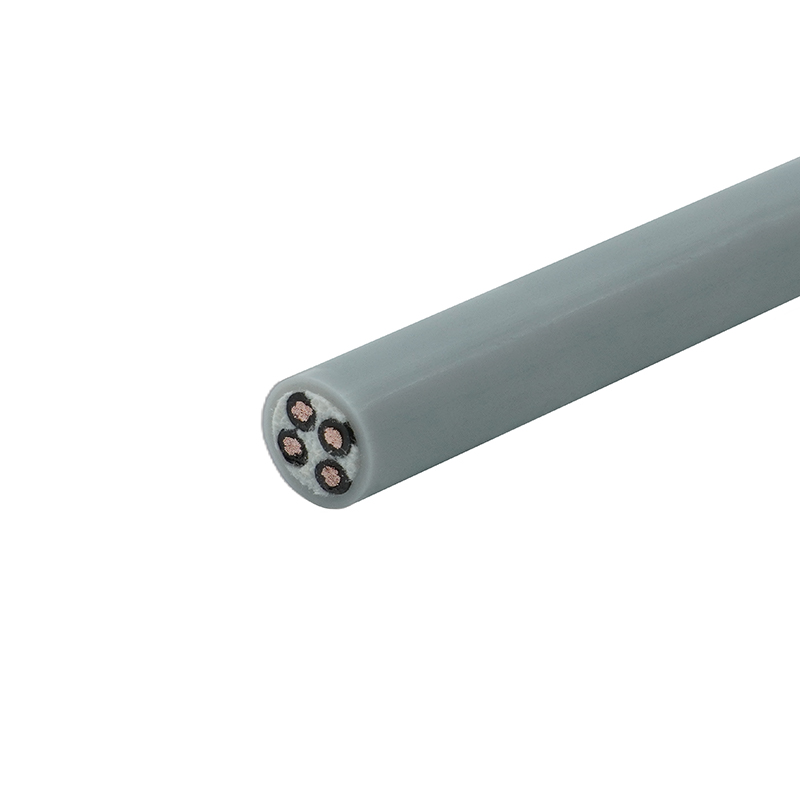 High-Flex Polyurethane Drag Chain Control Cable for Dynamic ApplicationsFeaturing a weather-resistant PUR sheath with optimized hydrolysis resistance, this unshielded cable is 15% lighter and 20% more flexible than shielded versions. It handles frequent bending in towline systems, and its oil and chemical resistance suits laser cutting machines and high-speed equipment.View Product →
Procurement Checklist for High-Quality Oil Resistant Wire
When you are ready to buy, use a specific checklist rather than accepting generic claims. Confirm the exact oil type and temperature the cable will see. Ask the supplier to provide a test report from an independent laboratory or at least a standard-compliant internal test. The report should list hardness change, volume swell, tensile and elongation retention, and dielectric strength after immersion. Verify that the cable has the required certifications for your market, such as UL for North America, CE for Europe, or CCC for China. For custom requests, the supplier should be able to modify the jacket compound or the conductor stranding without delaying the project. A transparent manufacturer will show its production equipment and quality process, and will be open to discussing how it controls the quality of each batch.
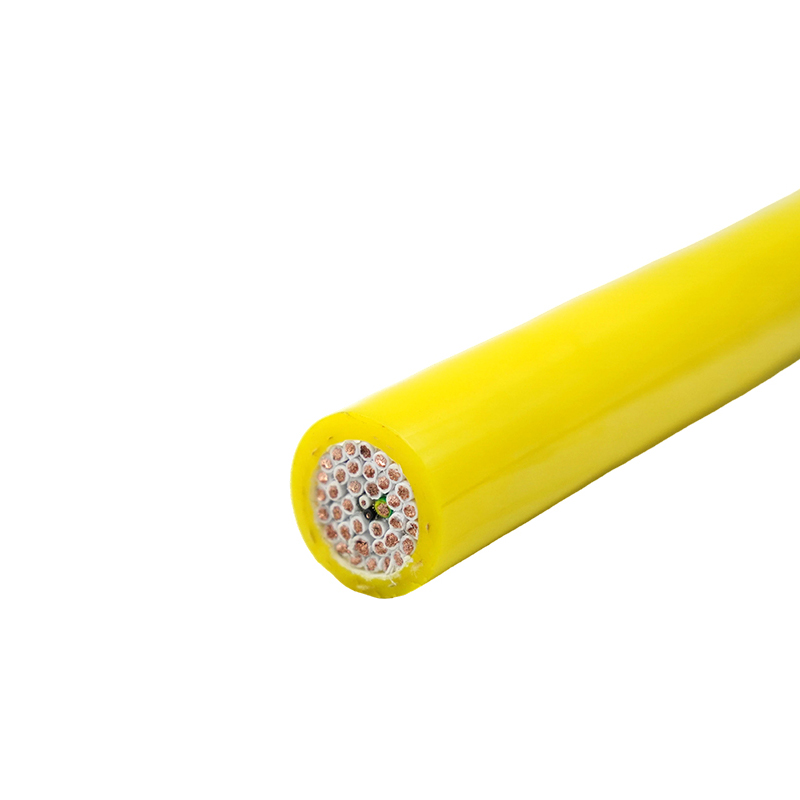 TPU Dual-Sheath Waterproof Reeling Cable for CranesBuilt with galvanized steel or aramid tensile layers, this cable withstands high vertical and horizontal winding forces. Its anti-torsion structure allows ±50°/m, and the wear-resistant TPU sheath resists oil and abrasion, while handling temperatures from -30°C to 100°C for crane mechanisms.View Product →
Common Mistakes to Avoid When Evaluating Oil-Resistant Wire
One frequent error is to choose a cable based on the lowest price without checking the oil immersion report. A cheaper jacket may pass a short test but fail after real-world exposure. Another mistake is treating all "oil resistant" wires as interchangeable. A cable that resists mineral oil may not resist synthetic cutting fluids, and a cable that resists room-temperature oil may fail at 90°C. Also, do not rely only on the jacket material. In dynamic environments, the cable core and its flex performance are just as important as the outer jacket. Finally, a single test value is misleading. You need a full set of data covering hardness, volume change, tensile strength, elongation, and electrical properties after exposure.
In the end, identifying a high-quality oil resistant wire is a matter of asking for evidence. Look for specific oil compatibility data, clear test criteria, and a supplier that can discuss materials and construction in detail. A cable that survives the first month of production is not enough; it must maintain its electrical and mechanical integrity over years. Use the criteria above as your baseline and require a manufacturer to prove its performance before you commit.