 EN
EN
 English
 русский
 Español
Cable Sheathing: Compare PVC, PUR, XLPE & LSZH Materials for Harsh Environments
 2026.06.16
 Industry News
Content
- 1 What is Cable Sheathing and Why Does It Matter?
- 2 The 6 Most Common Cable Sheathing Materials Compared
- 3 How to Decode Cable Sheathing Standards: UL, CE, and CCC
- 4 Selecting Cable Sheathing for Special Applications
- 5 Cable Sheath vs. Cable Insulation: What’s the Difference?
- 6 A Step-by-Step Guide to Choosing the Right Cable Sheath
- 7 Custom Cable Sheathing: When Standard Solutions Aren’t Enough
What is Cable Sheathing and Why Does It Matter?
A conveyor cable fails after six months — not because the conductor broke, but because the outer jacket cracked and exposed the core to oil and metal shavings. Cable sheathing is the final defensive layer of any electrical cable. It shields the insulation and conductors from mechanical abuse, moisture, chemicals, UV radiation, and temperature extremes. Without the right sheath, even a well-designed cable becomes a liability.
The sheath serves five non-negotiable functions: mechanical protection against cuts, abrasion, and crushing; environmental sealing to keep out water, oil, and dust; electrical insulation redundancy; flame propagation control; and, in many modern designs, electromagnetic interference reduction. When a sheath fails, it can trigger short circuits, production downtime, or safety violations — outcomes no engineer can afford.
- Mechanical protection from impact, abrasion, and flex stress
- Environmental isolation against moisture, oil, UV, and corrosive agents
- Supplementary electrical insulation for personnel and equipment safety
- Flame retardancy and low‑smoke properties to meet fire codes
- Reduction of electromagnetic interference when combined with shielding layers
The 6 Most Common Cable Sheathing Materials Compared
Not all sheathing materials perform equally — and selecting the wrong one can halve a cable’s service life. Six families dominate industrial and commercial cabling: PVC, PE, XLPE, PUR, LSZH, and rubber. Each brings a different balance of temperature tolerance, mechanical toughness, chemical resistance, and cost. The table below distills measurable performance so you can match the material to your actual operating conditions.
| Material | Temperature Range | Abrasion Resistance | Oil Resistance | Flame Retardancy (UL/IEC) | Relative Cost | Typical Applications |
|---|---|---|---|---|---|---|
| PVC | -25°C to +105°C | Moderate | Moderate | VW-1 (UL 1581) | Low | General indoor wiring, control panels, consumer electronics |
| PE | -40°C to +85°C | Low to moderate | Good | Not inherently flame retardant | Low | Outdoor telecom, low‑voltage distribution, direct burial |
| XLPE | -40°C to +125°C | Moderate | Excellent | Passes IEC 60332‑1 | Medium | Medium‑voltage power, industrial control, solar arrays |
| PUR (Polyurethane) | -40°C to +125°C (short‑term +150°C) | Excellent (Taber abrasion index <30 mg/1000 cycles) | Excellent | VW-1, IEC 60332‑1‑2 | High | Drag chains, robotics, harsh factory floors, mining |
| LSZH | -30°C to +90°C | Moderate | Moderate | IEC 60332‑3‑24, EN 50267‑2‑2 (low smoke, zero halogen) | Medium to high | Data centers, tunnels, mass transit, public buildings |
| Rubber (EPR/Neoprene) | -40°C to +120°C | Good | Good | VW-1 achievable with additives | Medium | VFD drives, welding cable, temporary power, marine |
PVC dominates due to price, but its plasticizer migration limits flexibility and low‑temperature performance. PUR delivers over 10 million flex cycles in drag chain applications, five times what a standard PVC sheath can withstand. LSZH materials prevent toxic smoke accumulation in enclosed spaces, which is why IEC 60332‑3‑24 and EN 50267‑2‑2 compliance is mandatory for Europe’s construction and railway sectors. Rubber sheaths, meanwhile, absorb vibration and resist cuts in portable power tools and variable‑frequency drive installations, although they demand careful compounding to pass vertical flame tests.
How to Decode Cable Sheathing Standards: UL, CE, and CCC
A sheathing material that passes one certification regime may fail another. Engineers shipping equipment globally must understand how UL, CE, and CCC standards test for flame spread, halogen content, smoke density, and mechanical durability. Skipping this analysis leads to rejected shipments or unsafe installations.
- UL 1581 (VW‑1): vertical flame test on a single cable; measures after‑flame time and ignition of cotton indicator. No halogen or smoke limit.
- IEC 60332‑3 series: bundled‑cable fire propagation test; critical for CE marking in building applications. Differentiates flame spread categories A, B, C, D.
- EN 50267‑2‑2 / IEC 60754‑2: determines halogen acid gas content. LSZH sheaths must yield less than 0.5% HCl.
- CCC (China Compulsory Certification): adopts GB/T 18380 for flame propagation and GB/T 17650 for halogen content, closely mirroring IEC standards but requiring in‑country testing for local sales.
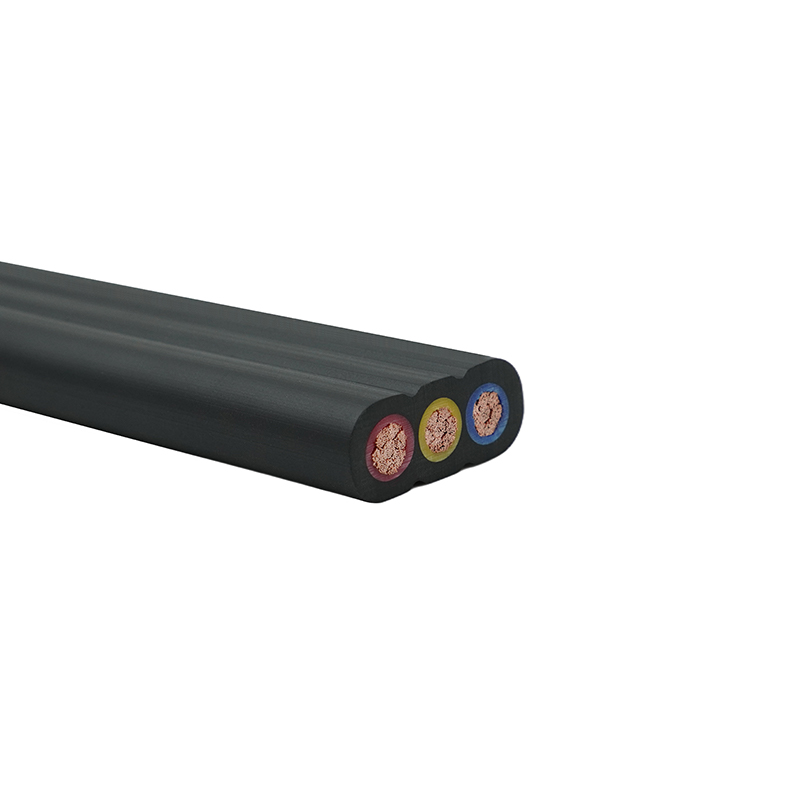
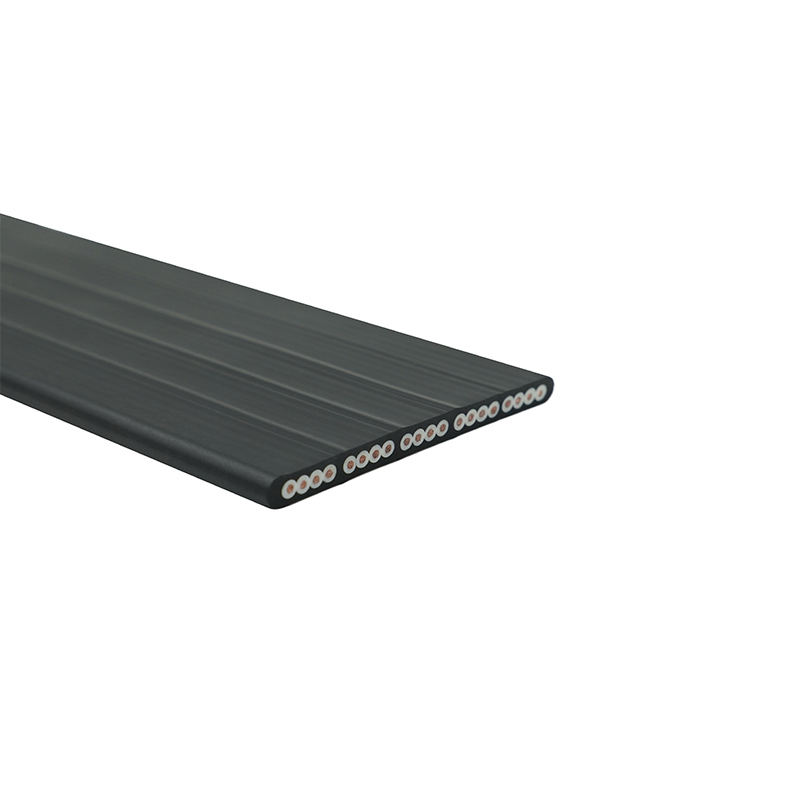
When you need CE conformity, cables like the CE-certified flat cable rated 300/500V demonstrate sheathing that passes IEC 60332‑1‑2 and EN 50525‑2‑51, linking the material’s performance directly to real‑world industrial crane installations. UL listings focus more on North American safety codes, while CCC covers China’s domestic market with mandatory fire and mechanical tests. Choosing a sheath without matching certification is a costly gamble.
Selecting Cable Sheathing for Special Applications
Standard PVC fails quickly when the application demands continuous flexing, submersion, or high‑frequency electrical stress. Three demanding scenarios illustrate how sheathing material choice directly affects uptime and total cost of ownership.
Drag Chain and High‑Flex Systems
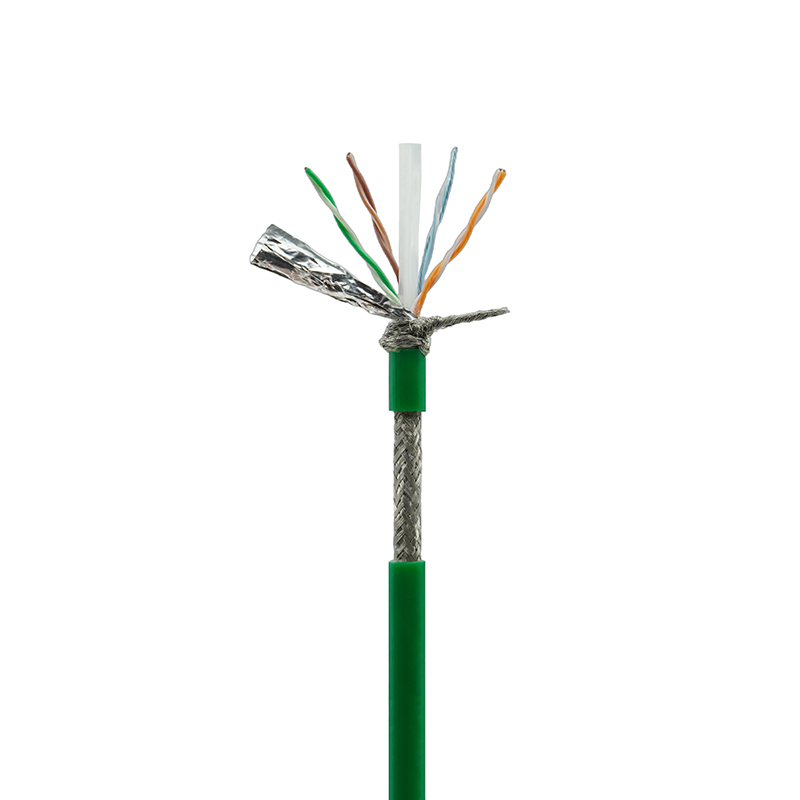
In automated machinery, cables inside drag chains endure millions of bending cycles at tight radii. A PVC‑sheathed cable might crack after 2 million cycles because the material abrades against the chain links and loses flexibility as plasticizers evaporate. PUR sheathing extends cycle life beyond 10 million flexes, resists notch propagation, and withstands mineral oils found on factory floors. For lines that run 24/7, the upfront premium for PUR pays back through avoided downtime. Our drag chain cable portfolio leverages PUR jacket technology to meet these extremes without oversizing the cable.
Underwater and Subsea Cables
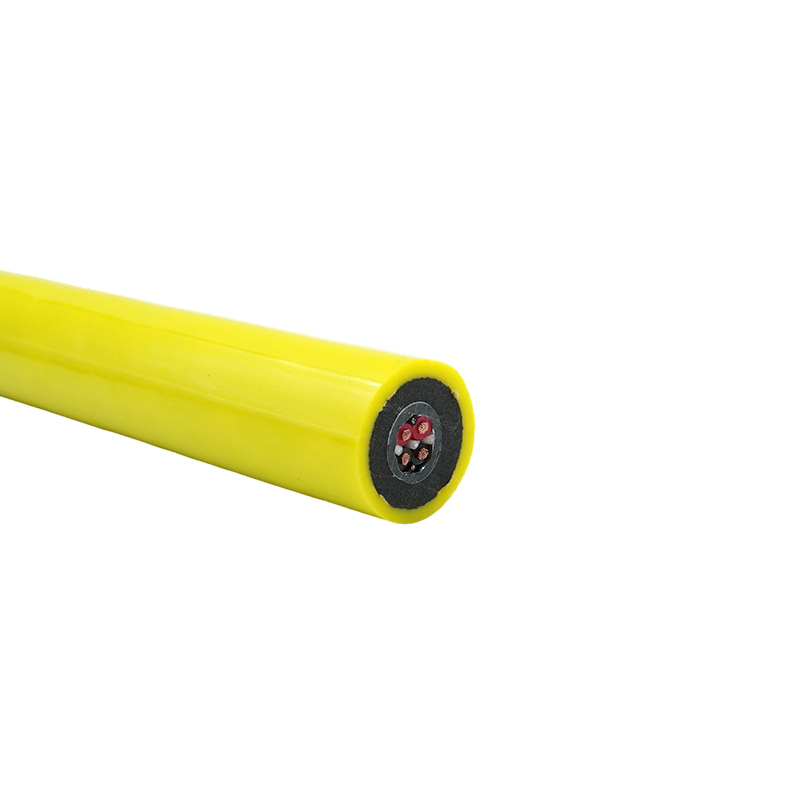
Sheaths for underwater detectors and ROVs must prevent water ingress under sustained hydrostatic pressure while repelling microbial growth and resisting abrasion against rocks or seabed structures. A custom PUR formulation with hydrophobic additives achieves a water‑absorption rate below 1.5% after 10,000 hours of immersion, while standard PVC can swell and delaminate within days. Depth ratings of 100 meters and beyond require integrated water‑blocking elements, which we embed directly into the sheath of our buoyant cable for underwater robots.
VFD and High‑Power Drives
Variable frequency drives generate voltage spikes that stress both insulation and sheath. PVC‑jacketed cables handling 480‑V drives can experience corona discharge at the sheath‑insulation interface, leading to premature failure. Rubber sheaths (EPR/Neoprene) dampen high‑frequency harmonics and tolerate the repetitive peak voltages — often exceeding 2 kV — without degradation. Although rubber’s cost is higher, replacing a burnt PVC cable on a critical pump or conveyor erases any initial savings. In these installations, a dedicated VFD cable with a robust rubber sheath becomes an insurance policy against unplanned outages.
Cable Sheath vs. Cable Insulation: What’s the Difference?
Engineers sometimes treat the sheath and insulation as interchangeable; they are not. Insulation directly surrounds the conductor to prevent electrical leakage, while the sheath encases the insulated cores, fillers, and shields as a mechanical and environmental barrier. Confusing the two leads to material selection errors that compromise both safety and performance.
| Aspect | Cable Insulation | Cable Sheath |
|---|---|---|
| Primary Function | Dielectric barrier between conductors | Mechanical, chemical, and environmental protection |
| Typical Material | XLPE, EPR, PVC, FEP | PVC, PUR, PE, LSZH, rubber |
| Position in Cable | Immediate layer over conductor(s) | Outermost layer, covering all cores and shields |
| Thickness | Determined by voltage class (e.g., 0.6/1 kV) | Determined by mechanical stress and environmental exposure |
| Key Testing Standards | IEC 60502 (power), UL 44 (thermoset), voltage withstand, partial discharge | UL 1581, IEC 60332 (flame), IEC 60811 (mechanical), oil immersion tests |
In a 600‑V control cable, the insulation might be 0.7 mm of cross‑linked polyethylene rated for continuous 90°C, while the sheath adds another 1.8 mm of oil‑resistant PUR that can handle impact and abrasion without compromising the electrical core. Selecting one material for both roles would force a trade‑off that neither function can tolerate.
A Step-by-Step Guide to Choosing the Right Cable Sheath
An effective selection process moves from the environment inward, not from price outward. Start with the conditions the cable will actually face, then filter materials by safety mandates, and only then compare cost against lifecycle performance.
- Map the physical environment. Document temperature extremes (min/max), UV exposure, immersion risk, and chemical contact (oil, solvents, acids). A cable outdoors in Saudi Arabia endures UV and 80°C heat; a cable in a food plant sees washdown chemicals and water.
- Quantify mechanical stress. Will the cable flex constantly in a drag chain, twist in a robot wrist, or hang stationary in a tray? Estimate bend cycles per day and minimum bend radius. For dynamic applications, PUR or specially compounded PVC wins over standard PVC.
- Define safety and fire requirements. In Europe, LSZH is mandated for public transportation and enclosed spaces. In North America, UL VW‑1 may suffice. List the required certifications (UL, CE, CCC) early — retrofitting a design to meet a missed standard is expensive.
- Check electrochemical compatibility. When a cable runs alongside variable‑frequency drives, assess the peak voltage and frequency. Rubber or XLPE sheaths resist corona and harmonic heating better than basic PVC.
- Balance lifecycle cost, not purchase price. A PUR drag chain cable may cost 2–3 times a PVC alternative but last five times longer. Factor in labor for replacement, downtime, and risk of contamination before making the final decision.
Finally, run a quick checklist: is the environment outdoor? Yes — UV‑stabilized PE or PUR. Does the area require zero halogen? Yes — LSZH. Will the cable move continuously? Yes — high‑flex PUR or TPE. Is budget the primary constraint? Yes — confirmed PVC, but verify temperature and oil limits first. A single overlooked condition can turn a minor savings into a major failure.
Custom Cable Sheathing: When Standard Solutions Aren’t Enough
Off‑the‑shelf cables satisfy about 80% of applications. The other 20% — extreme cold, aggressive chemical cocktails, or a combination of tight routing and extreme flex life — demand a custom sheath formulation and cable construction. Partnering with a manufacturer that engineers custom sheathing solves problems a catalog cannot.
Three situations where custom sheathing justifies its development lead time:
- Ultra‑low temperature environments. Standard PVC becomes brittle at -25°C. A custom TPE or silicone‑based sheath keeps flexibility at -60°C for Arctic mining or cold‑storage logistics.
- Chemical attack beyond oil resistance. Semiconductor fabs or pharmaceutical reactors expose cables to aggressive acids, strong alkalis, and ozone. A fluoropolymer‑alloy sheath can withstand these while maintaining mechanical integrity.
- Extended flex life beyond 20 million cycles. High‑speed pick‑and‑place machines push PUR to its limit. Additives and reinforcement layers can push flex life past 30 million cycles without increasing bend radius.
Custom solutions typically require a 2–4 week development cycle and minimum order quantities that vary by complexity, but they eliminate the recurring cost of premature cable replacement. Standard catalog cables focus on volume; custom sheathing focuses on mission‑critical survival.