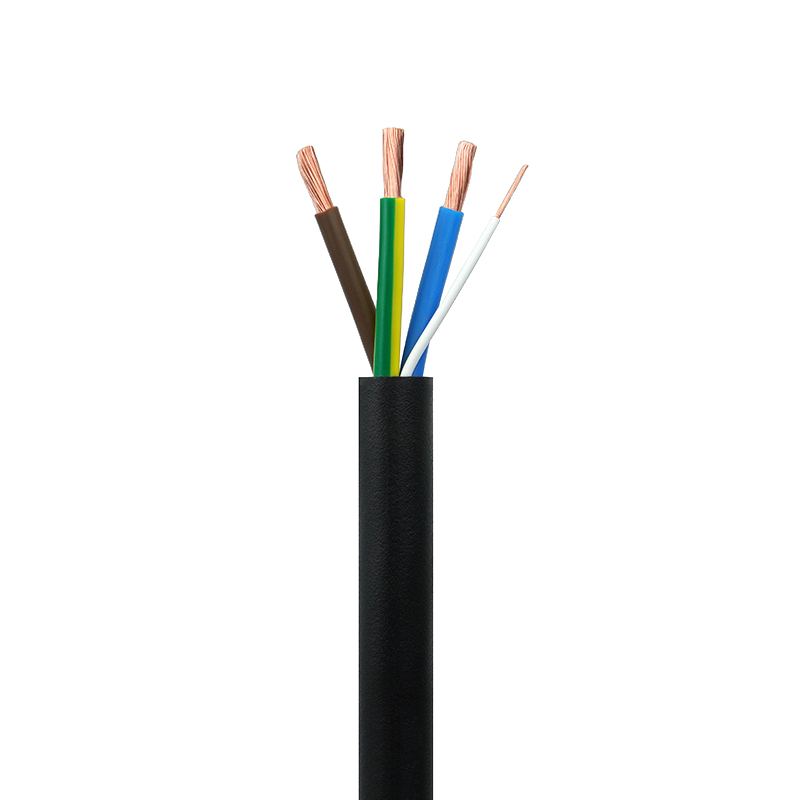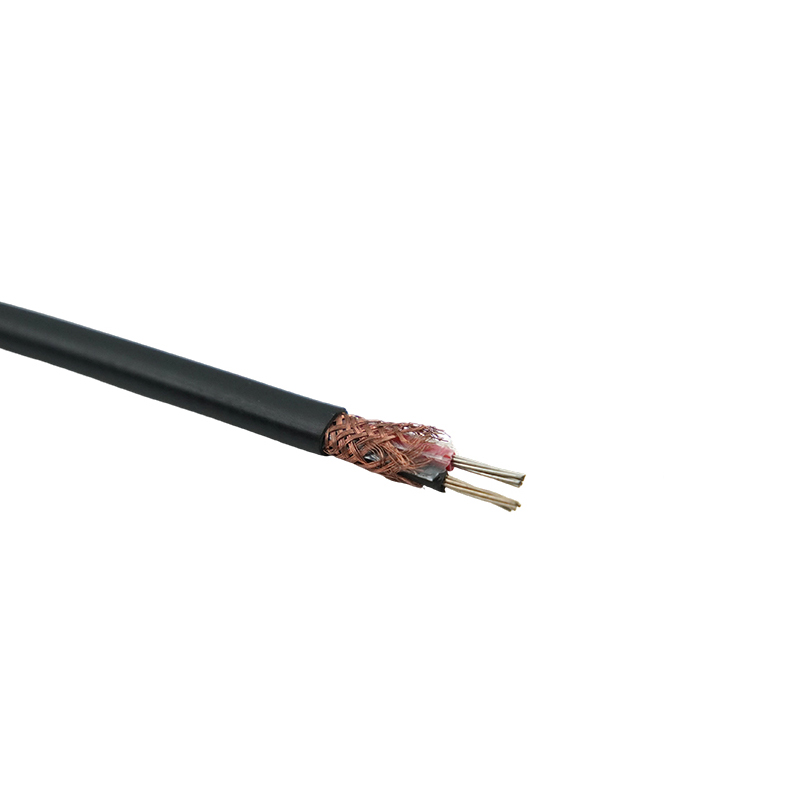
 EN
EN
 English
 русский
 Español
Cable Abrasion Protection: How Jacket and Routing Choices Extend Cable Life
 2026.09.18
 Industry News
Content
Cable abrasion protection is one of those problems that looks simple until it has to work on a machine running three shifts a day. A jacket that passes a bench test can still be worn through within months once a cable slides through a drag chain, wraps around a reeling drum or drags across a concrete yard. The cables that last are rarely the ones with the thickest wall; they are the ones whose jacket compound, stranding, shielding and routing were selected together for the way the equipment actually moves.
We build special cables for exactly these situations. Our production and testing lines run 80 sets of equipment, and our products carry CCC, UL, ISO9001 and CE approvals, which means the same construction can be supplied to a project in Europe, North America or China without redesign. The notes below collect what we have learned about abrasion protection from the shop floor and from customer feedback in the field.
What Actually Wears a Cable Out
Abrasion is seldom caused by one dramatic event. It is the slow result of contact pressure plus movement, and in practice it shows up in a handful of familiar forms:
- Sliding friction inside a cable carrier: the jacket rubs against chain links and against neighbouring cables on every stroke.
- Drum and sheave contact: reeling cables are squeezed and released at the same point thousands of times, first polishing and then cracking the outer wall.
- Ground and debris contact: welding leads, yard equipment and mining cables are dragged over concrete, gravel and metal scrap.
- Inter-cable chafing: cables bundled in trays, festoons or hoses rub against each other under vibration.
- Entry-point chafing: gland plates, cabinet edges, guide rings and over-tightened cable ties create high-pressure contact points.
The consequences go beyond appearance. Once a jacket thins, oil and moisture reach the shield and insulation, braided screens corrode, and a worn surface turns into a ground fault or an intermittent signal. In most failures we are asked to analyse, the root cause is a mismatch between cable and motion rather than a defective production batch.
Abrasion Protection Starts With the Jacket
The outer sheath is the sacrificial layer, and its compound matters more than its thickness. A hard but brittle material can crack at a tight bend radius, while an overly soft compound deforms and picks up embedded grit that grinds through the insulation underneath. What you need is a balance of toughness, tear strength and flexibility retained across the whole service temperature range.
| Jacket material | Abrasion resistance | Oil and coolant contact | Service temperature | Typical applications |
|---|---|---|---|---|
| PVC | Moderate | Limited | -10 to +70 C | Fixed wiring, control panels, light duty |
| PUR / TPU | Excellent | Very good | -40 to +90 C | Drag chains, reeling drums, robotics |
| Rubber (neoprene, EPR, CPE) | Very good | Good | -40 to +90 C | Welding leads, marine, heavy outdoor |
| XLPE | Good | Fair | -40 to +90 C | VFD and power cable where heat matters |
| FEP, PTFE, silicone | Moderate to good | Excellent against chemicals | -60 to +200 C | High temperature and compensating cable |
In moving applications, PUR and TPU are usually our starting point because they combine high abrasion and cut resistance with good oil, coolant and hydrolysis performance. Rubber-jacketed designs remain the better answer for welding leads, marine power and outdoor equipment dragged over rough ground. For fixed power runs where heat is the limiting factor, XLPE insulation with a tough outer sheath often costs less than an all-PUR construction. If you want a deeper comparison of sheath compounds, our technical notes include a detailed breakdown of PVC, PUR, XLPE and LSZH sheathing materials.
Construction Choices That Decide Service Life
Stranding, fillers and inner sheaths
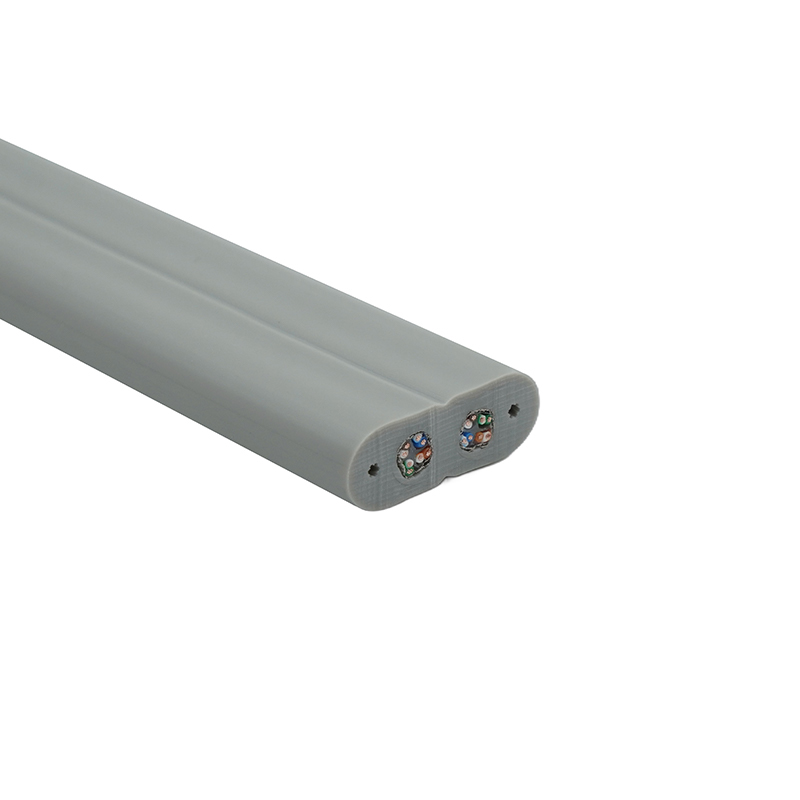
Under repeated bending, the copper is as important as the jacket. Fine-stranded Class 5 or Class 6 conductors with an optimised lay length distribute strain across many wires instead of concentrating it in a few. Fillers keep cores round and separated so they cannot rub against one another inside the sheath, and a double-sheath design adds a sacrificial inner layer that the insulated cores can slide against. In flat cables the same logic is applied in one plane, which is why a flat profile follows a pulley far more quietly than a round cable of equal capacity.
Shields, braids and strength members
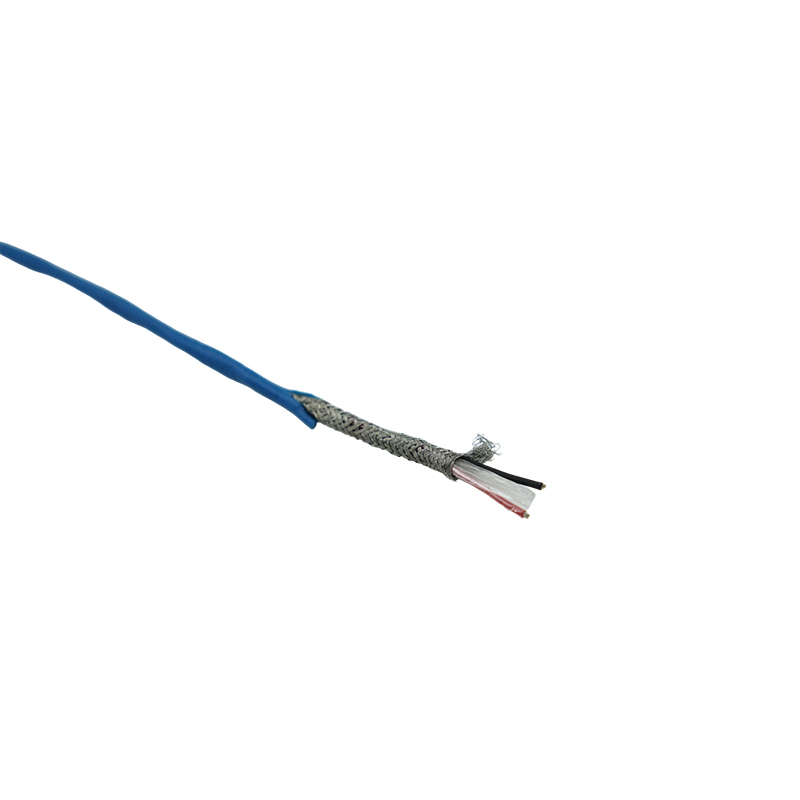
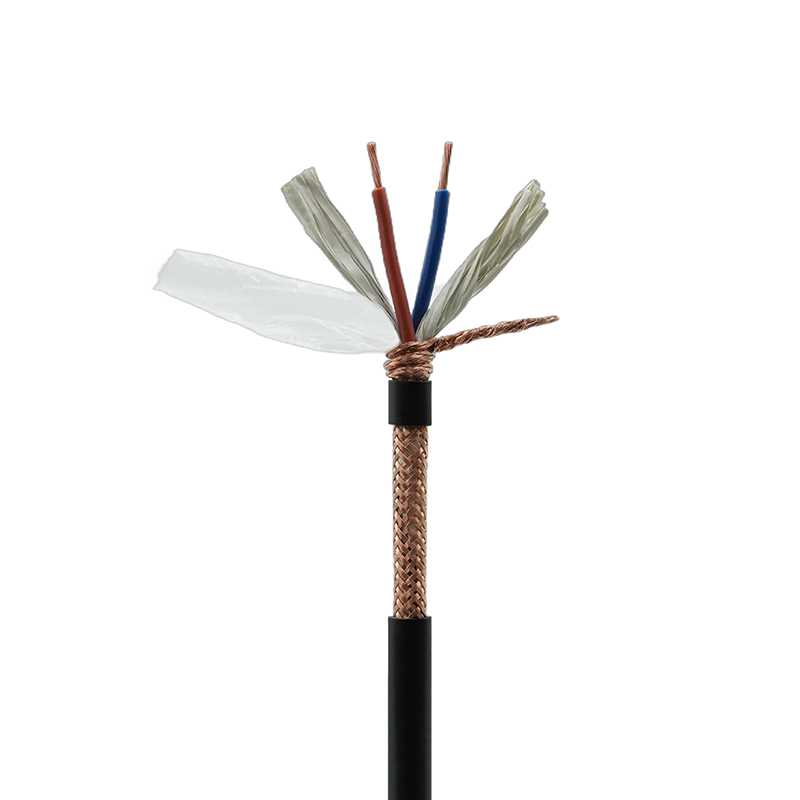
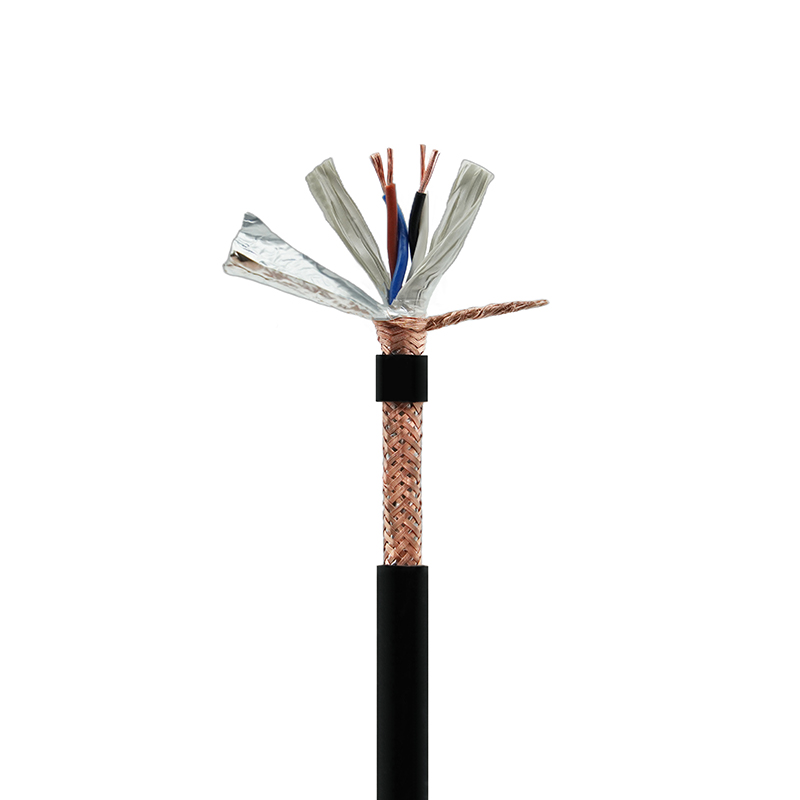
Foil screens crack quickly under continuous flexing, so a braided copper shield is the safer choice for moving cable — it also adds mechanical protection over the insulated cores. Where the cable carries its own weight, as in reeling and crane travel systems, a steel wire or aramid strength member takes the tension out of the jacket. That one detail often explains why two cables with similar-looking sheaths have very different service lives.
Matching the Cable to the Motion Profile
Abrasion protection is a system decision: the motion defines the construction. The list below reflects the way we normally map an application to a cable family.
- Continuous flexing in a drag chain: fine-stranded copper, PUR jacket, braided shield, verified flex life test data.
- Reeling and winding drums: PUR or TPU double sheath with a support member and a torsion-resistant lay.
- Crane and hoist travel: flat cable with a tough compound sheath, optionally with steel wire and shielding.
- Elevator traveling: flat PVC or PUR cable, with steel wire and integrated Cat6 elements where data and power share one run.
- Welding and outdoor heavy duty: rubber jacket rated for oil, ozone and weather exposure.
- Subsea and ROV work: buoyant, water-blocked jackets where weight and abrasion both have to be controlled.
For continuously flexing machine axes we usually recommend starting from a high-flex PUR drag chain control cable, which pairs a fine-stranded core with a low-friction polyurethane jacket.
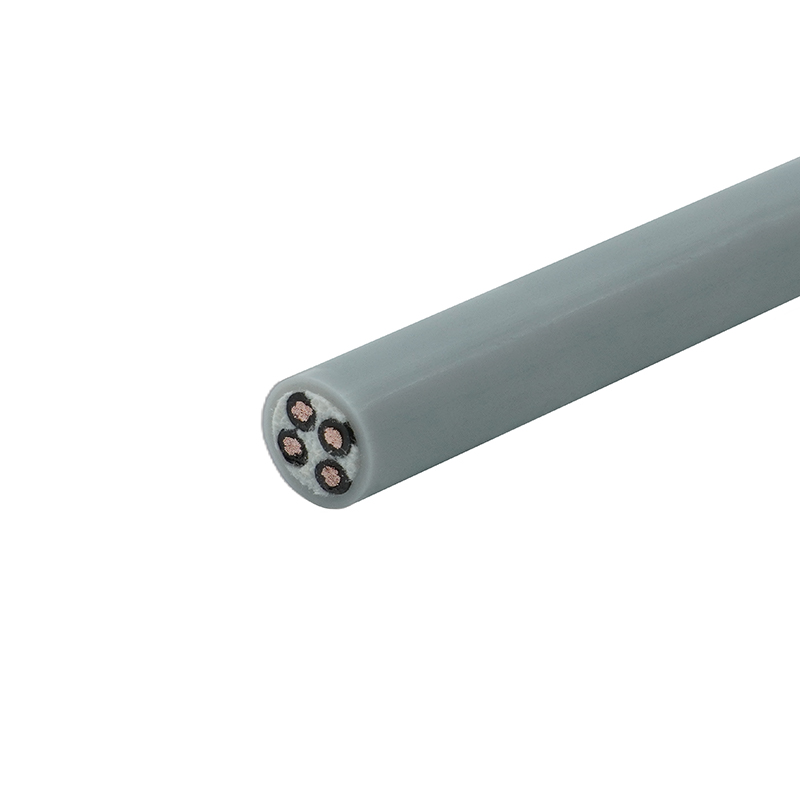 High-Flex Polyurethane Drag Chain Control Cable (TRVV-PUR)Product Positioning: An unshielded weather-resistant towline cable, focusing on power transmission in extreme environments.View Product →
Reeling is a different wear pattern: the cable is pulled, spooled and squeezed, so the sheath has to resist sliding and compression at the same time. A PUR reeling cable with a reinforced core is the usual answer.
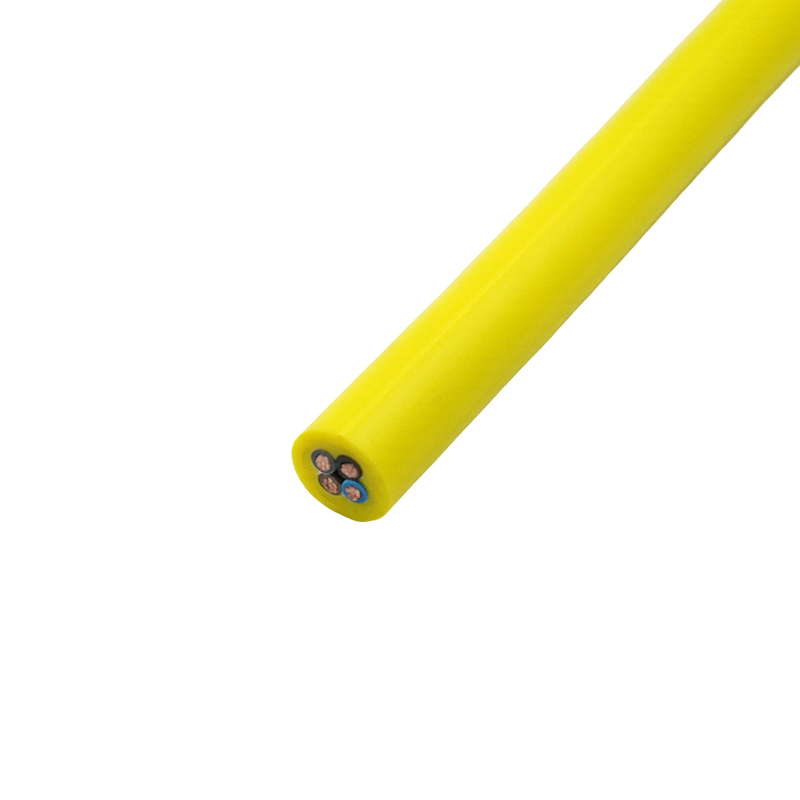 Polyurethane (PUR) Reeling Cable (Reel cable)Product Positioning: Suitable for general mobile equipment such as stacker-reclaimers, port machinery, grab cranes, material conveying equipment, and oil-to-electric d...View Product →
Where cables are dragged over gravel, workshop floors or outdoor yards, rubber still outperforms most thermoplastics, and a heavy-duty oil-resistant rubber flexible cable usually works out cheaper over its lifetime than replacing PVC every season.
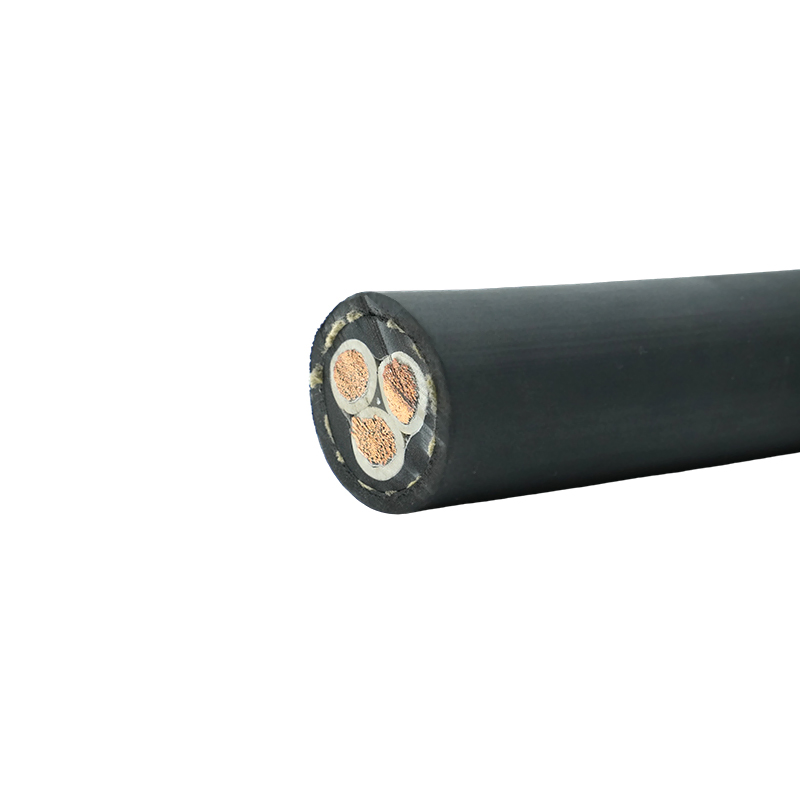 Heavy-Duty Outdoor Oil-Resistant Rubber Flexible Cable (YCW)Product Positioning: A dedicated power cable for industrial oil-exposed scenarios, focusing on strong oil resistance and wear resistance. It adapts to heavy-duty equip...View Product →
Routing and Installation Rules That Cut Wear
Even a perfect cable can be destroyed by poor routing. These are the points we raise most often during site reviews:
- Respect the dynamic bend radius, not the static one; the two numbers can differ by a factor of two or more.
- Keep travelling cables in the neutral axis of the carrier and use separators so they never ride on top of each other.
- Leave slack for thermal expansion and contraction, and never let the cable act as a tension member.
- Chamfer or cover every metal edge the cable can touch, and avoid over-tightened ties that crush the jacket.
- Separate cables of different diameters and types instead of stacking mixed bundles in the same channel.
- Add strain relief at the transition between fixed and moving parts, where most jacket failures begin.
Inspection, Maintenance and Where Wrap Still Helps
Abrasion damage announces itself early if someone is looking for it. Polished, glossy patches on a jacket, a shrunken outer diameter, fine circumferential cracks at a stress point or white powder near a gland all indicate that the sheath is working harder than it should. Scheduled inspection — checking travel length, carrier condition and bend radii at the same time — usually catches a problem one maintenance cycle before an unplanned shutdown.
Where wraps and sleeving still make sense
Spiral wrap, braided sleeving and protective hose have a place, but that place is after the cable has been selected correctly. They are useful for protecting short breakouts, hydraulic hoses and retrofits where re-cabling is not yet an option, and as extra chafe guards at entry points. They cannot compensate for a PVC jacket in a continuous-flexing application, and they can trap heat and moisture around the cable if they are fitted too tightly over long runs. Treat them as a supplement to construction and routing, never as a substitute for either.
Abrasion protection is decided long before the first worn jacket appears: in the choice of compound, the stranding, the shield, the strength member and the way the cable is routed. Get those decisions right and the accessory question usually becomes a detail. If you are working through a specific application — a drag chain, a reeling drum, a crane travel system or an outdoor welding set — send us the motion data and we will match it against our special cable range or design a construction for it.