 EN
EN
 English
 русский
 Español
Communication Cables: Types, Specifications & How to Choose the Right One
 2026.03.30
 Industry News
Content
What Communication Cables Actually Do
Communication cables transmit voice, data, and control signals between devices — and choosing the wrong type doesn't just degrade performance, it can cause system failures. The right cable depends on three factors: the signal type, the transmission distance, and the electromagnetic environment. Everything else — impedance, shielding, conductor material — flows from those decisions.
These cables are used across a wide range of environments: telecom base stations, data centers, industrial sensor networks, PLC control systems, broadcasting equipment, and security monitoring systems. Each setting imposes different demands on the cable's electrical and mechanical properties.
Common Types of Communication Cables
Not all communication cables are interchangeable. The major categories differ significantly in construction, performance, and intended use.
Unshielded and Shielded Twisted Pair (UTP / STP)
Twisted pair cables are the backbone of Ethernet and structured cabling. UTP (Unshielded Twisted Pair) is cost-effective and widely used in office networks. STP (Shielded Twisted Pair) adds a foil or braided shield, making it suitable for environments with higher electromagnetic interference.
- CAT5e — supports up to 1 Gbps over 100 m; common in legacy installations
- CAT6 — reduced crosstalk; supports 10 Gbps up to 55 m
- CAT6A — full 10 Gbps over 100 m; preferred for new commercial deployments
Coaxial Communication Cables (RG / SYV Series)
Coaxial cables are designed for RF and video signal transmission. The characteristic impedance is standardized: 75Ω for broadcast and cable TV systems, and 50Ω for RF test and wireless equipment. The SYV series, commonly used in CCTV and analog video, maintains signal integrity over longer runs than twisted pair.
Industrial Bus and Fieldbus Cables
Industrial communication cables — such as those used in RS485, RS422, CC-Link, and KNX protocols — are built for electrically noisy environments. RS485 cables typically use 120Ω impedance, which matches the termination resistance required to prevent signal reflection in long-distance differential data lines. These cables often meet standards like UL2464 or the LiY(C)Y(TP) specification for flexible, shielded multi-conductor applications.
Computer and Data Center Screened Cables
DJYPVP and similar screened cables are designed specifically for computer rooms and data transmission environments where both signal integrity and EMI suppression are critical. They often combine foil and braid shielding layers for double protection.
Key Specifications Explained
Understanding the datasheet parameters helps you evaluate whether a cable is fit for purpose — not just compliant on paper.
| Parameter | Typical Value | Relevance |
|---|---|---|
| Characteristic Impedance | 75Ω / 100Ω / 120Ω | Must match system protocol to prevent signal reflection |
| Working Voltage (low-freq) | ≤300V | Standard for control and signal circuits |
| Working Voltage (high-freq) | 500V / 600V / 1000V | Required for high-speed data transmission lines |
| Test Voltage (<0.5mm²) | 2000V | Insulation dielectric withstand test standard |
| Test Voltage (≥0.5mm²) | 2500V | Higher conductor cross-section requires higher test threshold |
| Min. Bend Radius (mobile) | 10D | D = cable outer diameter; critical for cable trays and conduit routing |
| Min. Bend Radius (fixed) | 5D | Applicable when cable is permanently routed without movement |
Operating Temperature Range
Temperature ratings vary depending on installation type and environment. Standard ranges are:
- Mobile installation: -10°C to 70°C
- Fixed installation: -30°C to 80°C
- Custom range (on request): -40°C to 105°C — for extreme industrial or outdoor environments
Conductor and Insulation Materials: Why They Matter
The conductor is the electrical core of the cable, and the insulation determines how well the signal is preserved along its path.
Conductor: Bare Copper vs. Tinned Copper
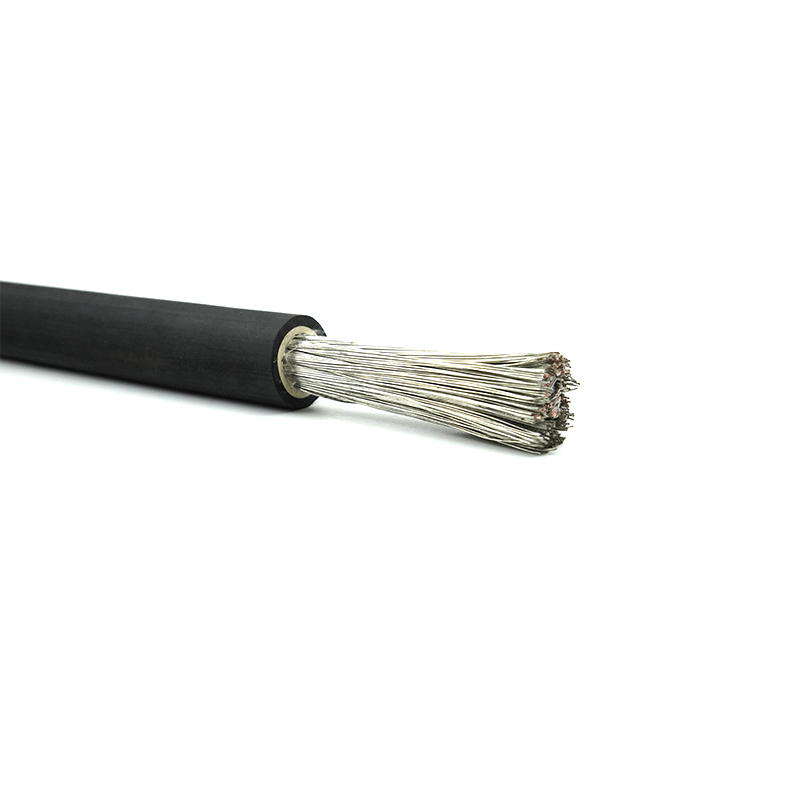
Communication cables typically use either bare copper or tinned copper wire, often in stranded form to improve flexibility. Both meet the VDE0295 CLASS 5 standard for fine-stranded conductors. Tinned copper offers better corrosion resistance in humid or chemically active environments, making it preferable for outdoor or industrial use.
Insulation: PVC, PE, and Low-Smoke Halogen-Free Materials
Different insulation materials are suited to different environments:
- PVC — cost-effective, flexible, moisture-resistant; standard for indoor applications
- PE (Polyethylene) — lower dielectric constant; better for high-frequency signal cables
- Low-smoke halogen-free (LSZH) — required in confined public spaces such as tunnels, hospitals, and transportation hubs where toxic smoke from burning cables is a safety concern
- TPU (Thermoplastic Polyurethane) — used in outer jackets where abrasion resistance and aging resistance are priorities
The outer jacket color is also standardized in many applications: RAL9005 (black) for outdoor or UV-exposed routes, and RAL7001 (grey) for general indoor installation.
Shielding Options and EMI Suppression
In environments with variable frequency drives, motors, or high-current switching equipment, unshielded cables pick up noise that corrupts data. Shielding is not optional in these cases — it's a design requirement.
There are several shielding configurations used in communication cables:
- Bare copper or tinned copper braid shield — coverage density ≥80%; effective against both EMI and RFI; flexible and solderable
- Aluminum foil (mylar tape) shield — provides 100% coverage; better at higher frequencies; typically combined with a drain wire for grounding
- Double-layer shielding (foil + braid) — used in cables requiring the highest interference rejection; common in industrial fieldbuses and broadcast equipment
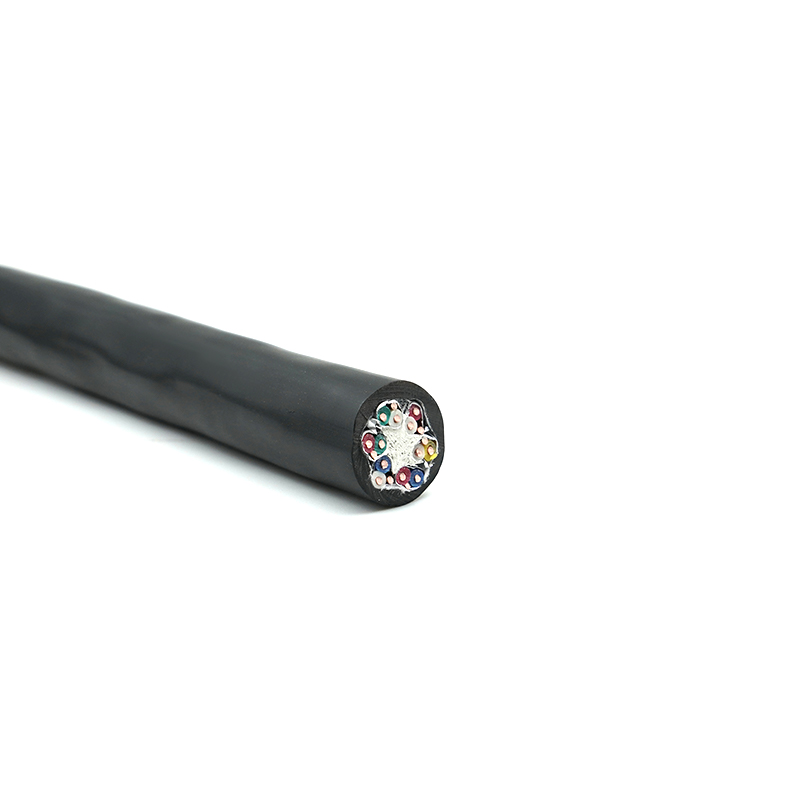
- Cross-filler core frame (cross-web) — an internal structural element that also reduces inter-pair crosstalk and adds mechanical stability
A drain wire is included in most foil-shielded cables to allow easy termination of the shield to ground at the connector end, significantly improving installation reliability.
Applicable Standards and Compliance
Communication cables are manufactured and tested against both national and international standards. Specifying a compliant cable provides assurance on electrical performance, mechanical durability, and fire behavior.
- YD/T 1019-2013 — Chinese industry standard for digital communication cables
- ISO/IEC 11801 — international standard for generic cabling for customer premises
- IEC 61156-6 — covers symmetrical cables used in high-speed digital communications
- VDE0295 CLASS 5 — European standard for flexible fine-stranded conductors
- UL2464 — UL standard for multi-conductor cables for use in electronic equipment
When procuring for cross-border projects, it is important to match the applicable standard to the target market. A cable compliant with IEC 61156-6 may not automatically satisfy UL requirements, and vice versa.
How to Select the Right Communication Cable
A structured selection process avoids costly mismatches between cable spec and system requirements. Work through these criteria in order:
- Identify the protocol and impedance requirement — RS485 requires 120Ω; Ethernet structured cabling requires 100Ω; RF and video use 75Ω. This eliminates most incompatible options immediately.
- Determine the environment — dry indoor, humid industrial, or outdoor? This drives the choice of insulation material (PVC vs. LSZH vs. TPU) and shielding level.
- Assess EMI exposure — if the cable runs near motors, inverters, or high-current switchgear, choose shielded cable. Double shielding is warranted in particularly noisy environments.
- Check the installation type — mobile or flex installations need a higher minimum bend radius (10D) and more flexible conductor stranding. Fixed routes can use the 5D specification.
- Verify temperature rating — match the cable's rated range to the ambient conditions of the installation site, including worst-case seasonal extremes.
- Confirm applicable standards — specify the required compliance standard in your procurement documents to ensure the cable has been independently tested to the correct specification.
For non-standard applications — unusual dimensions, special color coding, or materials outside standard combinations — most cable specifications can be customized at the manufacturing stage. Communicating requirements at the design phase is always more cost-effective than substituting an off-the-shelf cable that is close but not ideal.