 EN
 English
 русский
 Español
Scrapyard Crane Cables: Festoon, Reeling and Flat Cable Selection Guide
 2026.11.14
 Industry News
Content
- 1 Why Scrapyard Cranes Are So Hard on Cables
- 2 Festoon or Reeling? Start With How the Crane Travels
- 3 Reading a Flat Crane Cable Construction
- 4 Magnet, Grapple and VFD Duty: Where Shielding Pays Off
- 5 Installation Details That Decide Cable Life
- 6 A Practical Specification Checklist
- 7 Getting the Cable Right the First Time
Scrapyard cranes rarely get an easy shift. A magnet crane can make several hundred lifts between dawn and dusk, swinging over shredded scrap, baled cars and turnings, while a grapple crane feeds the shredder or sorts material across the yard. Every one of those lifts flexes the cables that power the magnet, the trolley and the control panel. When a cable fails, the crane stops and the whole yard waits. In our experience working with lifting-equipment builders and maintenance teams, the cable is often the last item on the specification sheet and the first one to cause downtime. This guide walks through what actually matters when you select cable for a scrapyard crane.
Why Scrapyard Cranes Are So Hard on Cables
A scrap yard combines almost every condition that shortens cable life at once. Dust and shredder fluff settle into festoon trolleys and reels. Oil, hydraulic fluid and coolant attack sheaths that were never designed for permanent exposure. Steel scrap has sharp edges, and a swinging load can pull a cable against a girder before anyone notices. On top of that, the duty cycle is relentless: high lift counts, short rest periods, and travel speeds that put real mechanical strain on every conductor strand.
The electrical side is just as demanding. Magnet coils are highly inductive, so switching them produces voltage spikes. Travel drives are usually inverter-fed, which means harmonic currents and high-frequency noise travel along the same cable trays as control and signal lines. Add seasonal temperature swings, rain and washdown water, and you have a duty that rewards a properly built cable and punishes a general-purpose one.
- High flex counts — hundreds of trolley or reel cycles per shift.
- Abrasive dust and metal particles that work into sheaths and trolleys.
- Oil, grease, hydraulic fluid and occasional washdown water.
- Shock loading when a magnet releases or a grapple bites into scrap.
- EMI from VFD travel drives and magnet switching.
- Long spans with wind and vibration on outdoor gantries.
Festoon or Reeling? Start With How the Crane Travels
The travel arrangement decides more about cable construction than any other factor. A festoon system carries the cable in loops on trolleys that run along a track, while a reeling system winds the cable onto a motorised drum. Both work well in scrap yards, but they need different cable designs and very different installation care.
Festoon systems
Festoon arrangements suit cranes with moderate to long travel where the cable can hang in controlled loops. Flat cable is the usual choice because it stacks neatly, resists twisting and keeps the loop stable at speed. On long spans, the cable should include steel wire carriers so the tension is taken by the wire rather than by the copper conductors. Without that carrier, the conductors gradually stretch, resistance rises and strands begin to break near the end clamps.
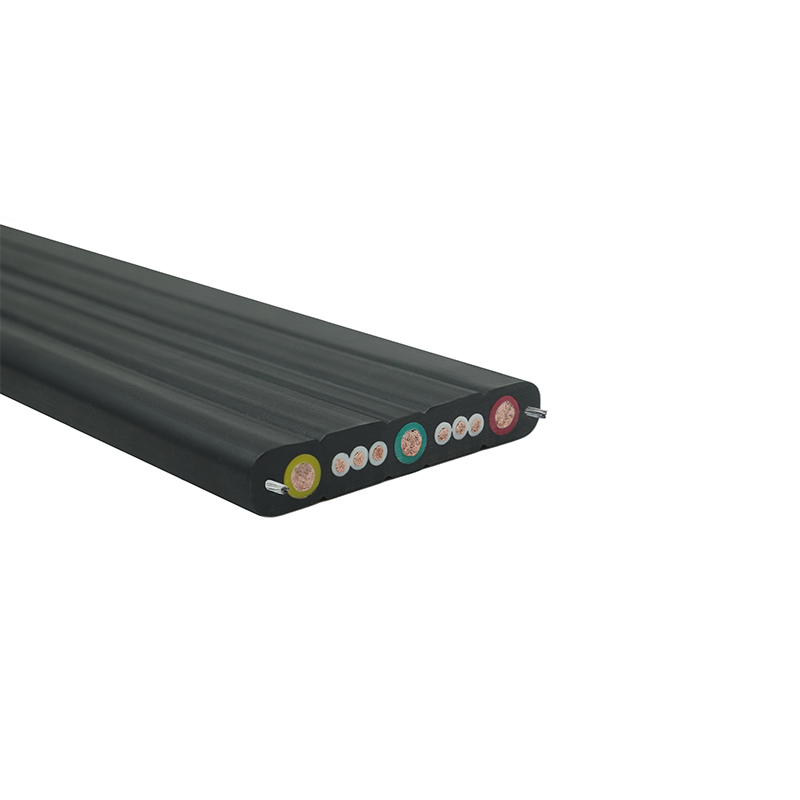
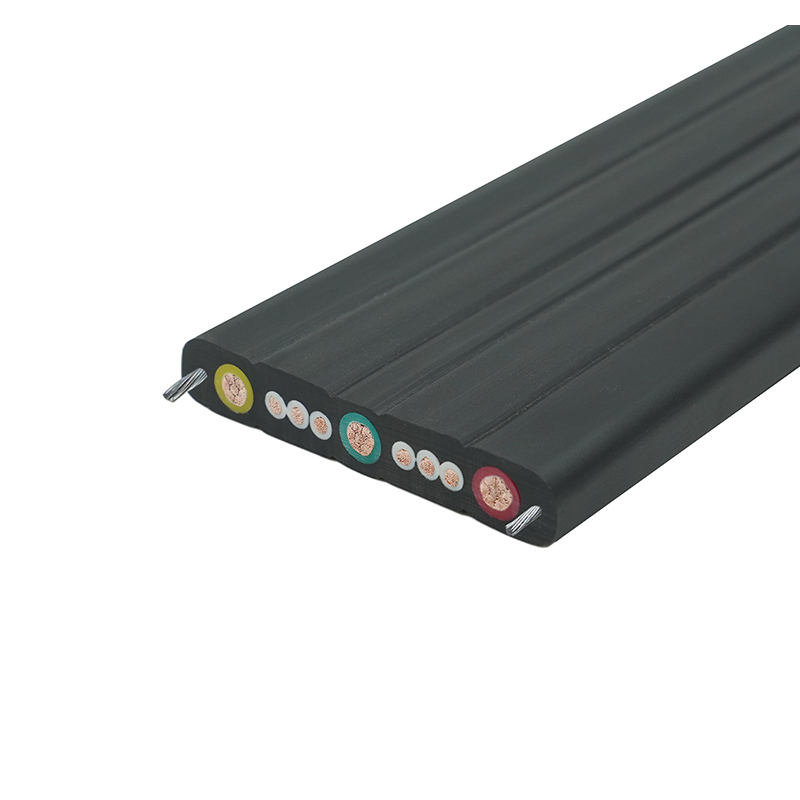 YFFBG Steel-Wire Reinforced Crane Traveling Flat CableTensile-upgraded YFFB-series flat cable with steel wire reinforcement and PVC sheath for festoon crane travel where cable sagging and conductor strain are concerns.View Product →
Loop depth, trolley spacing and travel speed all influence how the cable behaves. If you are still at the design stage, our guide to crane festoon systems and flat cable selection covers the geometry in more detail, including how to set strain relief so the cable does not fight the trolley.
Reeling systems
Reeling is often the better answer for very long travel, for dusty yards where festoon tracks clog, or where there simply is no room for a festoon runway. The cable must be built for winding: a tightly controlled outer diameter, a sheath that slides over itself without grabbing, and a construction that tolerates constant tension. A standard flexible cable wound on a reel will usually fail at the point where it enters the drum. Grab duty adds another layer of punishment, because the bucket shocks travel straight back into the cable.
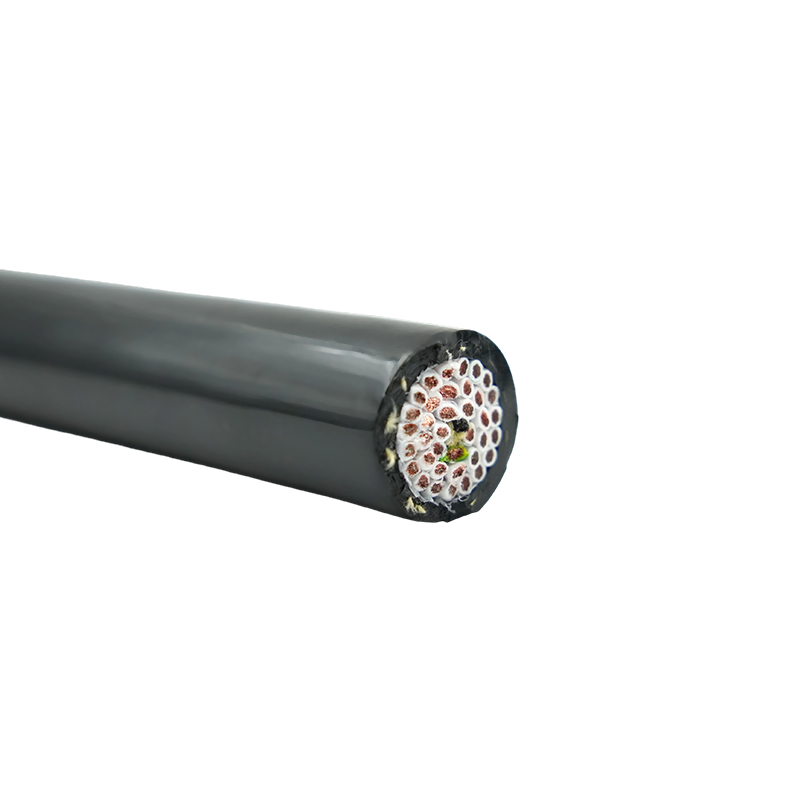
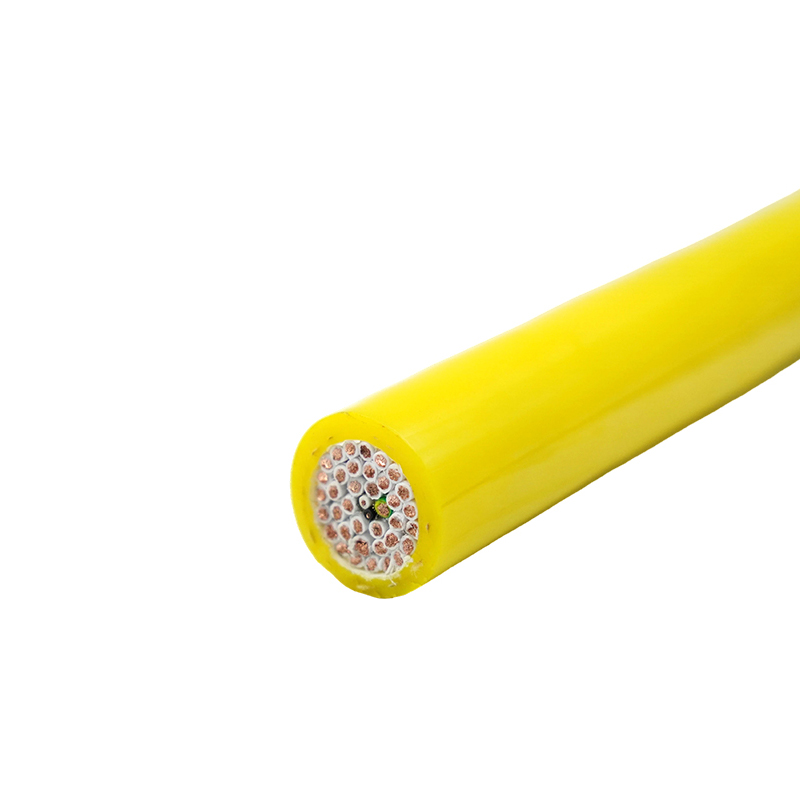 TPU Dual-Sheath Waterproof Crane Reeling CableDual-sheath TPU reeling cable for high-frequency winding on travelling, tower and portal cranes, suited to power and control transmission under lifting and luffing tension.View Product →
Reading a Flat Crane Cable Construction
Once you have chosen festoon or reeling, the details of the construction decide the service life. Fine-stranded copper conductors handle flexing; coarse strands crack. Insulation must resist the operating temperature and the oils present in the yard. The sheath is the first line of defence, and in scrap handling that usually means PVC for lighter duty, or a compound or polyurethane sheath where abrasion and oil are constant.
Flat cable adds a few features worth checking. Steel wire carriers should be positioned so they do not press on the cores. Fillers and binders should keep the cores flat and parallel during travel. Where the cable also feeds a VFD-driven travel motor or carries magnet control signals, a copper braid shield with good coverage prevents noise from reaching the control system.
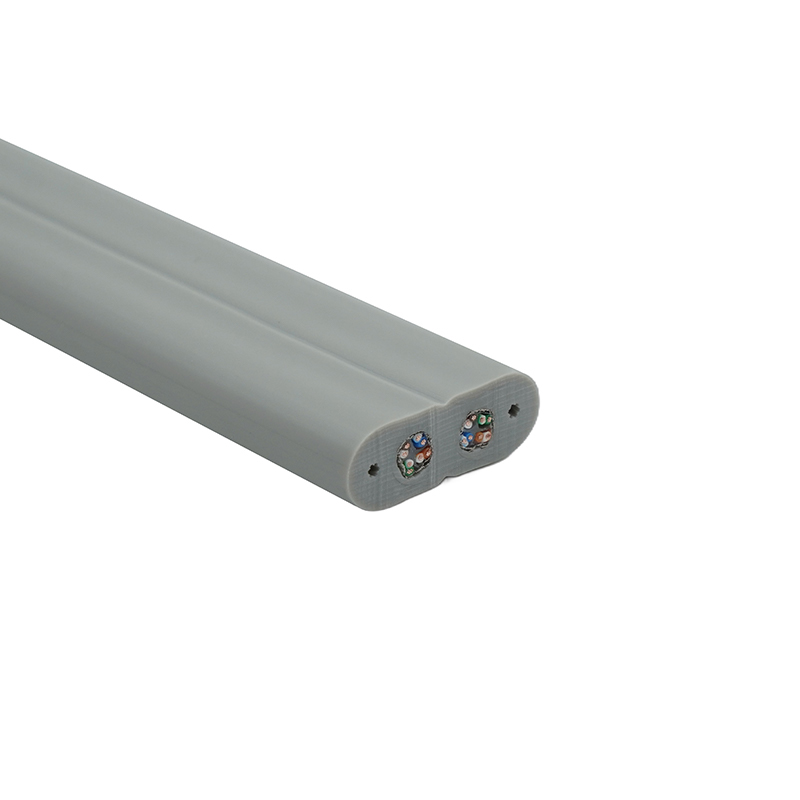
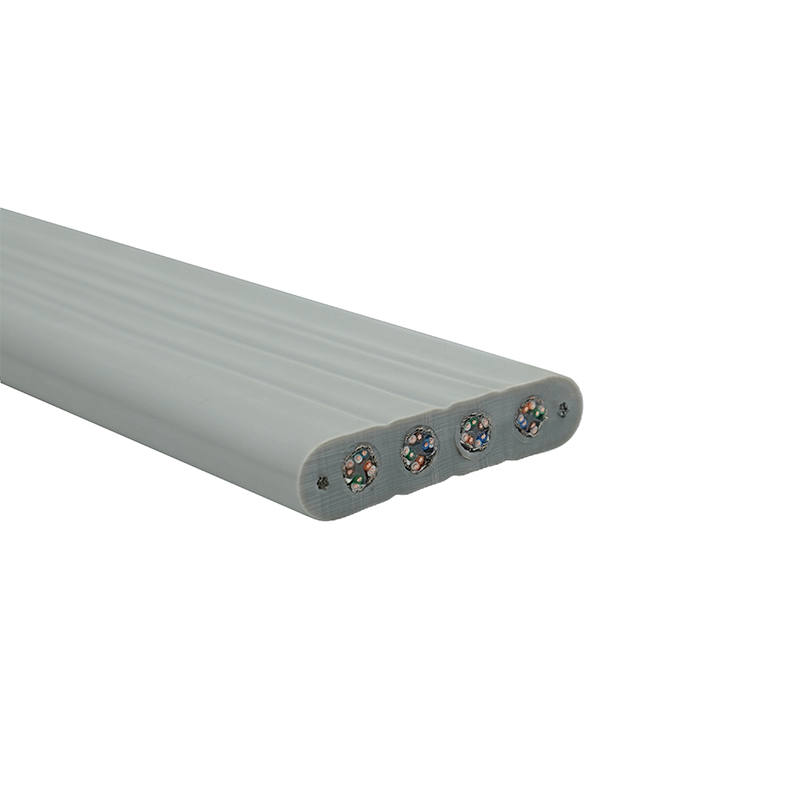
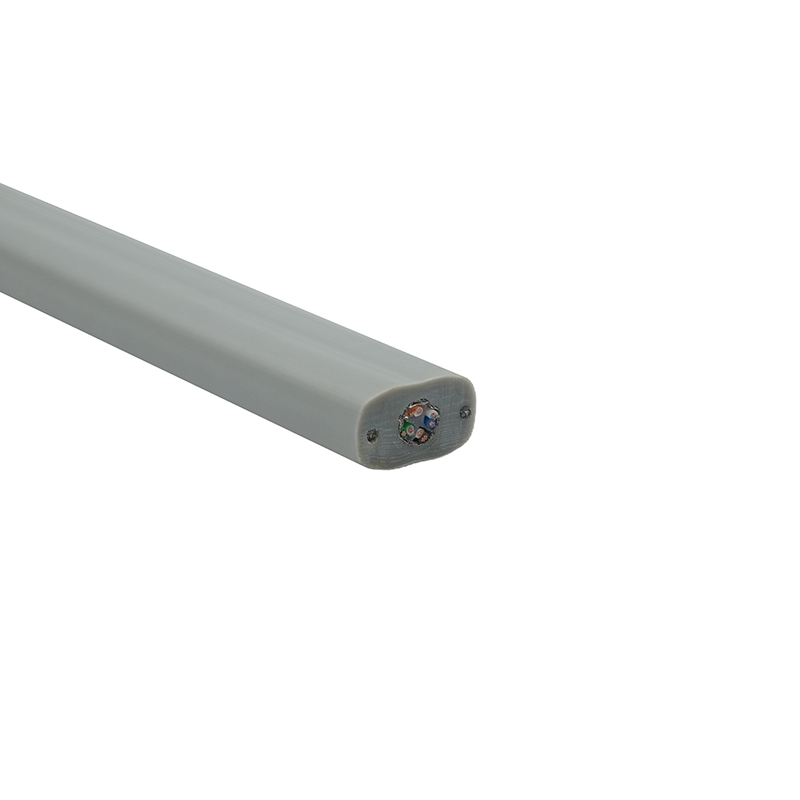
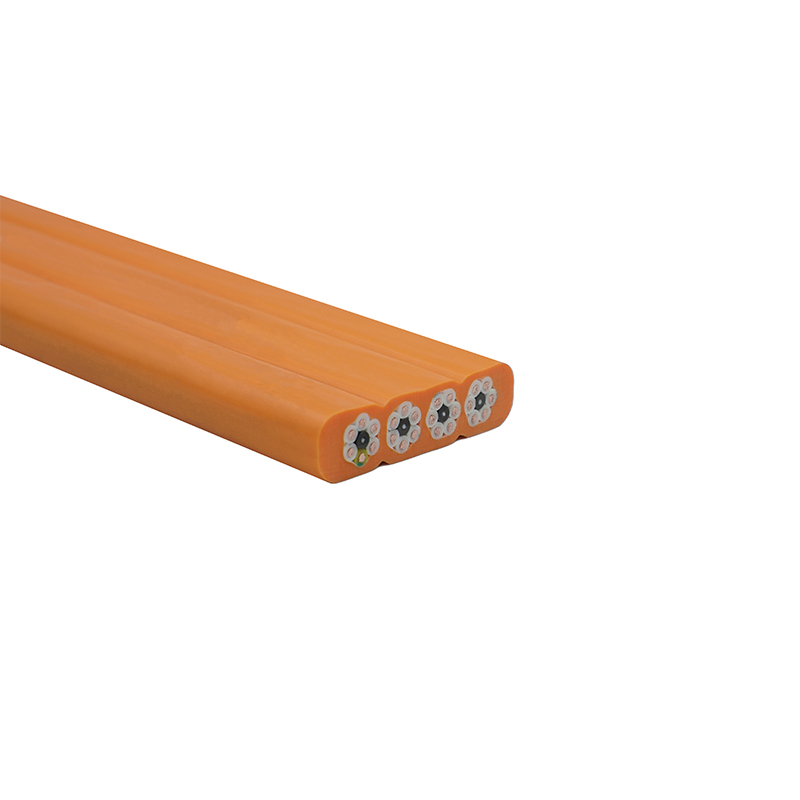
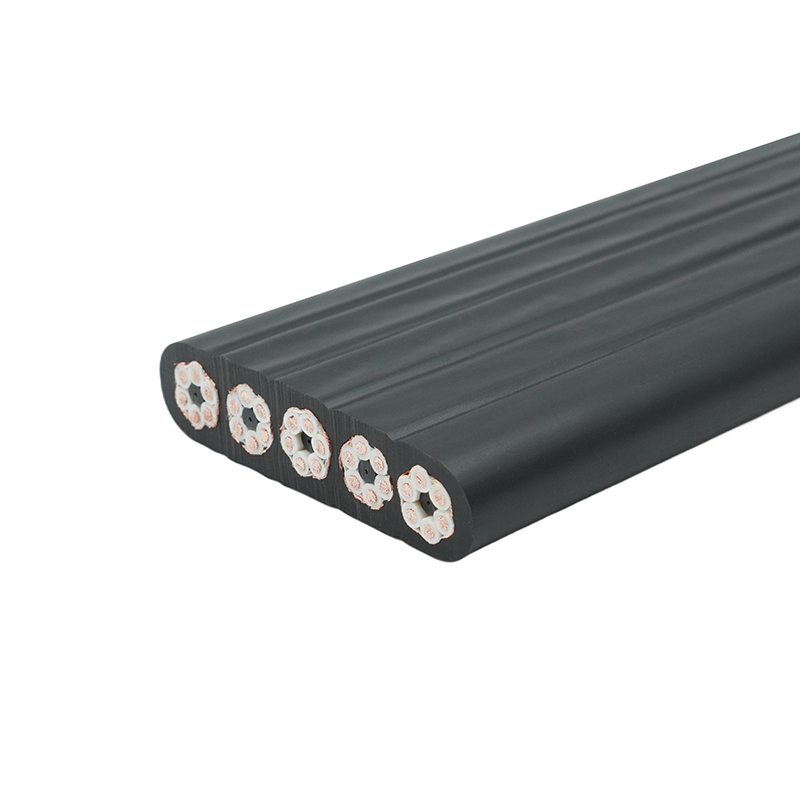 YFFBP Shielded Compound-Sheath Crane Traveling Flat CableShielded compound-sheath flat cable for moving crane equipment, combining anti-interference signal transmission with space-saving installation in electromagnetic-heavy industrial environments.View Product →
| Construction | Where it fits in a scrapyard | Strengths | What to check |
|---|---|---|---|
| PVC flat crane cable without steel wire | Short-travel festoons and lighter magnet duty | Flexible, compact, economical | Lower tensile strength and more sag on long spans |
| Compound sheath flat cable with steel wire | Long festoon travel with high lift counts | Carriers take tension off the conductors and resist looping | End clamps and strain relief must be installed correctly |
| Shielded flat crane cable | VFD travel drives and magnet control circuits | Reduces EMI on drive and signal cores | Shield termination and grounding at both ends |
| PUR or TPU dual-sheath reeling cable | Long travel, wet or dusty yards, grab duty | Abrasion and oil resistance with reliable winding | Fleet angle, reel tension and drum size |
Magnet, Grapple and VFD Duty: Where Shielding Pays Off
Magnet cables carry heavy DC current and switch constantly. The resulting surges are hard on insulation and terminals, and the magnetic field can couple noise into nearby control wiring. Routing the magnet feeder separately from signal cables is the first step; using a shielded construction for the control and drive cables is the second. Braid coverage around 85 percent is a practical target for crane duty, terminated properly at both ends with a suitable gland or clamp.
For VFD-fed travel and hoist motors, the cable should be specified as a drive cable rather than a general flexible cable. That means symmetric conductor layout, a proper earth core and a shield designed for high-frequency noise. It also means paying attention to motor cable length, because long runs without output reactors can stress both the cable and the motor insulation.
Installation Details That Decide Cable Life
Two identical cables can last six months or six years depending on how they are installed. Most of the failures we see in the field trace back to handling rather than to the cable itself.
- Respect the minimum bend radius, especially at the trolley and the drum entry.
- Never twist a flat cable to make it fit a round gland or a tight corner.
- Support festoon loops so the cable hangs in a natural curve without sharp kinks.
- Clamp the outer sheath, not the conductors, and leave a service loop at terminations.
- Keep reeling cable entering the drum at the recommended fleet angle.
- Inspect end fittings, sheaths and trolley wheels on a fixed schedule, not after a failure.
A Practical Specification Checklist
Before requesting a quotation, gather the details that actually change the cable design. A short, accurate brief saves weeks of back-and-forth and usually produces a better cable.
- Travel length, travel speed and the number of cycles per shift.
- Festoon or reeling, plus the drum or trolley dimensions.
- Voltage, current and the number of power, control and signal cores.
- Magnet, grapple, VFD travel drive or a combination of duties.
- Ambient temperature range, water exposure and the oils or chemicals present.
- Required approvals such as CE or UL for the destination market.
- Preferred sheath material and whether shielding is needed.
Getting the Cable Right the First Time
Scrapyard cranes earn their keep through sheer repetition, and the cable has to survive that repetition without drama. Choosing the right travel arrangement, matching the construction to the environment, and installing it with the same care you would give a gearbox will usually add years of service between replacements. If you are unsure which construction suits your crane, send us the travel data, duty cycle and environment, and our engineers will work through the options with you. You can reach the team through our contact page, and we are always glad to look at a drawing or a photo of an existing installation.