 EN
 English
 русский
 Español
Oil-Resistant Wire Under Stress: How Flex, Heat and Oil Affect Cable Life
 2026.11.05
 Industry News
Content
- 1 Why Oil and Stress Together Are Harder Than Either Alone
- 2 What Usually Fails First in Service
- 3 Sheath Materials Under Combined Oil and Movement
- 4 Construction Details That Decide Service Life
- 5 Reading Oil Resistance Test Data Correctly
- 6 Matching the Wire to the Actual Stress Profile
- 7 Where Custom Work Makes the Difference
Oil resistance is often treated as a yes-or-no property, as though a wire either has it or does not. In reality, the figure on a datasheet usually comes from a static soak test, while the cable in your machine is doing something much less polite: bending through a tight radius, twisting at a robot wrist, dragging across a machine bed, and sitting in the same oil sump shift after shift. The more useful question is not whether a jacket survives immersion, but how long it keeps its mechanical strength while it is still being worked. That combination, oil plus stress, is where most real failures begin.
Why Oil and Stress Together Are Harder Than Either Alone
A sheath exposed to oil absorbs part of it. The polymer swells slightly, plasticizers migrate out of the compound, and the material softens. A jacket that felt firm on the reel can lose a noticeable share of its tensile strength and elongation while gaining a few percent in diameter. On its own, that may still be acceptable. Add continuous flexing, and the softened compound can no longer distribute strain the way it was designed to, so the bend apex works harder on every cycle.
The two mechanisms feed each other. Chemical attack lowers the load the material can carry; mechanical work opens microcracks that let oil travel deeper. Once oil reaches the bedding and the strand bundle, it wicks along the conductor, softening fillers, swelling tapes and reaching the copper. From that point on, strand fatigue accelerates, shields corrode, and the layers begin to slip against each other instead of moving as one.
Temperature decides how fast all of this happens. As a rule of thumb, the rate of chemical attack roughly doubles for every 10 °C rise, which is why a wire that behaves well in a cold lubricant line can fail quickly in a warm hydraulic sump or beside a gearbox that runs hot all day.
What Usually Fails First in Service
When oil-resistant wire comes back from the field with a complaint, the damage tends to follow a small number of patterns:
- Jacket cracking at the bend apex, often starting on the outside of the curve where strain is highest.
- Localized swelling or a soft, tacky surface near a leak or drip point, while the rest of the run looks fine.
- Hardening and surface crazing where hot oil has stripped plasticizer from a PVC compound.
- Broken strands under an intact jacket, usually where the cable enters a carrier or passes over a sheave.
- Green or black corrosion at the conductor and braid after oil has wicked along the core from a single exposed end.
| Stress type | Typical location | What happens to an oil-exposed wire |
|---|---|---|
| Continuous flexing | Drag chains, festoon loops | Jacket cracks at the bend apex; strands fatigue where oil has softened the bedding |
| Torsion | Robot wrists, rotary joints | Layer slip, corkscrew deformation, shield strand breakage |
| Tension and reeling | Reeling drums, vertical drops | Jacket thinning, core compression, oil pushed deeper into the core |
| Vibration and abrasion | Pump skids, machine bases under oil mist | Surface polishing, then thinning, then exposed bedding |
| Heat plus immersion | Sumps, hydraulic power units | Plasticizer extraction, hardening, sharp loss of elongation |
Sheath Materials Under Combined Oil and Movement
No single compound wins everywhere, which is why the material choice should follow the oil type, the temperature and the motion rather than the other way around. The comparison below is a starting point for discussion, not a substitute for testing with the actual lubricant.
| Sheath material | Oil resistance | Flex life in oily service | Best fit |
|---|---|---|---|
| PVC | Moderate | Fair; softens and swells in hot oils | Static runs, light oil mist, cost-sensitive panels |
| PUR / TPU | Good to very good | Excellent; high abrasion and cut resistance | Drag chains, reeling, machine tools with coolant |
| Polychloroprene | Good | Good; stays flexible in outdoor conditions | Heavy mobile equipment, welding and yard duty |
| EPR with rubber sheath | Good | Good at high temperature | Marine, pump and power feeds near hot oil |
| FEP, silicone | Very good to excellent | Fair under repeated flex; low mechanical strength | High heat, chemical splash, sensor leads |
Two practical notes sit behind that table. First, a harder compound is not automatically better: very hard jackets resist penetration but transfer strain to the strands. Second, mixed oils matter. Cutting fluid, way lube and hydraulic oil can attack different parts of a compound, and a sheath that passes a standard oil test may still struggle in a coolant that has been topped up with water and tramp oil for a year.
Construction Details That Decide Service Life
Compound selection gets most of the attention, but the internal build often separates a cable that reaches two years from one that reaches ten. Stranding comes first: many fine wires bunched in short lay lengths bend more easily and keep individual strands below the strain where fatigue cracking starts. A separator tape or extruded bedding over the core prevents oil that has entered at one point from travelling along the whole assembly.
Jacket geometry matters just as much as the material. A concentric wall with tight tolerance keeps stiffness even around the circumference, so the cable does not develop a preferred bend direction. Properly controlled adhesion between jacket and core stops the sheath from sliding and bunching at the point where the cable enters a carrier.
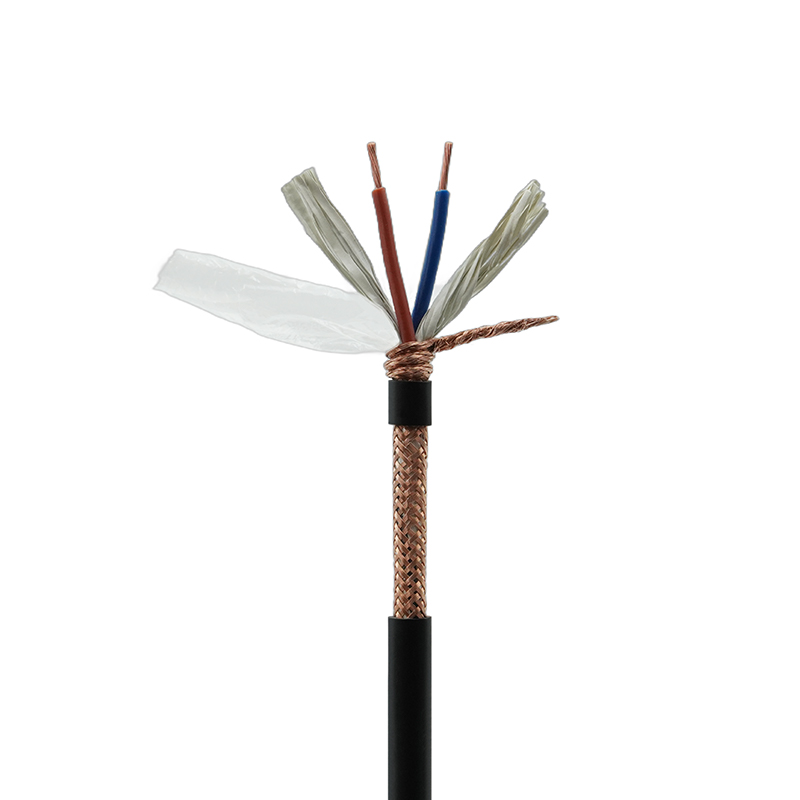
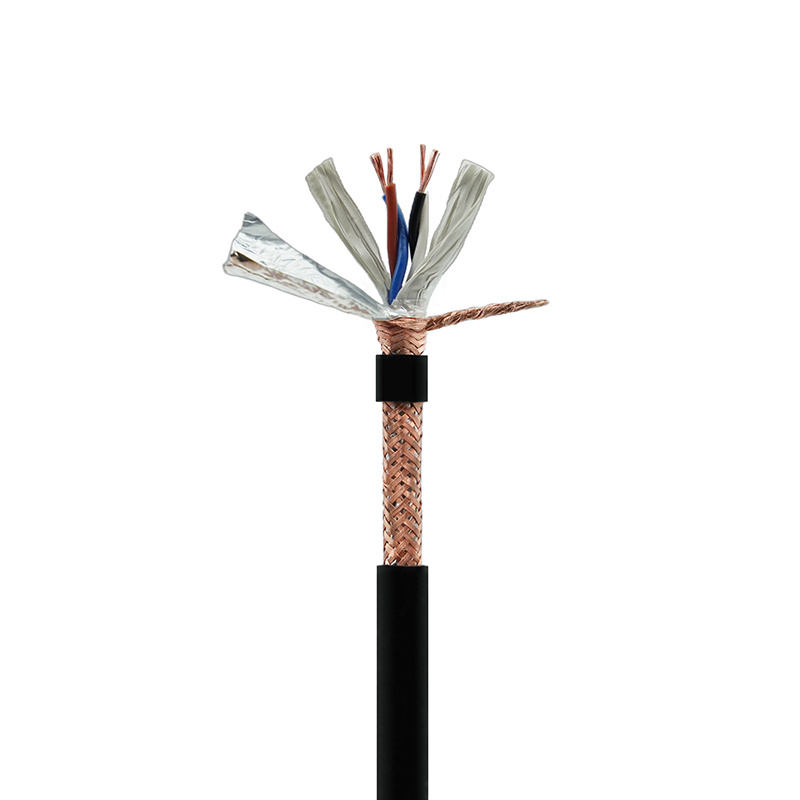
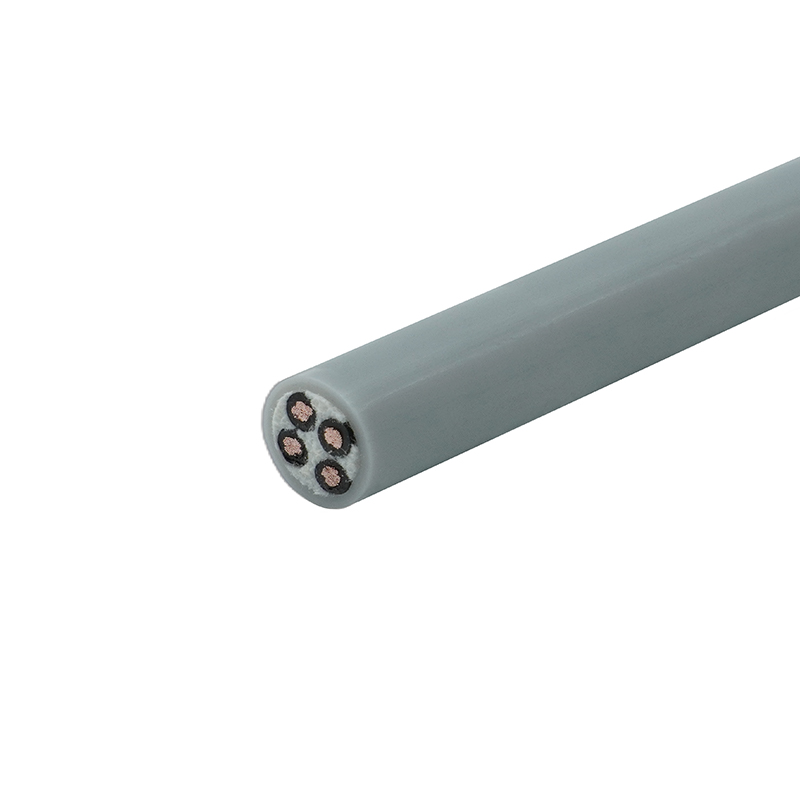 High-Flex Polyurethane Drag Chain Control Cable TRVV-PURUnshielded, weather-resistant PUR drag chain cable for power transmission in extreme environments; worth reviewing for moving-axis installations and minimum-bend-radius checks.View Product →
For continuously moving axes, a high-flexibility polyurethane drag chain control cable illustrates how these details come together: fine-strand copper, a PUR jacket with good oil and abrasion behaviour, and a construction tuned for millions of cycles rather than for static installation. It is worth asking any supplier how the cable behaves at the minimum bend radius you actually use, not the one printed in the catalogue.
Reading Oil Resistance Test Data Correctly
Most oil resistance claims come back to immersion testing. A specimen is soaked in a reference oil such as IRM 902 or the more aggressive IRM 903, at a set temperature and duration, and then measured. The figures that matter are tensile strength retention, elongation retention, and changes in mass, diameter and hardness. A retention figure of 60 to 70 percent in elongation after hot immersion is generally a more honest indicator of usable life than a simple pass or fail mark.
Static immersion, however, says nothing about movement. If your application flexes, ask for dynamic evidence: flex tests run in oil mist or with an oil-wetted jacket, abrasion testing after conditioning, and torsion data where relevant. A supplier who can show how the cable was tested, not just that it was tested, is usually a safer partner. Our own guide to key tests and checks for oil-resistant wire walks through the measurements worth requesting before a purchase decision.
Matching the Wire to the Actual Stress Profile
Before comparing datasheets, write down what the cable will actually experience. In our experience the most useful questions are these:
- Which oil or fluid is involved, and is it mineral, synthetic, ester-based, water-glycol or a coolant mixture?
- Is exposure continuous immersion, splash, mist, or an occasional spill?
- What is the standing and peak temperature at the cable, not at the tank?
- Is the motion static, continuous flex, torsion, reeling, or festoon travel, and at what speed and acceleration?
- What is the true minimum bend radius, and does the installation respect it after a few maintenance rounds?
- How long is the run, and are there connectors where oil can pool and wick into the core?
For outdoor and heavy mobile duty where oil, water and mechanical abuse arrive together, a heavy-duty outdoor oil-resistant rubber flexible cable is often the more forgiving answer than a thin-walled control cable.
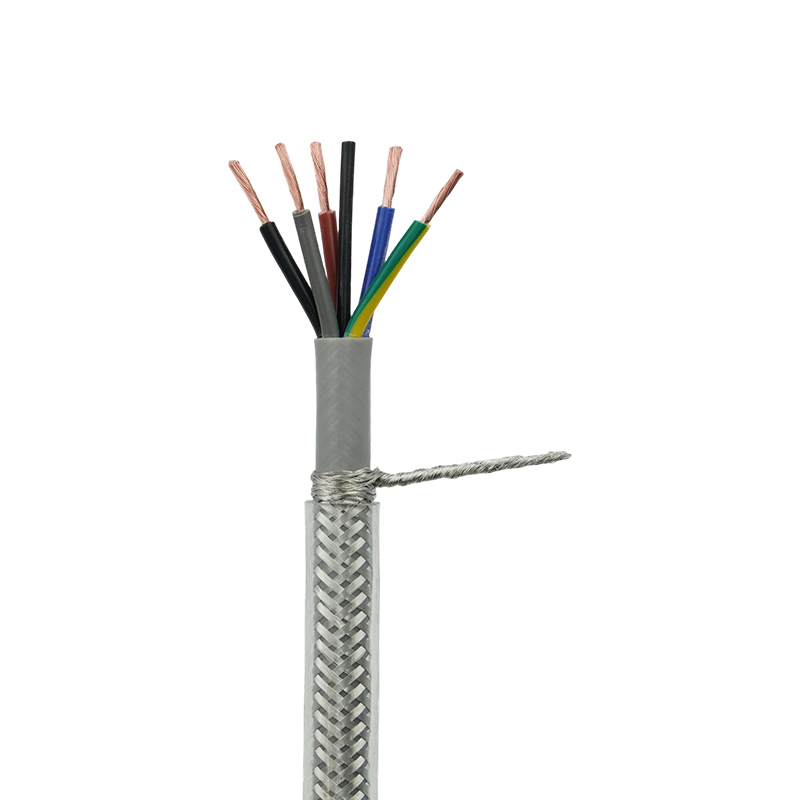
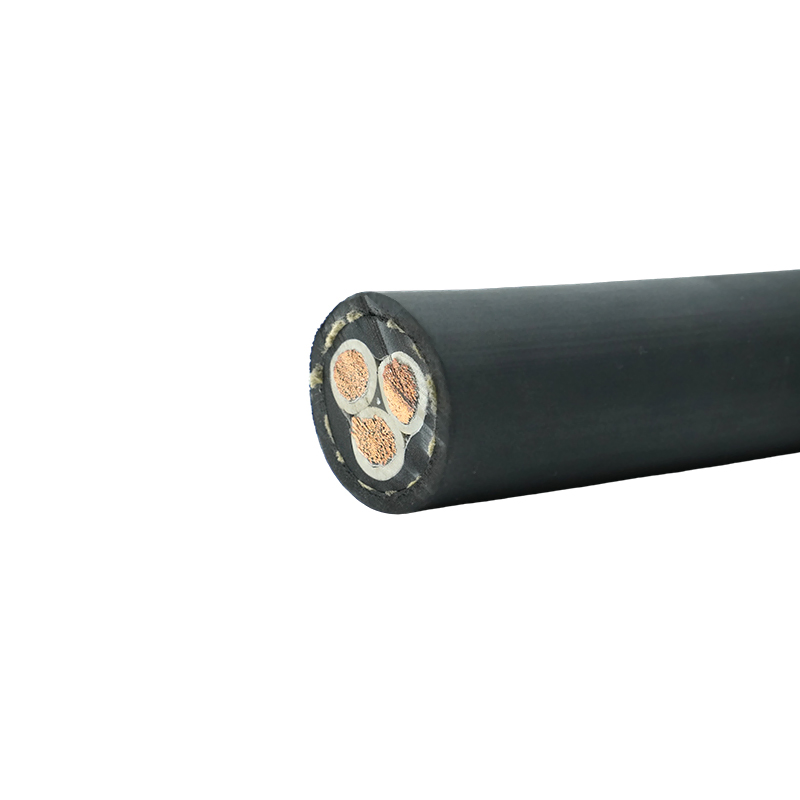 YCW Heavy-Duty Outdoor Oil-Resistant Rubber Flexible CableHeavy-duty outdoor oil-resistant rubber power cable for frequently moving industrial equipment exposed to oil; more forgiving than thin-walled control cable in harsh mobile duty.View Product →
Where the cable is wound on a drum, oil resistance has to survive tension as well, because each layer compresses the one beneath it. A polyurethane reeling cable built for drum winding handles that load case far better than a general-purpose flexible wire.
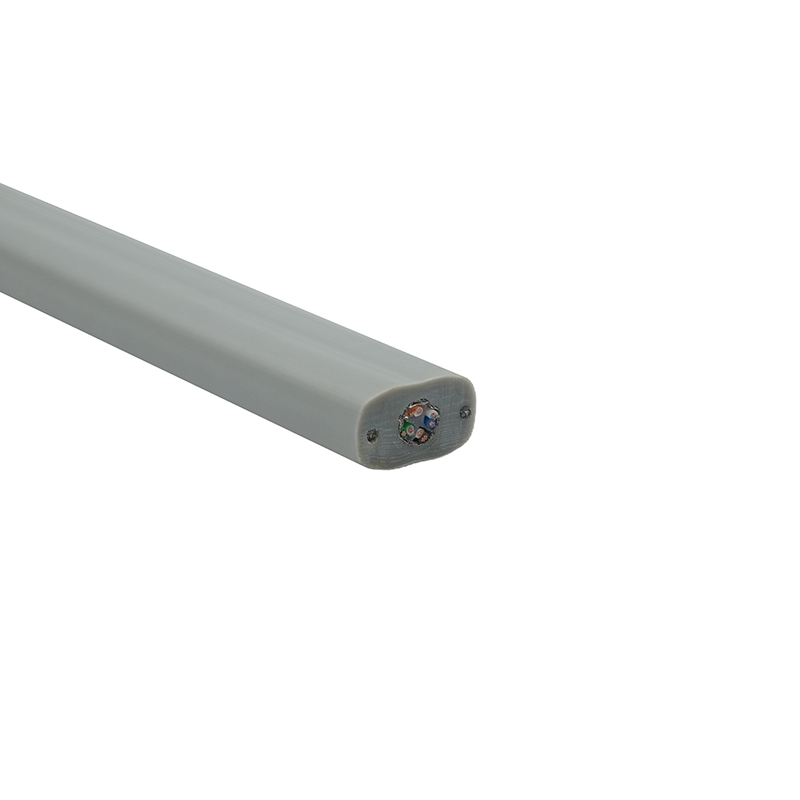
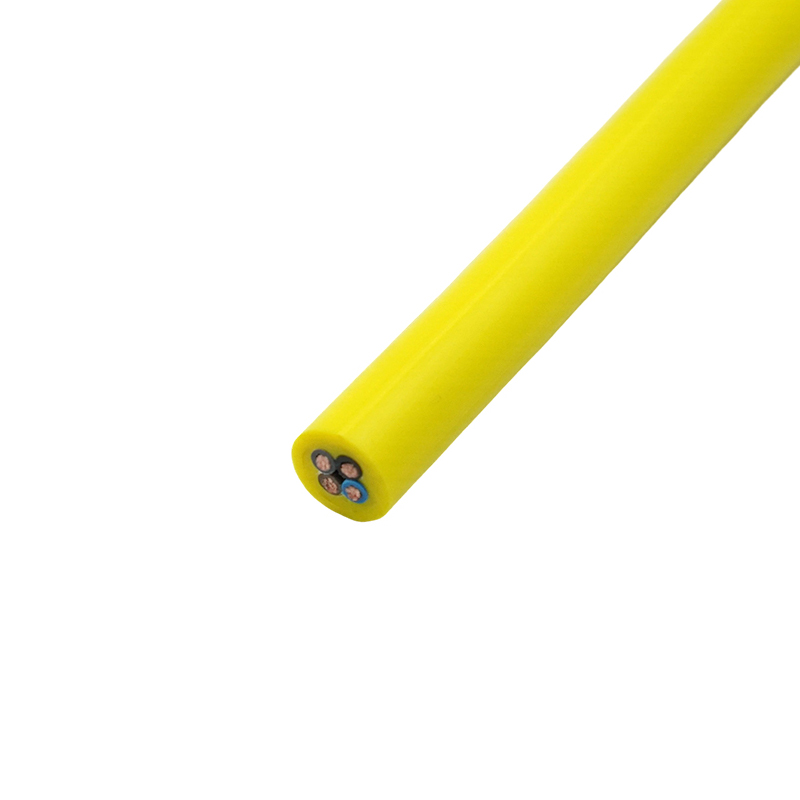 Polyurethane PUR Reeling Cable for Mobile EquipmentPUR reeling cable for general mobile equipment such as stacker-reclaimers, port machinery and grab cranes; relevant when drum-wound oil resistance and custom stress combinations matter.View Product →
Where Custom Work Makes the Difference
Many oil-and-stress problems do not have an off-the-shelf answer. A machine tool that runs a water-mixed coolant, a robot cell exposed to ester-based hydraulic fluid, or a pump station that sees hot oil splash and constant vibration may each need a different combination of jacket compound, separator, stranding and shield. Small changes, such as a tinned copper braid instead of bare copper or an added inner sheath, can shift service life significantly without changing the outer dimensions.
As a manufacturer of special cables, we build around the application rather than the other way round, with production and inspection equipment on site and the option to evaluate customer oil samples before a compound is chosen. If it helps, you can look at our cable testing laboratory to see how incoming compounds and finished cables are checked.
Oil-resistant wire performs best when the compound, the construction and the installation are all chosen for the same stress profile. Take the time to describe the fluid, the temperature and the motion precisely, ask for dynamic test evidence rather than a static claim, and treat the bend radius and carrier fill as part of the specification. Done that way, oil resistance stops being a marketing word and becomes a predictable service life.