 EN
EN
 English
 русский
 Español
Gas and Oil Resistant Cable: Choosing Wire and Cable That Lasts in Harsh Service
 2026.10.10
 Industry News
Content
- 1 What "Oil and Gas Resistant" Actually Means
- 2 Jacket and Insulation Materials at a Glance
- 3 Cable Types Used Across Oil and Gas Operations
- 4 A Short Selection Checklist
- 5 Standards and How to Verify a Claim
- 6 Installation Habits That Extend Service Life
- 7 Frequently Asked Questions
- 8 Working With a Specialty Cable Manufacturer
Oil and gas installations are unforgiving places for electrical cable. Diesel spills, hydraulic mist, sour gas, brine spray, and constant vibration attack the jacket from the first day of service, and a cable that looks perfectly acceptable in a catalog photo can swell, soften, or crack within months. The failure almost always appears in the least accessible part of the run, which is why selection deserves more attention than it usually gets.
We build specialty cable for these conditions every day, and the questions we hear from engineers and buyers rarely change: which compound survives the fluid, which cable construction suits the application, and how do you tell a genuinely oil resistant product from one that simply claims to be? This guide works through those answers in practical terms.
What "Oil and Gas Resistant" Actually Means
Resistance is not one single property. It is the ability of a compound to keep its mechanical strength, its dimensions, and its electrical performance while sitting in contact with hydrocarbons. Chemistry, temperature, and exposure time all act together, and heat quietly accelerates everything.
When a hydrocarbon meets a polymer, one of three things tends to happen. The compound absorbs the fluid and swells. Plasticizers and other additives migrate out, leaving the material hard and brittle. Or the fluid dissolves part of the surface, producing a sticky, cracking jacket. None of these failures is visible on the day of installation.
Gas introduces a different problem. Under pressure, gas can permeate the sheath and insulation. If pressure drops quickly, the trapped gas expands and can blister the cable from the inside out. Wellhead and exploration areas therefore call for dense, well-bonded sheath constructions rather than porous or foamed materials.
The practical conclusion is that "oil resistant" is always relative. A PVC jacket is perfectly adequate inside a dry control cabinet. The same jacket soaked in hot diesel on a moving machine is a premature failure waiting to happen.
Jacket and Insulation Materials at a Glance
Most specification mistakes come down to choosing a compound out of habit rather than by fluid and temperature. The comparison below covers the options we see most often in the field.
| Material | Behavior in Oil and Gas | Typical Service Temperature | Where It Fits |
|---|---|---|---|
| PVC | Limited; swells and loses plasticizer in hot hydrocarbons | -10 to +70 C | Fixed indoor control wiring |
| PUR / TPU | Very good; low absorption and high abrasion resistance | -40 to +90 C | Drag chains, reeling drums, mobile machinery |
| CPE / Neoprene | Good; resists oil, ozone, and weathering | -30 to +90 C | Offshore, marine, heavy outdoor duty |
| XLPE | Good as insulation; usually needs a protective sheath | -40 to +90 C | Power feeders and VFD conductors |
| FEP / PTFE | Excellent; chemically inert to most hydrocarbons | -60 to +200 C | Instrumentation and high-temperature zones |
| Silicone | Poor in oil; swells noticeably on contact | -60 to +180 C | Heat-only areas without fluid exposure |
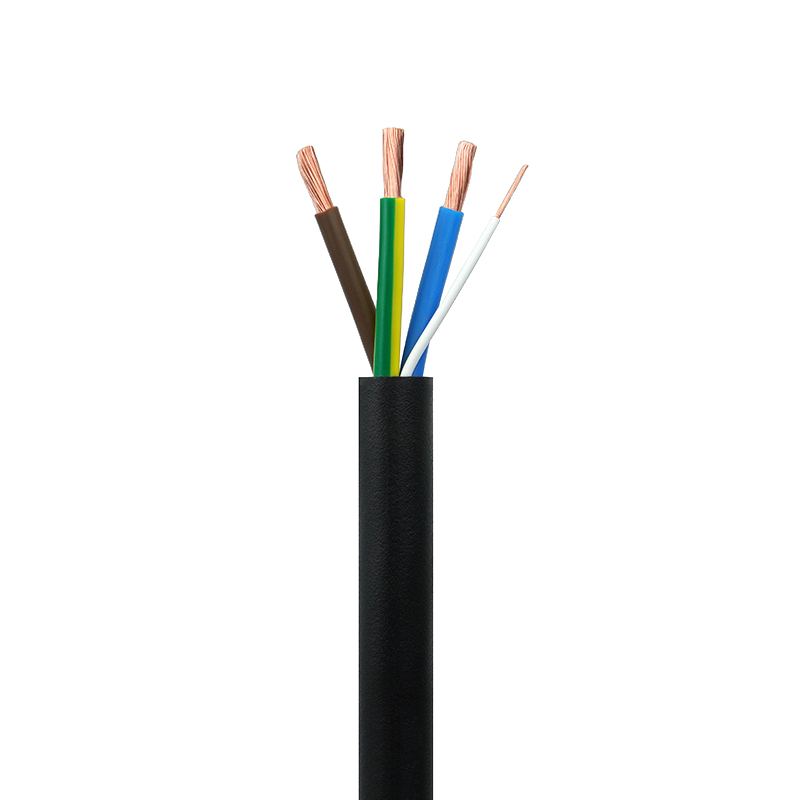
One of the cables we supply most often into fuel-handling and outdoor equipment areas pairs a heavy-duty oil-resistant rubber compound with a finely stranded conductor, so it tolerates both chemical exposure and repeated movement.
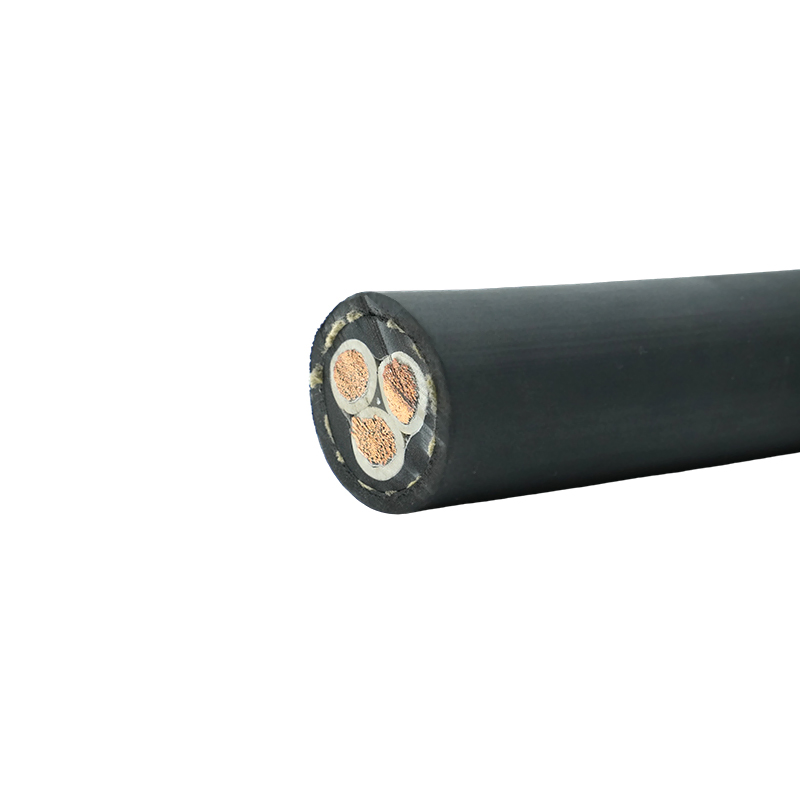 Heavy-Duty Outdoor Oil-Resistant Rubber Flexible Cable YCWRubber-sheathed flexible power cable for oil-exposed outdoor equipment and fuel-handling areas, where chemical resistance and repeated movement are key concerns.View Product →
Cable Types Used Across Oil and Gas Operations
Facilities use nearly every cable family, but a handful of categories carry most of the risk. These are the ones worth getting right.
Power and Motor Supply Cables
Low and medium voltage feeders run pumps, compressors, heaters, and lighting. XLPE insulation with a CPE, neoprene, or PUR sheath is the usual starting point, and armouring earns its place where burial, cable trays in congested areas, or mechanical abuse are expected. On motors that move or vibrate, conductor stranding class matters as much as the jacket.
Control and Instrumentation Cables
Analog loops, valve actuators, and emergency shutdown circuits depend on signal integrity. Shielded pairs with a drain wire are standard, and foil-plus-braid coverage handles the electrically noisy areas best. Thermocouple extension and compensating cables belong in this group too, since the wrong alloy introduces a temperature error that nobody notices until readings drift.
VFD and Drive Cables
Variable frequency drives bring their own problem set: high frequency noise, reflected waves on long runs, and bearing currents. A symmetrical three-core construction with three protective earth conductors, full shield coverage, and low capacitance keeps the drive and the motor both happy.
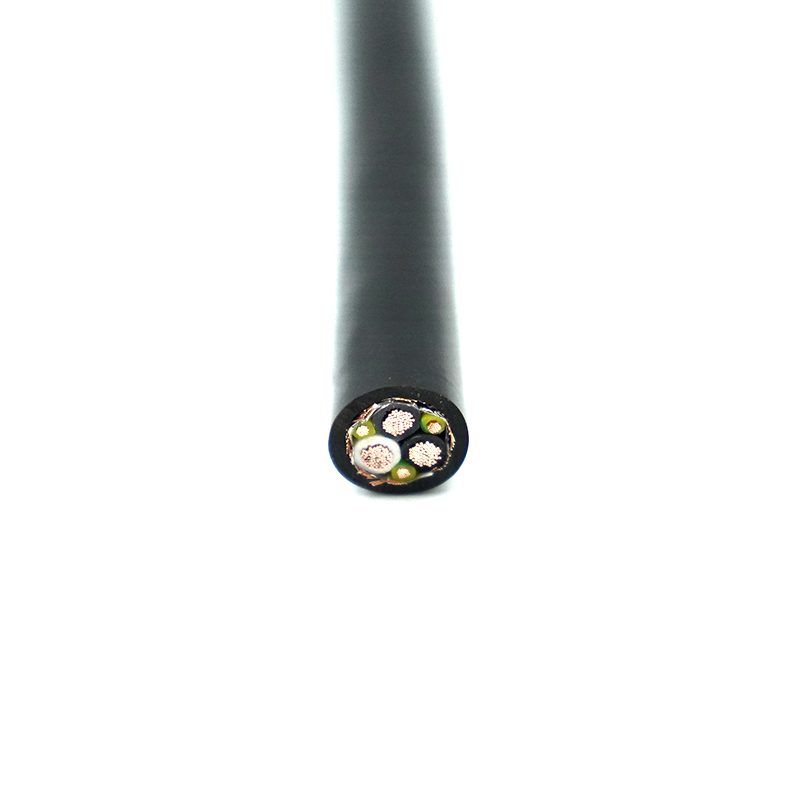 XLPE Insulated PVC Sheathed Copper Braided Shielded VFD Flexible Cable BPYJVRPShielded flexible VFD cable for high-voltage equipment power circuits where electromagnetic interference is present, combining XLPE insulation, PVC sheath, and copper braided shielding.View Product →
Communication and Data Cables
Shielded twisted pair network cable, RS-485 fieldbus, CC-Link, and KNX all appear in control rooms and process areas. They need the same fluid resistance as power cable, but they also need consistent impedance, so the shield and the twist must survive the same jacket chemistry.
Reeling, Festoon, and Crane Cables
Cranes, grab buckets, and travelling trolleys either wind cable onto a drum or carry it along a festoon system. These cables bend thousands of times a year, so the compound needs to stay flexible when cold and the conductor needs a strand design built for cycling rather than for simple current carrying.
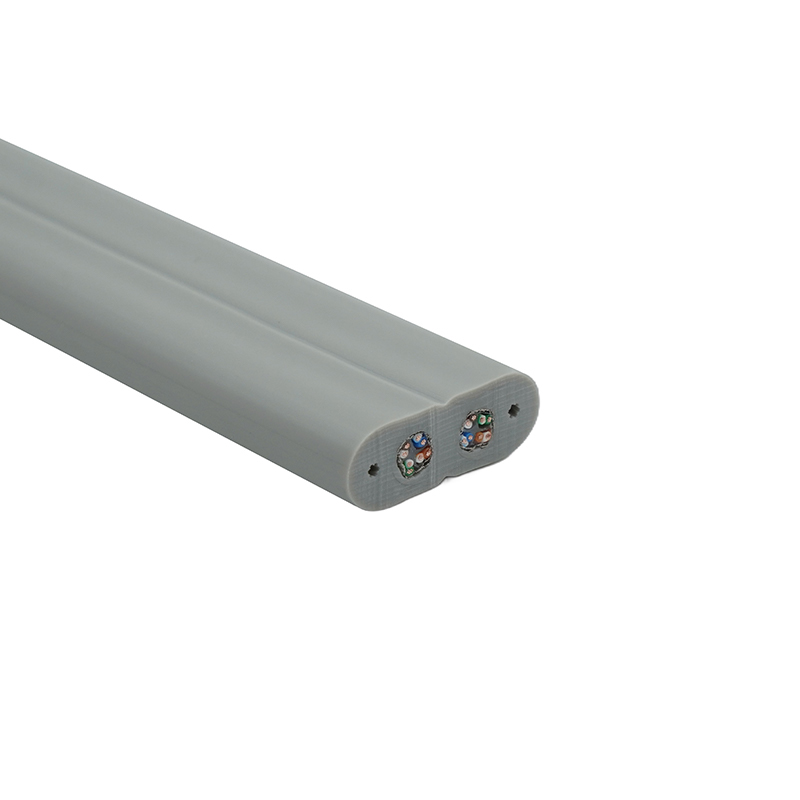
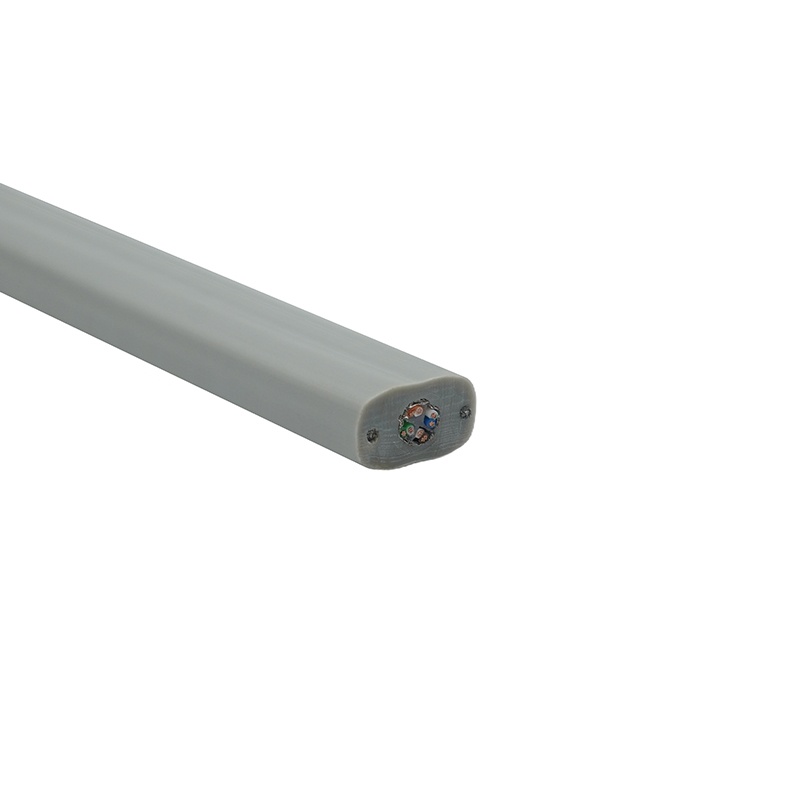
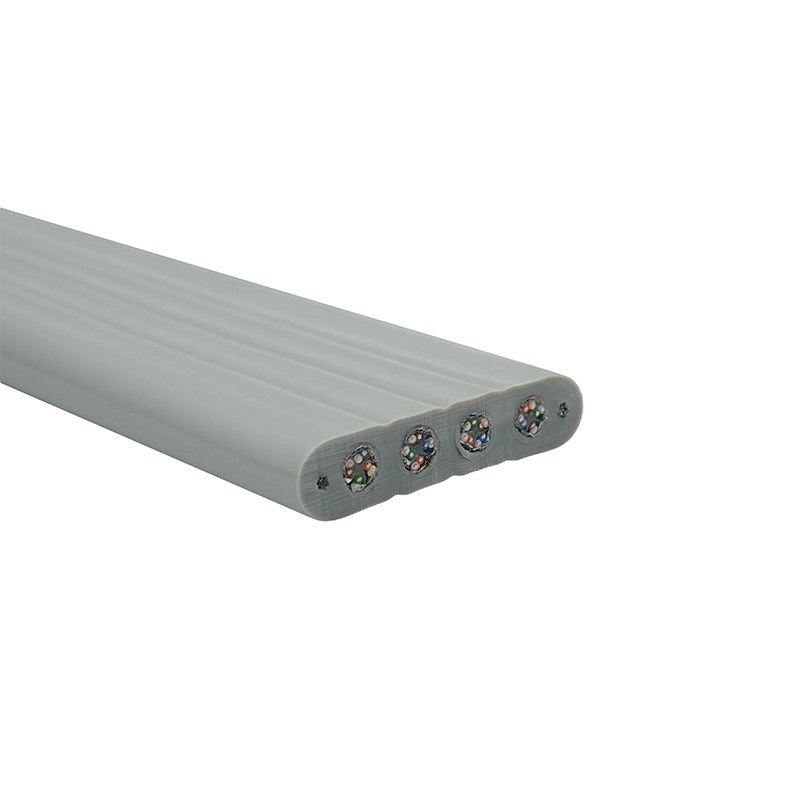
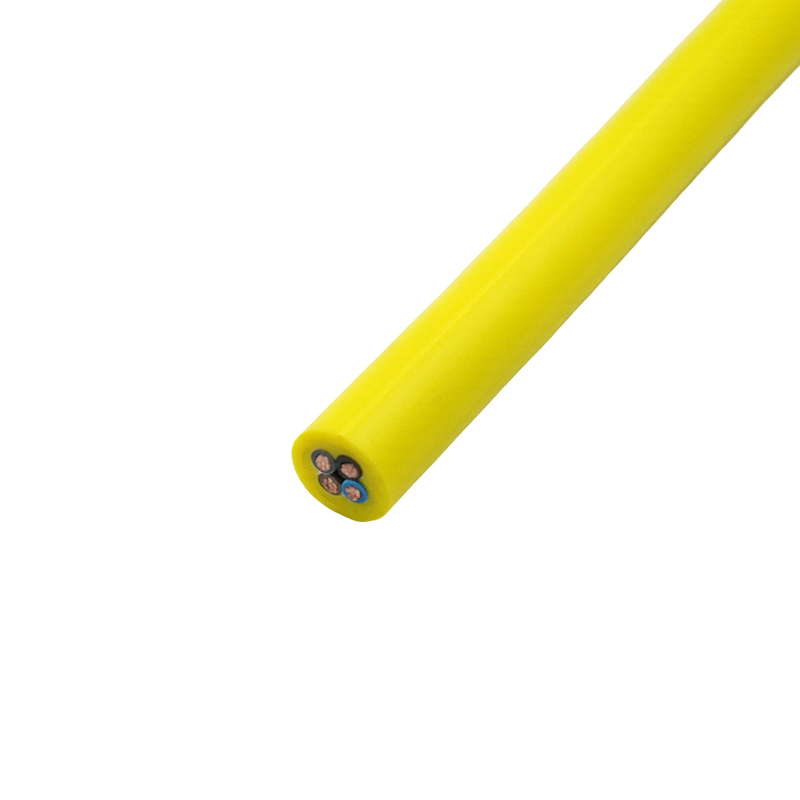 Polyurethane PUR Reeling Cable for Mobile EquipmentReeling cable positioned for stacker-reclaimers, port machinery, grab cranes, material conveying, and oil-to-electric drive systems, suited to mobile equipment with repeated cable movement.View Product →
Offshore and Marine Cables
Salt water, mud, and ultraviolet exposure push offshore cable toward mud-resistant compounds and sheaths that resist hydrolysis. Floating cable for ROVs and underwater detectors is a specialized branch of the same family, combining buoyancy with oil and seawater resistance.
A Short Selection Checklist
Before you request a quotation, it helps to have these answers ready. They are the questions our own engineers ask first.
- Which exact fluid will the cable contact, and at what concentration?
- What is the maximum conductor temperature and the surrounding ambient temperature?
- Is the cable static, flexing, twisting, or reeling, and how many cycles per year?
- Does the circuit carry power, analog signal, digital data, or a combination?
- Which approvals does the project require, and which market will the equipment serve?
- What glands, trays, and terminations will be used, and do they match the sheath diameter and material?
- What documentation is needed: test reports, certificates, or batch traceability?
Standards and How to Verify a Claim
Oil resistance is measurable. IEC 60811-404 covers oil immersion testing, flame behavior is described by IEC 60332, and offshore projects frequently reference NEK 606 for mud resistance. In North America, UL listings such as UL 2464 signal that a construction has been evaluated, while CE marking serves the European market.
Ask for the test data behind the claim, not just the word "resistant" on a datasheet. If you would like a practical walkthrough of the checks that separate a durable jacket from a mediocre one, our article on how to identify high-quality oil-resistant wire goes through the key tests step by step.
Installation Habits That Extend Service Life
- Route cable away from hot surfaces and known hydraulic leak points wherever the layout allows.
- Respect the minimum bend radius, especially at drum entries and festoon trolleys.
- Use correctly sized glands and seals so the jacket is not asked to act as a pressure seal.
- Support long vertical runs to prevent the conductor from carrying its own weight.
- Inspect at fixed intervals and look for swelling, hardening, or surface cracking rather than waiting for a fault.
- Keep replacement lengths matched to the original specification, since a mixed installation hides the real failure cause.
Frequently Asked Questions
Is PVC good enough for oil and gas service?
In dry, fixed, indoor control panels it often is. In contact with hot oil, diesel, or solvent, PVC loses plasticizer and hardens far sooner than PUR, CPE, or FEP. If the cable touches hydrocarbon regularly, choose a compound designed for it.
How long should an oil and gas resistant cable last?
Service life depends on temperature, fluid concentration, and movement. A static cable in moderate conditions can last well over a decade, while a reeling cable in continuous motion may need replacement far sooner. Inspection records tell you more than any general estimate.
What is the difference between oil resistant and gas resistant cable?
Oil resistance focuses on absorption and swelling at the surface. Gas resistance focuses on permeation through the sheath and on what happens when pressure is released. A construction can be strong in one and weak in the other, so both should be specified when both conditions exist.
Working With a Specialty Cable Manufacturer
Off-the-shelf cable rarely matches a real installation exactly. Most of the cable we produce is adapted from a proven construction: a different sheath compound, a denser shield, a steel carrier, or an extra pair for a data link running alongside power. Small changes like these are what keep a cable alive in a fuel-rich environment.
If you are unsure which compound suits your fluid or how many bending cycles your reeling application will see, send us the details. Our laboratory and engineering team can review the specification with you and recommend a construction that fits, rather than one that merely looks close on paper.