 EN
EN
 English
 русский
 Español
Festooning Cable Selection Guide: Flat vs Round Types, Sheath Materials & Buying
 2026.08.07
 Industry News
Content
- 1 What Is a Festooning Cable and How Does a Festoon System Work?
- 2 Flat vs Round Festoon Cable: Which Construction Wins?
- 3 Festoon Cable Construction: Materials That Define Service Life
- 4 Common Festoon Cable Failure Modes and How to Avoid Them
- 5 How to Specify Festooning Cable for Your Application
- 6 Choosing a Festoon Cable Manufacturer
A 10-ton overhead crane at a steel processing plant runs 60 meters along its runway hundreds of times per day. Each time the bridge moves, the festooning cable feeding the hoist flexes, sways, and carries full load current. When that cable fails, production stops in the middle of a shift. Yet many maintenance teams and equipment buyers still select festooning cable as a commodity, focusing on price per meter instead of the mechanical duty it must survive.
The short version: choose a festooning cable for the flexing motion, track geometry, and environment it will work in, not just for its conductor count and voltage rating. Flat cables dominate this application, and the sheath material, stranding, and reinforcement determine whether the cable lasts for years or fails within months. Spending slightly more on the correct construction is almost always cheaper than one unscheduled replacement.
What Is a Festooning Cable and How Does a Festoon System Work?
A festooning cable is a flexible power or control cable suspended from trolleys that travel along a track mounted beside or above moving equipment. The track can be a C-track, an I-beam, or a wire rope, depending on the load and travel length. The cable hangs in loops between the trolleys, extending and compressing as the equipment moves. This arrangement keeps the cable off the floor and avoids the need for a winding drum.
Festoon systems are common on overhead crane bridges and trolleys, hoists, automated storage and retrieval machines, and transfer cars. They suit travel distances that are too short for a cable reeling drum to be practical but too long for the cable to simply drag behind the machine. In these systems, the cable performs far more mechanical work than a cable in any fixed installation, which is why general-purpose flexible cord is rarely a safe substitute.
Flat vs Round Festoon Cable: Which Construction Wins?
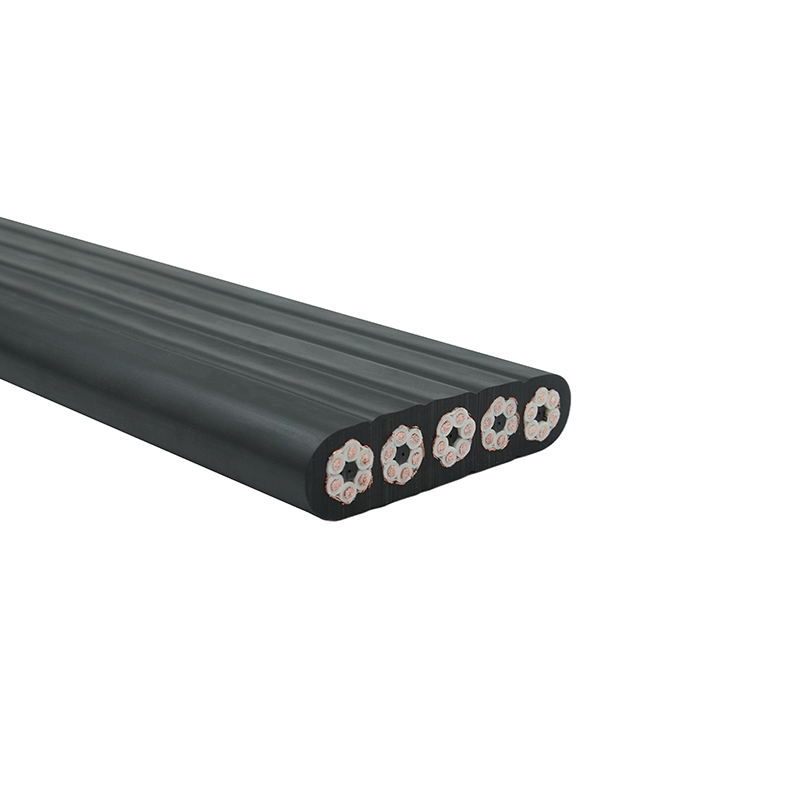
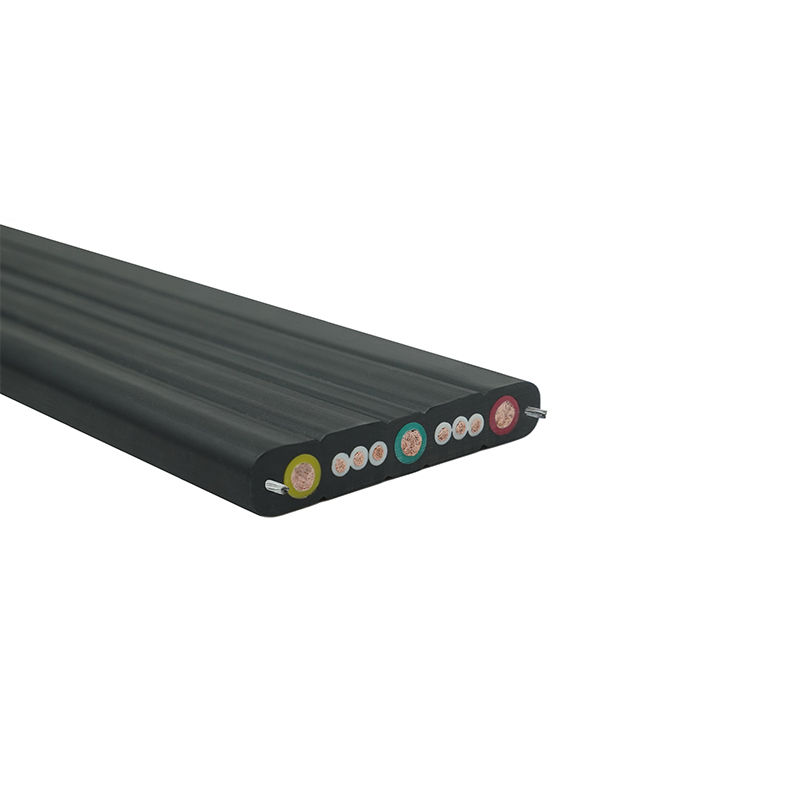
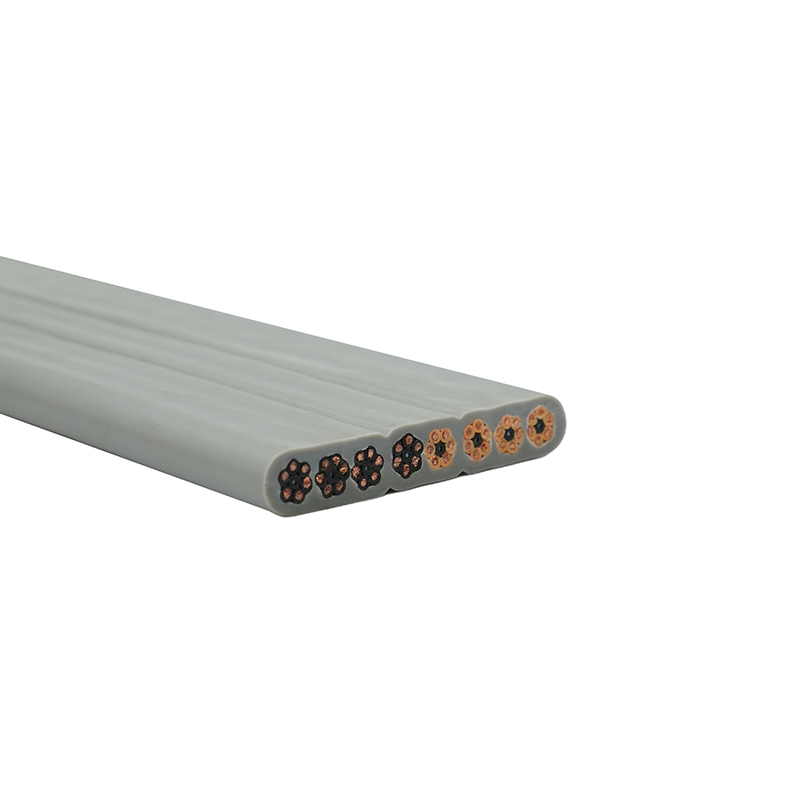
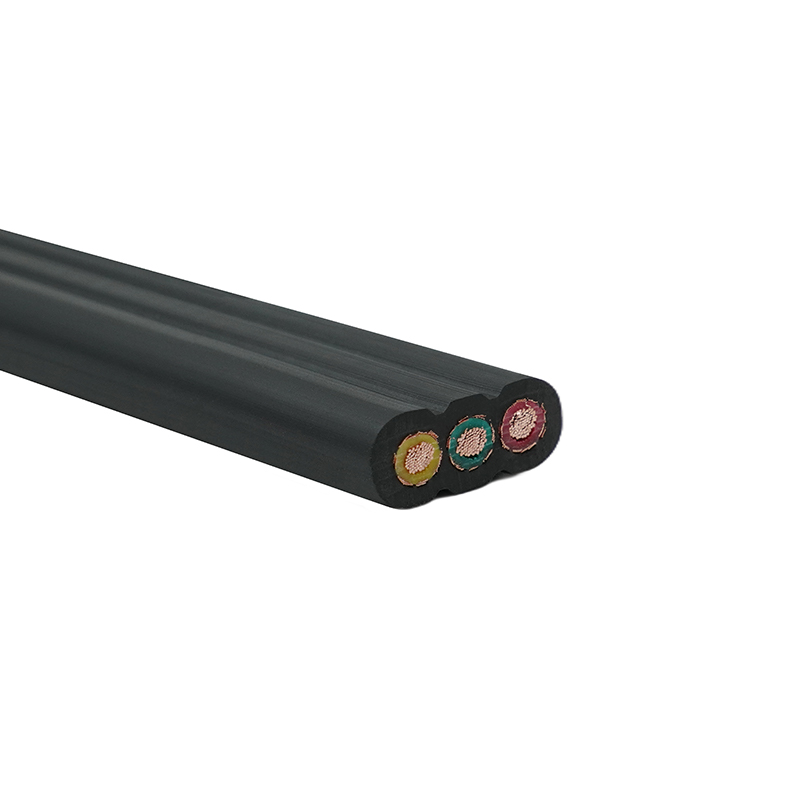
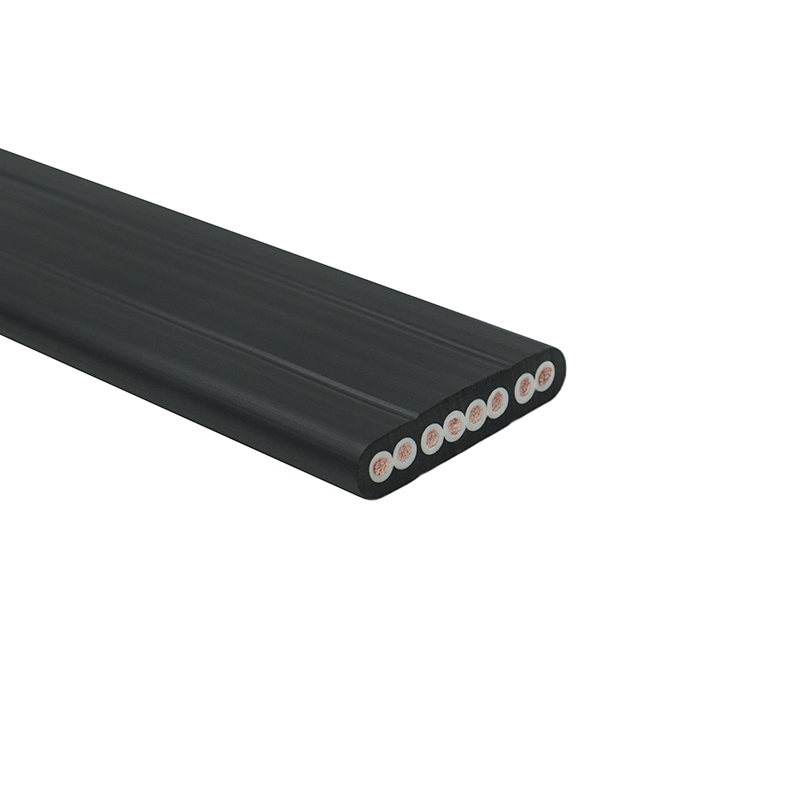
The first and most important decision when specifying festooning cable is the cross-section shape: flat or round. Flat cable is the default choice for most overhead crane and hoist installations. Its conductors lie parallel in a single plane, giving it directional flexibility. The cable bends along one axis, which suits the straight-line motion of a festoon track, and resists twisting that would otherwise accumulate along the run.
Round cable bends in every direction and has a place on curved runs or where the track changes path. On a straight festoon run, however, round cable tends to rotate under its own weight, placing uneven stress on the conductors and increasing the risk of breakage near the cable ends. For a long straight runway, flat cable is almost always the more reliable answer.
| Comparison Factor | Flat Festoon Cable | Round Festoon Cable |
|---|---|---|
| Bending behavior | Bends in one plane; resists twisting | Bends in all directions; prone to rotation |
| Hanging stability | Stable, controlled loop geometry | Can twist and sway on straight tracks |
| Track compatibility | Best for straight runs at moderate to high speed | Better for curved or short-radius paths |
| Space requirement | Low profile; compact loop | Larger loop diameter required |
| Typical applications | Crane travel, hoists, elevator traveling cables | Curved festoon systems, restricted clearances |
For a broader view of flat cable designs and where each style performs best, see our industrial flat cable guide.
Festoon Cable Construction: Materials That Define Service Life
Once the cable shape is decided, every remaining choice is about materials and construction. A festooning cable is only as strong as its weakest layer, and each layer plays a specific role under continuous flexing.
Conductors: fine stranding means better flex life
The conductor stranding determines the cable's flex life. Festoon applications should use finely stranded copper conductors, typically class 5 or class 6 stranding, rather than the coarser class 2 conductors found in fixed wiring. The finer wires share bending stress more evenly, which delays the fatigue fractures that eventually cause open circuits. If the cable also carries power, the conductor cross-section must be verified against the actual current demand, not just the flex requirement.
Insulation: the layer that protects conductor spacing
The insulation around each conductor must stay flexible at the lowest operating temperature and tolerate whatever chemicals are present. PVC is economical and works well in dry, indoor environments, but rubber and EPR insulation hold up better in hot or oily locations. Around steel mills and foundries, that distinction is often the reason one cable lasts for years while another becomes brittle and cracks within months.
Sheath materials: where most festoon cable failures begin
The outer sheath is the layer that contacts the environment. PVC sheathing is acceptable indoors or in mild weather. For outdoor crane runways, PUR (polyurethane) provides far better abrasion resistance and remains flexible in cold temperatures. Compound sheaths and neoprene are also used in heavy-duty crane flat cables where oil and mechanical abuse are expected. The trade-offs between PVC, PUR, XLPE, and LSZH are worth reviewing in our PVC vs PUR vs XLPE vs LSZH sheath material comparison before you commit to a design.
Steel wire reinforcement: essential for suspended runs
A flat festoon cable hanging between trolleys must support its own weight plus the acceleration forces of the moving equipment. Without reinforcement, that mechanical load transfers directly to the copper conductors and shortens the flex life. Steel wire, either embedded in the sheath or as a separate load-bearing member, takes the tension so the copper only carries electrical current. For long travels and heavy duty, a compound sheath crane traveling flat cable with steel wire is the usual solution.
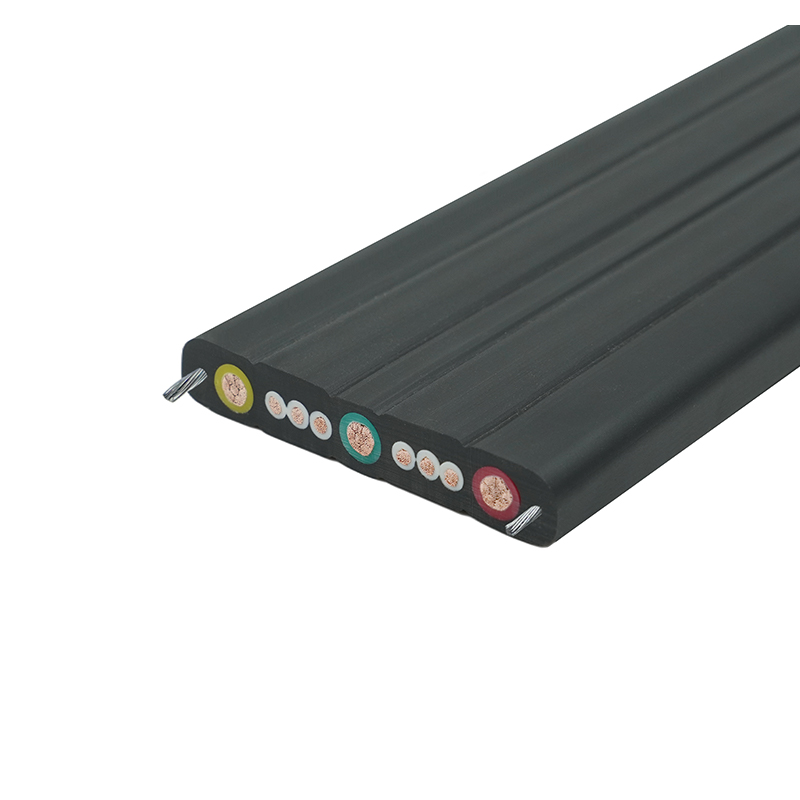 YFFBG Compound Sheath Crane Traveling Flat Cable with Steel Wire Suppliers, WholAs YFFBG Compound Sheath Crane Traveling Flat Cable with Steel Wire Suppliers and Company in China, Junshuai offer Wholesale Compound She...View Product →
Common Festoon Cable Failure Modes and How to Avoid Them
Most festooning cable failures come from a small set of repeated causes. Knowing them is the shortest route to preventing unplanned downtime.
- Conductor breakage from flex fatigue. This happens when the cable is bent at a radius tighter than its design limit, or when trolley spacing creates a concentrated bend point. Maintain a bending radius of at least 10 to 15 times the cable thickness for flat festoon cables, and set trolley spacing according to the manufacturer's recommendation.
- Twisting and tangling. Round cables are the usual victims. On a long straight run without a swivel, a flat design eliminates most of this risk.
- Sheath abrasion and cutting. The cable rubs against track edges, cable trays, or adjacent cables. PUR and compound sheaths reduce wear dramatically. In severe conditions, a PUR polyurethane reeling cable
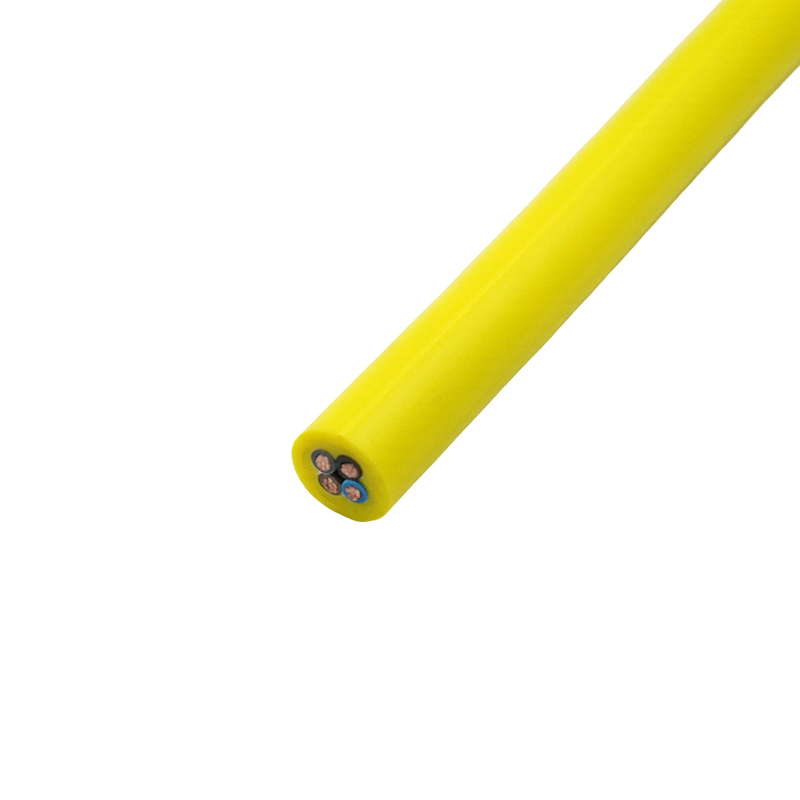 Reel cable Polyurethane (PUR) Reeling Cable Suppliers, Wholesale Company - JiangAs Reel cable Polyurethane (PUR) Reeling Cable Suppliers and Company in China, Junshuai offer Wholesale Polyurethane (PUR) Reeling Cable ...View Product → (built with the same abrasion-resistant jacket used for continuous reeling duty) is a practical upgrade for harsh festoon environments.
 - UV and weather degradation. Outdoor crane runways expose PVC sheaths to UV radiation that makes them stiff, discolored, and cracked. Specify a UV-stabilized or PUR-based sheath for any outdoor installation.
All of these failure modes are preventable through the correct cable construction and system layout. When a festoon system fails repeatedly, the cable has usually been specified for voltage and ampacity but not for the actual mechanical duty cycle. That is the most common procurement mistake, and it is entirely avoidable.
How to Specify Festooning Cable for Your Application
To get a dependable quotation and avoid specification errors, provide the cable manufacturer with the following information:
- Number of power, control, and data conductors, with the cross-section of each.
- Operating voltage: 300/500 V and 450/750 V are the common levels for festoon systems.
- Travel distance and speed of the moving equipment, which define the loop geometry and flexing frequency.
- Available bending radius in the festoon layout.
- Ambient temperature range and whether the cable will be installed indoors or outdoors.
- Exposure to oil, water, chemicals, or mechanical abrasion.
- Required certifications, such as CE, UL, or other market-specific standards.
When the application calls for a standard, certified flat cable for crane or hoist power, a CE certified flat cable rated 450/750 V covers many common specifications and removes the uncertainty of unverified constructions.
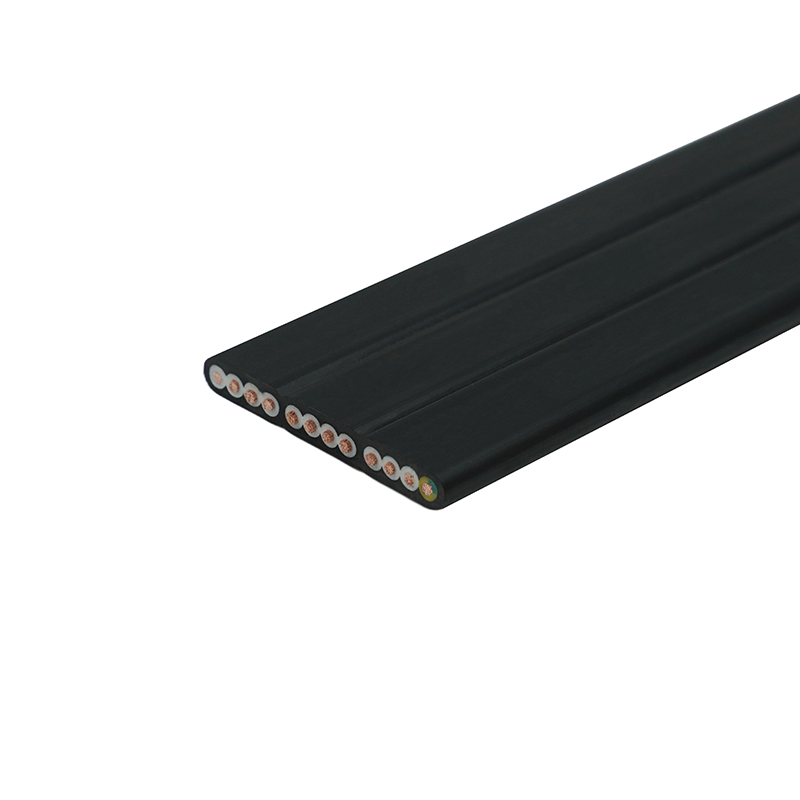 H07VVH6-F CE Certified Flat Cable Rated 450/750V Suppliers, Wholesale Company - As H07VVH6-F CE Certified Flat Cable Rated 450/750V Suppliers and Company in China, Junshuai offer Wholesale CE Certified Flat Cable Rate...View Product →
It is also worth understanding how festoon systems compare with other moving-cable technologies. In many plants, the real choice is not only between flat and round cable, but between a festoon system and a cable reeling drum. The practical differences are explained in our comparison of reeling cables vs drag chain cables.
Choosing a Festoon Cable Manufacturer
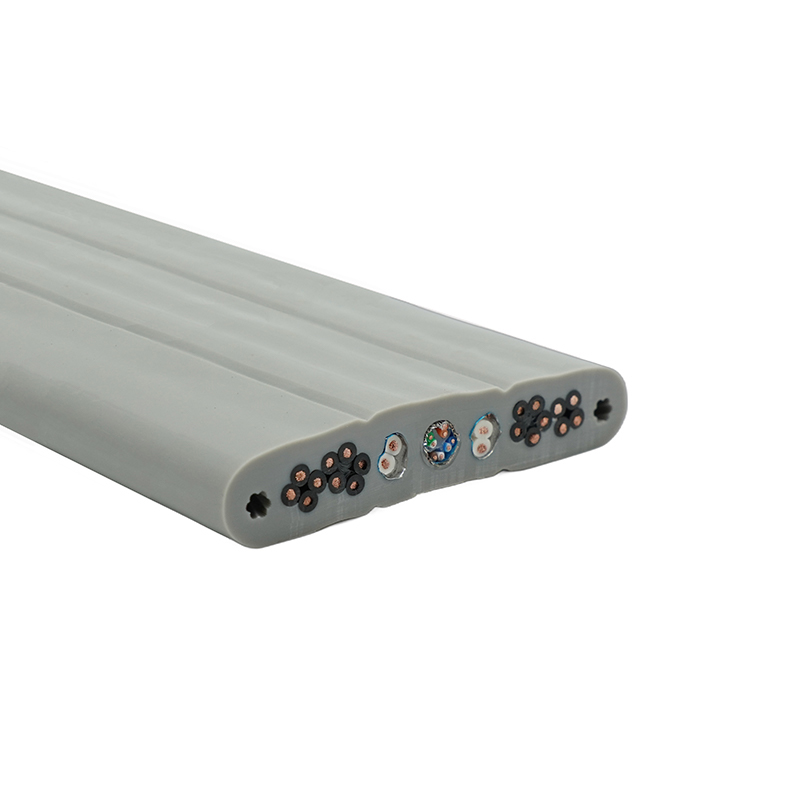
Because any festooning cable is a moving component, the manufacturer's design approach and quality control directly affect your maintenance costs. Look for a supplier that builds cables around the actual motion profile, offers custom constructions such as reinforced flat cables or hybrid designs with integrated data pairs, and holds certifications relevant to your market. A manufacturer that produces specialty cables in-house, rather than reselling generic stock, is far more likely to deliver the exact construction your application needs.
Before ordering, ask how the cable behaves at the end of its expected life. A well-built festoon cable shows progressive sheath wear that gives you time to plan replacement. An underbuilt cable breaks conductors without warning. That difference, invisible on a spec sheet, is the reason experienced buyers pay close attention to the manufacturer's construction methods, test procedures, and willingness to discuss the mechanical demands of the installation.